

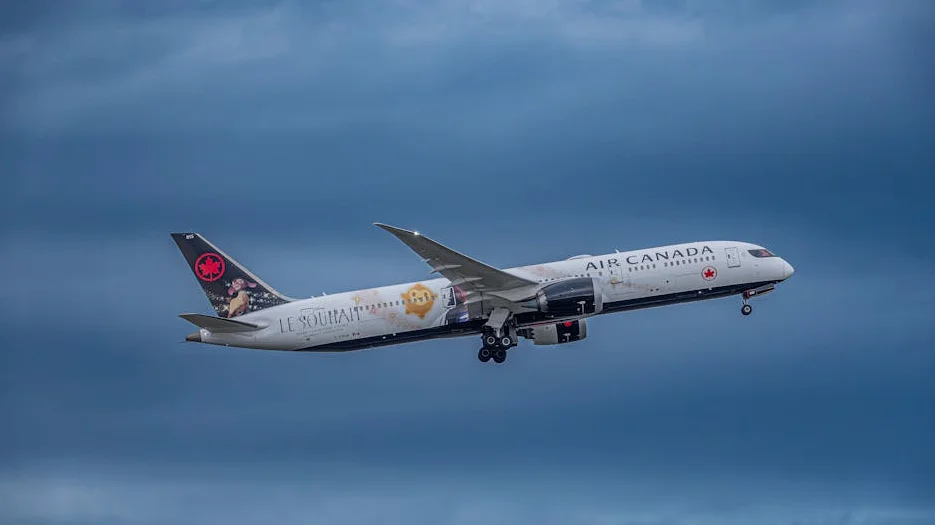
Two pilots died and at least 40 passengers were injured when an Air Canada Boeing 737 collided with a fire truck at LaGuardia Airport on Tuesday morning, according to Yahoo. The incident occurred during an emergency evacuation drill, with the fire truck attempting to access the aircraft’s rear door, while the plane was preparing to taxi to the gate after landing from a flight originating in Montreal.
Collision During Emergency Drill
The collision happened shortly after 8 a.m. local time, as the plane was still on the runway. According to airport officials. The fire truck had been summoned to conduct a routine emergency drill, a procedure that occurs regularly at major airports to prepare for real emergencies; the drill involves simulating a scenario where first responders must access the aircraft quickly in case of an emergency.
“The emergency drill is a standard part of airport safety protocols,” said a spokesperson for the Port Authority of New York and New Jersey. “These drills are conducted to ensure that all emergency services are prepared for any situation that might arise, and Unfortunately, this incident highlights the risks involved in these simulations.”
The fire truck was attempting to reach the rear of the aircraft when the collision occurred — the plane was still taxiing, and the fire truck was moving in the opposite direction. According to witnesses. The fire truck was flagged down by airport personnel, but it appears the communication or coordination between the two parties was insufficient.
Impact on Passengers and Crew
At least 40 passengers and two crew members were injured in the crash, with several requiring hospitalization; the two pilots who died were identified as Captain Marc-André Leclerc and First Officer Simon Giguère. Both were experienced pilots with over 10,000 hours of combined flight time.
“The pilots were among the first to respond to the emergency and were working to ensure the safety of everyone on board,” said Air Canada in a statement. “Our thoughts and prayers are with the families of the two pilots and with all those who were injured in this tragic incident.”
Air Canada confirmed that the flight had arrived from Montreal and was scheduled to depart for Boston. The plane was carrying 152 passengers and six crew members when the collision occurred, but Emergency services arrived quickly and evacuated the injured from the aircraft, with several passengers being treated on the tarmac before being transported to local hospitals.
Investigation and Safety Concerns
The National Transportation Safety Board (NTSB) has launched an investigation into the crash. The NTSB will be examining the communications between the fire truck and the airport control tower, as well as the procedures followed during the emergency drill.
“This incident is a serious safety concern and will be thoroughly investigated,” said NTSB Chair Jennifer Homendy. “We are committed to uncovering the root causes and ensuring that such an incident does not occur again in the future.”
The collision has raised concerns about the coordination between emergency services and airport operations. Similar incidents have occurred in the past, including a 2018 collision at Dallas/Fort Worth International Airport and a 2020 incident at Denver International Airport. These events have prompted calls for stricter safety protocols during emergency drills.
“We are working closely with the NTSB and other agencies to ensure that all necessary safety measures are in place,” said the Port Authority spokesperson. “This incident will be used as an opportunity to review and improve our emergency response procedures.”
As the investigation continues, the focus will be on determining whether the emergency drill was conducted in accordance with standard protocols. The NTSB is expected to release its preliminary findings within the next two weeks. In the meantime, Air Canada has suspended all emergency drills at its aircraft until the investigation is complete.
“We are committed to the safety of our passengers and crew, and this incident is a reminder of the importance of vigilance in all aspects of airport operations,” said Air Canada in a statement.






Comments
No comments yet
Be the first to share your thoughts