

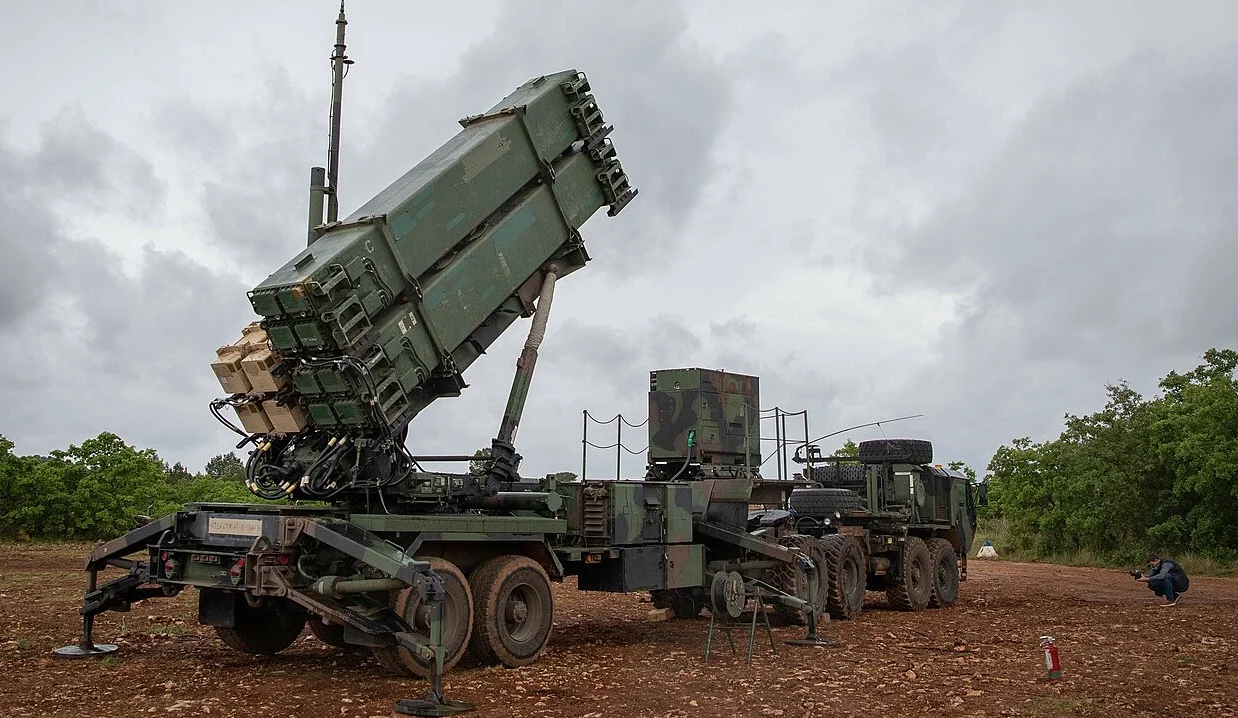
The U.S. has activated Patriot air defense systems in the Middle East as tensions with Iran continue to rise, signaling a heightened readiness for potential military action. The move comes as the USS Gerald R. Ford carrier strike group departs Crete heading toward Israel, marking the second U.S. aircraft carrier ready to support a potential strike on Iran. This buildup, the largest since the 2003 invasion of Iraq, involves hundreds of aircraft and dozens of warships stationed around the region.
Strategic Deployment of Patriot Systems
The MIM-104 Patriot Air Defense System, a key component of U.S. military preparedness, is being deployed to intercept potential Iranian missile and drone attacks. The system, which has been in service since 1981, is valued at approximately $1 billion per battery. It is equipped with PAC-2 or PAC-3 missiles, capable of intercepting targets at altitudes up to 75,000 feet and with a radar range of over 60 miles.
The last time the Patriot system saw extensive operational use in a conventional war was during the 1991 Gulf War, where it successfully intercepted Iraqi missiles. More recently, the system has been deployed to Ukraine, where it plays a critical role in defending against Russian attacks. The U.S. and its NATO allies have transferred several Patriot batteries to Ukraine, where they are used daily to intercept Russian missiles and drones.
Operational Mechanism and Effectiveness
The Patriot system is composed of three main components: the radar set, the control station, and the missile launcher. These components can be separated and dispersed to enhance survivability against enemy attacks. The radar set detects incoming threats, while the control station prioritizes targets based on their threat level. The missile launcher then fires PAC-2 or PAC-3 interceptors using hit-to-kill technology, which can engage a target within nine seconds of detection.
“The Patriot is by far the most lethal SAM system in the world, and there is no aeroplane in existence that is going to get away from it,” said a Navy aviator who participated in Operation Iraqi Freedom. “The missile itself is also designed to bias its impact on the nose of the aircraft so as to kill the pilot. If a Patriot is fired at your aircraft, you might as well eject, as there is nothing you can do to get away from it.”
Analysts say that the deployment of Patriot systems is a clear signal of the U.S. military’s readiness to defend against potential Iranian aggression. With Iran known to possess a large arsenal of ballistic and cruise missiles, the U.S. is taking precautions to mitigate the risk of retaliatory strikes following any potential military action.
Implications for Regional Stability
The deployment of the Patriot system has significant implications for regional stability. With the U.S. military presence in the region at its highest level since the Iraq War, the risk of a military confrontation between the U.S. and Iran has increased. The potential for a conflict could lead to a broader regional war, with significant humanitarian and economic consequences for the Middle East.
The situation is further complicated by the proximity of the U.S. carrier strike group to Israel, a key U.S. ally in the region. The presence of U.S. military assets in the area could provoke a response from Iran, potentially escalating tensions to an uncontrollable level.
Experts warn that the U.S. must carefully balance its military posture with diplomatic efforts to avoid an all-out war. The situation remains highly volatile, with no clear resolution in sight.
The U.S. military has not yet confirmed its plans for any potential strike on Iran. However, the deployment of Patriot systems suggests that the U.S. is preparing for all contingencies, including the possibility of an Iranian counterattack.
The situation highlights the ongoing challenges of maintaining regional stability in a highly complex geopolitical landscape. The potential for conflict remains a serious concern for policymakers and military planners alike.





Comments
No comments yet
Be the first to share your thoughts