

 Associated Press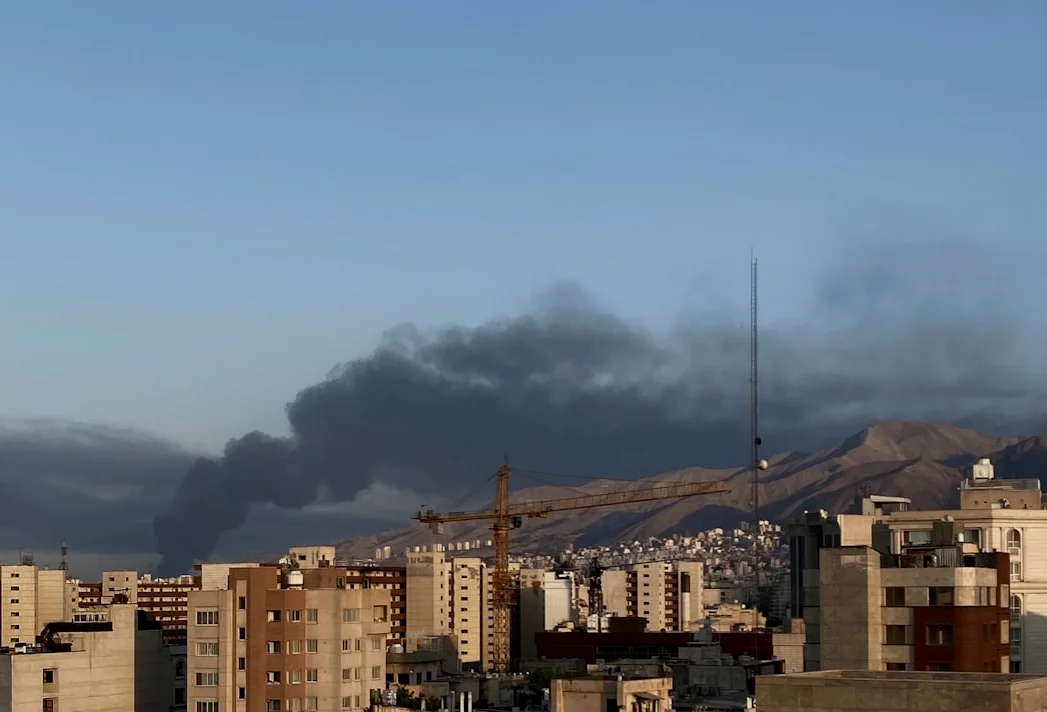
The U.S. and Israel’s attack on Iran on Saturday triggered widespread flight cancellations and airspace closures across the Middle East, leaving tens of thousands of travelers stranded and disrupting international travel. Airspace in Israel, Qatar, Syria, Iran, Iraq, Kuwait, and Bahrain was closed, while Oman’s Muscat International Airport shut down, according to flight tracking website FlightRadar24.
Stranded Travelers and Flight Cancellations
Major airlines operating in the region canceled hundreds of flights, and many passengers were unexpectedly rerouted to European airports or flown back to their departure points. Dubai International Airport, the world’s busiest for international flights, and Abu Dhabi’s Zayed International Airport reported more than 1,000 inbound and outbound flights canceled, according to FlightAware.
Cirium, an aviation analytics firm, estimated that at least 90,000 people change flights daily in airports in Dubai, Doha, and Abu Dhabi alone on Emirates, Qatar Airways, and Etihad Airways. However, the firm noted it is difficult to calculate the exact number of affected travelers globally.
Airlines issued waivers allowing affected passengers to rebook without additional fees. Jonathan Escott, a traveler in Newcastle, England, found his direct flight to Dubai canceled, leaving him and others stranded. ‘No one knows,’ Escott said. ‘Not Emirates, not anyone. No one has a clue.’
Regional and Global Flight Disruptions
At least 850 flights were canceled by Middle Eastern airlines, including Emirates, Flydubai, Gulf Air, Qatar Airways, and Kuwait Airways, according to Cirium. Flights en route to Tel Aviv and Dubai were diverted to Athens, Istanbul, or Rome, or returned to their departure points.
India’s civil aviation agency labeled much of the Middle East, including airspace over Jordan, Saudi Arabia, and Lebanon, as a high-security risk zone. Air India canceled all flights to Middle East destinations, and Turkish Airlines suspended flights to Lebanon, Syria, Iraq, Iran, and Jordan until Monday. Additional cancellations were expected, with many other airlines suspending flights into the region through the weekend.
U.S. carriers Delta Air Lines and United Airlines suspended flights to Tel Aviv at least through the weekend. Dutch airline KLM had already announced earlier in the week that it was suspending flights to and from Tel Aviv. Airlines such as Lufthansa, Air France, Transavia, and Pegasus canceled all flights to Lebanon, while American Airlines suspended flights from Philadelphia to Doha.
What Analysts Say
Airline industry analyst Henry Harteveldt said travelers should prepare for delays or cancellations for the next few days as the conflict evolves. ‘If you haven’t left home, chances are you won’t be leaving home if you’re supposed to travel to or through these destinations for at least several days, if not longer,’ he said.
Virgin Atlantic announced it would avoid flying over Iraq, which could lead to longer flight times for routes to and from India, the Maldives, and Riyadh. The airline also said it would carry extra fuel in case of sudden rerouting. British Airways suspended flights to Tel Aviv and Bahrain until next week and canceled flights to Amman, Jordan, on Saturday.
Airlines urged passengers to check their flight status online before heading to the airport. ‘Travelers should be very creative about how they get home,’ Harteveldt said, acknowledging the complexity of the situation.
The disruption comes amid heightened tensions following the U.S. and Israel’s attack on Iran, which lasted 12 days in June 2025. The current situation remains fluid, and it is unclear how long the flight disruptions will last.





Comments
No comments yet
Be the first to share your thoughts