

 Associated Press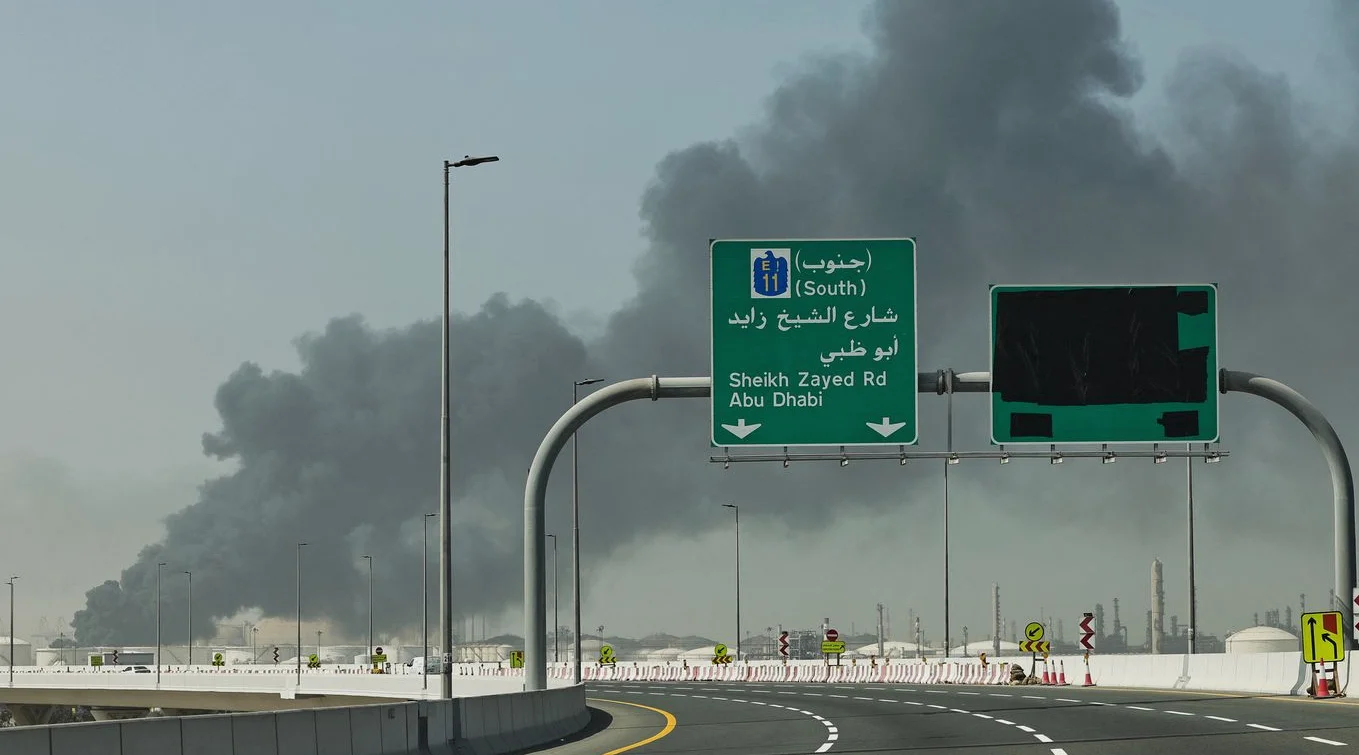
The United Arab Emirates is reportedly considering military action against Iranian missile sites, a move that would mark a major escalation in the regional conflict following a wave of Iranian attacks on Gulf nations. According to a source familiar with Emirati policy discussions, the UAE is evaluating active defensive measures against Iran, despite not having been directly involved in the war. The source noted that ‘the UAE is considering taking active defensive measures against Iran. Although it has not been involved in the war in any way, it has still endured 800 projectiles.’
Regional Conflict Spreads Beyond Israel
The war, which began with Iranian attacks on multiple Gulf states, has rapidly expanded beyond its initial scope. On the first day of the conflict, Iran launched missiles and drones at the UAE, Kuwait, Qatar, Bahrain, and Oman. By the second day, the attacks had spread to include Saudi Arabia. The unprecedented scale of the attacks has left the region reeling, with Gulf nations facing significant damage to infrastructure and civilian areas.
Among the hardest-hit countries, the UAE has been targeted the most, with reports indicating that Iran has launched 186 ballistic missiles at the UAE. Of those, 172 were intercepted, 13 fell into the sea, and one landed on Emirati territory. In addition, 812 drones were detected, with 755 intercepted and 57 making impact within the country. The attacks have resulted in three foreign nationals being killed and around 70 wounded.
The attacks have also had a significant impact on critical infrastructure. Debris from intercepted missiles ignited fires at Jebel Ali Port, one of the busiest ports in the Middle East. A drone strike hit a luxury hotel on Dubai’s Palm Jumeirah, drawing international attention to the growing threat posed by Iran’s missile program.
Iran’s Strategy and Regional Reactions
The attacks have not only caused immediate damage but have also shifted the geopolitical landscape in the region. Qatar suspended most of its natural gas production after the attacks, and an Iranian drone struck the U.S. embassy in Riyadh on Monday, raising concerns about the potential for further escalation.
Israeli officials believe Saudi Arabia may also take military action in response to the Iranian attacks, signaling that the conflict is no longer confined to a bilateral dispute. Anwar Gargash, foreign policy adviser to the UAE president, emphasized on X that Iran’s attacks against Gulf states were ‘a miscalculation and has isolated Iran at a critical juncture.’
Gargash further stated, ‘Your war is not with your neighbors, and this escalation only reinforces the narrative that Iran is the primary source of danger in the region and that its missile program is a constant source of instability.’
The UAE defense ministry has made it clear that it reserves its full right to respond to the escalation and take all necessary measures to protect its territory, citizens, and residents. The statement comes as the UAE faces mounting pressure to defend its interests against what it views as an existential threat from Iran.
Implications for Regional Stability
The conflict has turned into a sweeping regional crisis, pulling in countries that had previously sought to avoid direct involvement. The UAE’s potential military response could mark a turning point in the war, with far-reaching consequences for regional security and international relations.
Analysts warn that the situation remains volatile, with the potential for further escalation as Gulf states weigh their options. The UAE’s decision to consider striking Iranian missile sites could signal a shift in the region’s strategic posture, with other Gulf nations potentially following suit.
With the war entering its second week, the focus is now on what comes next. The UAE’s response will be closely watched by the international community, as the conflict continues to unfold with no clear end in sight.


Comments
No comments yet
Be the first to share your thoughts