

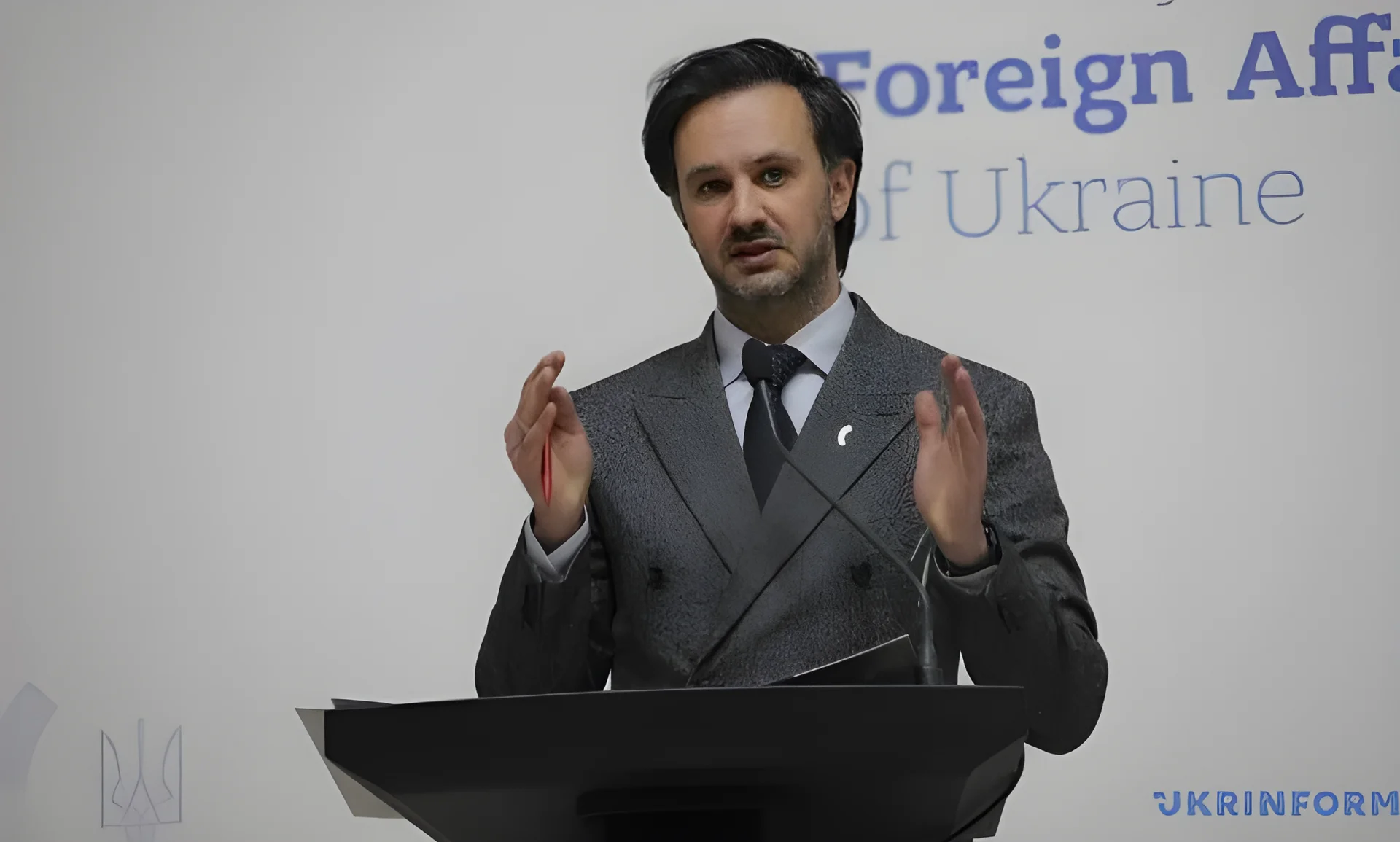
Ukraine has made a formal request for political, economic, and security support from Middle Eastern countries that have provided air defense assistance, according to a statement from the Ukrainian Foreign Ministry. The request was announced by Foreign Ministry spokesperson Heorhii Tykhyi during a press briefing, as reported by Ukrinform.
Expectations for Reciprocity
Tykhyi outlined four areas in which Ukraine expects support from Middle Eastern countries that have collaborated with Kyiv on air defense systems. These include strengthening political backing for Ukraine, supporting sanctions against Russia and Iran, expanding practical security and defense cooperation, and participating in Ukraine’s reconstruction and investment projects.
According to Tykhyi, the collaboration with Middle Eastern countries has already involved 11 nations that have sought Ukraine’s assistance in intercepting missiles and drones. The Ukrainian government is now emphasizing the need for these countries to provide reciprocal support in response to Kyiv’s aid.
“First, strengthening political support for Ukraine. Second, supporting sanctions policy against Russia and Iran. Third, expanding practical cooperation in security and defense. And fourth, participation in Ukraine’s reconstruction and investment projects,” Tykhyi said during the briefing. The statement reflects Ukraine’s growing emphasis on building mutually beneficial partnerships with regional allies.
Expanding Air Defense Cooperation
The collaboration between Ukraine and Middle Eastern countries in the area of air defense has intensified in recent months. President Volodymyr Zelensky previously stated that more than 200 military experts are currently deployed in the Middle East and Persian Gulf region, assisting in the defense against Iranian-made Shahed drones. Additionally, 34 specialists are prepared for deployment, according to Ukrinform.
These military experts are reportedly providing training and technical support to help Middle Eastern countries intercept incoming aerial threats. The presence of Ukrainian specialists in the region highlights the growing strategic relationship between Kyiv and Middle Eastern nations, particularly those facing similar security challenges from Iran.
Analysts suggest that Ukraine’s involvement in the region is not only a strategic move to secure its own air defense capabilities but also an opportunity to strengthen diplomatic ties with Middle Eastern countries. The mutual exchange of military and technical support could lead to broader security and economic cooperation in the future.
Implications for Regional Security and Diplomacy
The request for support from Middle Eastern countries comes amid a broader effort by Ukraine to build a global coalition of partners that share its stance on Russia’s invasion. The country has been seeking support from European and North American allies, as well as emerging partners in Asia and the Middle East.
Experts note that Ukraine’s strategy of offering military assistance in exchange for political and economic support is becoming a key element of its foreign policy. This approach has been tested in various contexts, including with countries in the Balkans and Eastern Europe, and now appears to be extending to the Middle East.
“This is a logical next step for Ukraine, given the increasing number of countries in the region that are facing similar security challenges from Iran,” said a regional analyst based in Istanbul. “By offering air defense assistance, Ukraine can build a network of allies that can provide it with the necessary support in return.”
The move could also have implications for the broader international community. If Middle Eastern countries agree to Ukraine’s requests, it could signal a shift in the region’s foreign policy priorities and open the door for more cooperation on global issues such as counterterrorism and regional stability.
However, the success of Ukraine’s initiative will depend on the willingness of Middle Eastern countries to commit to the requested support. Some nations in the region have been cautious about taking a strong stance against Russia due to their own economic and political considerations. Others may be more open to cooperation, particularly those that have been affected by Iranian aggression.
As the situation continues to evolve, Ukraine’s diplomatic efforts are expected to focus on engaging with Middle Eastern countries to build trust and ensure that its requests are met. The Ukrainian government has also indicated that it is preparing to present specific proposals for cooperation in the coming weeks.
“We are committed to building partnerships that are based on mutual benefit and shared security interests,” Tykhyi said during the briefing. “Our goal is to create a framework for long-term cooperation that supports both Ukraine and our partners in the region.”






Comments
No comments yet
Be the first to share your thoughts