

 BBC
BBC 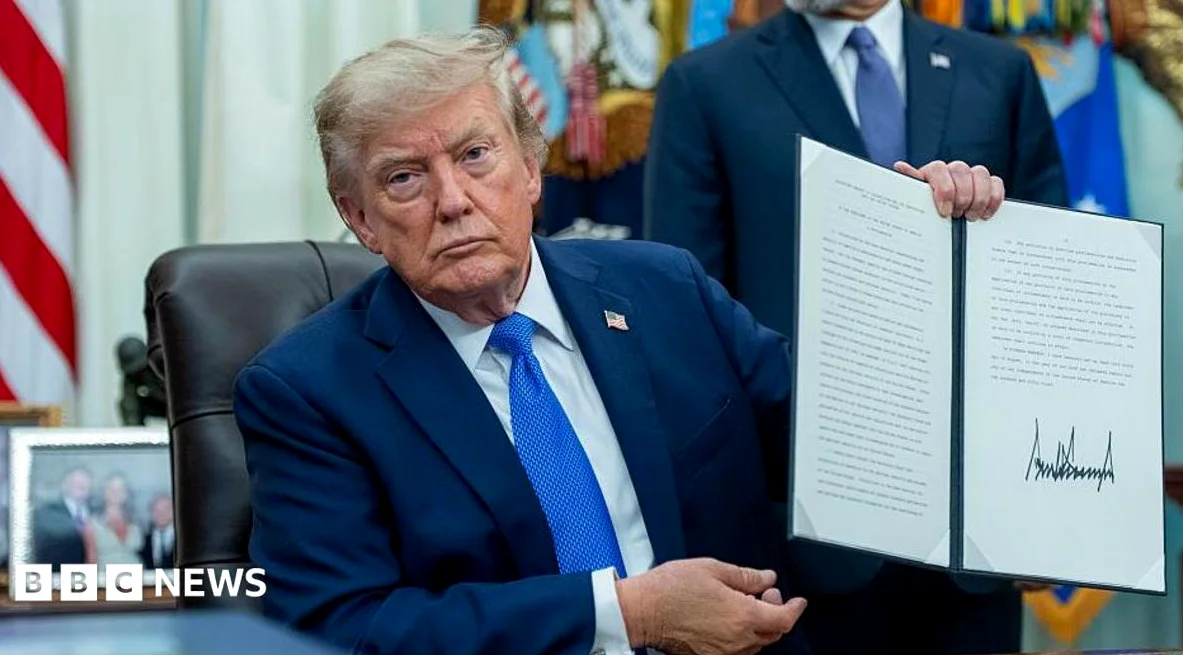
Expanding Definitions of Non-Citizens
On Thursday, the president signed two executive orders, one of which expands the existing definitions of non-citizens whose children are not eligible for birthright citizenship. This order specifically targets situations where one parent is a member of a foreign terrorist group, a foreign government employee, has attempted to gain citizenship through fraudulent means, or is living in U.S. territories where citizenship is not conferred by federal statute.
Birth Tourism Ban
The second executive order bans so-called birth tourism, the practice of pregnant mothers coming to the U.S. to give birth so that their babies will be citizens. Trump criticized the Supreme Court’s rejection of his previous bid to end the 150-year-old policy, stating, “This should have happened years ago, but we’re taking care of it now.”
According to Stephen Miller, homeland security advisor and White House deputy chief of staff for policy, the idea is that people come here pretending to be tourists. “The real reason they’re here is to have a child, to make that child an automatic citizen, (to) leave our country and then have a US citizen child,” he said, adding that those children then gain access to welfare benefits, the voting booth, and “all the other rights and privileges that belong solely to Americans.”
Miller stated that the president has the authority to ban birth tourism under a section of the Immigration and Nationality Act, which grants the president the power to set exceptions and limitations on who can enter the country. On one of his first back days in office in 2025, Trump signed an executive order that tried to end birthright citizenship as guaranteed in the 14th Amendment to the U.S. Constitution.
Legal Challenges and Criticism
A legal battle brought the case to the Supreme Court, which in June ruled that Trump’s 2025 policies could not stand and birthright citizenship remained the law. The decision was a major blow to Trump’s ongoing efforts to limit who can live, work, and become citizens in the U.S.
Trump described the Supreme Court’s decision as “a bad decision, very unfair decision,” while announcing the executive orders — “Our country suffers because of it, and we’re ending it in a different way,” he said.
Gabriel Chin, a professor at the University of California Davis’ School of Law, told the BBC that while parts of the order might hold up, other aspects “raise some serious constitutional questions.” He noted that the president does have some power to restrict people coming into the U.S. specifically for the purposes of having a child.
“But once it does happen, once a child is born in the United States, I don’t think the president has any power to decide that that child is not a citizen,” he said, adding that the issue was settled in the Trump administration’s recent loss in the Supreme Court. He called birth tourism a “drop in the bucket” against the millions of births in the U.S.
According to the Migration Policy Institute, a nonpartisan research group, the most expansive census-based estimate accounts for about 22,000 to 26,000 babies born in the U.S. from birth tourism every year. Government data, according to the institute, showed that there were 9,600 births to mothers with foreign addresses in 2024.





Comments
No comments yet
Be the first to share your thoughts