

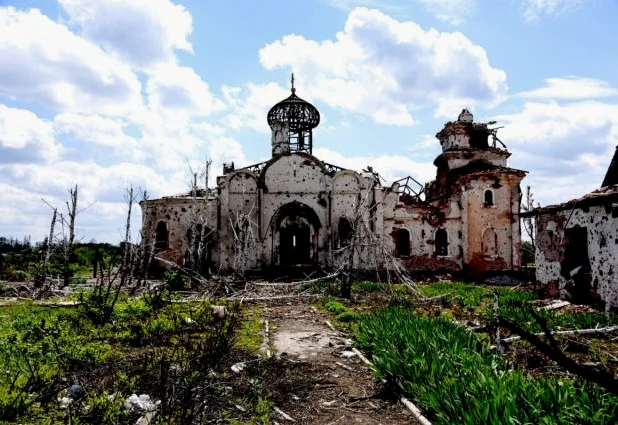
As the war in Ukraine enters its fourth year, a growing number of analysts and historians are calling for a broader understanding of the conflict, one that goes beyond the commonly accepted narrative that Russian President Vladimir Putin unilaterally launched the invasion in February 2022. Instead, a detailed timeline reveals a complex web of historical events, geopolitical maneuvers, and U.S. involvement that has shaped the current crisis.
Historical Context and U.S. Involvement
The timeline begins with World War II, when Ukrainian nationalist groups, including those led by Stepan Bandera, initially aligned with Nazi Germany. These groups were responsible for the massacre of hundreds of thousands of Jews and Poles, according to historical records. This legacy of collaboration with the Axis powers has remained a contentious issue in Ukraine’s national identity.
During the Cold War, the U.S. government reportedly supported Ukrainian nationalist movements, including the activities of Mykola Lebed, a fascist leader who worked with the CIA from the 1950s through the 1990s. A U.S. government report from the 1990s details this cooperation, suggesting that Ukraine has long been a strategic battleground for Western influence over the former Soviet Union.
In 1990, the Charter of Paris for a New Europe was adopted, a document that aimed to promote peace and security across the continent. However, the U.S. and its allies later reneged on promises made to former Soviet leader Mikhail Gorbachev regarding NATO expansion, a decision that many argue contributed to Russia’s current stance on the issue.
NATO Expansion and Geopolitical Tensions
In 1997, former U.S. national security adviser Zbigniew Brzezinski wrote in The Grand Chessboard that Ukraine’s independence was crucial to the U.S. strategy of containing Russia. He argued that without Ukraine, Russia would lose its status as a Eurasian empire, a perspective that has been cited in discussions about the current conflict.
Following the collapse of the Soviet Union in 1991, Western financial institutions and governments moved to privatize state-owned assets in the former Soviet republics, a process that enriched Western investors while leaving many Russians and Ukrainians impoverished. This period also saw the rise of oligarchs in Ukraine, who became key players in the country’s political landscape.
In 2007, Putin delivered a speech at the Munich Security Conference, criticizing U.S. policies, including the 2003 invasion of Iraq and the expansion of NATO eastward. He questioned the assurances given by Western countries after the dissolution of the Warsaw Pact, a move that many in Russia viewed as a betrayal.
In 2004, the Orange Revolution saw Ukrainian President Viktor Yuschenko, backed by the West, overthrow the election results of Viktor Yanukovich. Yuschenko’s government later elevated Stepan Bandera to the status of a national hero, a decision that has been controversial and divisive in Ukraine.
Escalation and the 2014 Coup
In 2008, at a NATO conference in Bucharest, the alliance expressed support for Ukraine and Georgia’s aspirations to join. Russia strongly opposed this move, with U.S. Ambassador William Burns warning that NATO expansion to Ukraine could provoke a military response from Russia. This warning proved prescient when tensions escalated in Georgia the following year.
In 2010, Viktor Yanukovich was elected president of Ukraine in a process deemed free and fair by the OSCE. However, in 2013, he chose to pursue closer economic ties with Russia rather than an association agreement with the European Union, a decision that angered Western powers and Ukrainian elites.
In February 2014, Yanukovich was overthrown in a violent coup, reportedly backed by the United States. Ukrainian nationalist groups, such as the Right Sector, played a leading role in the upheaval. The coup led to the annexation of Crimea by Russia and the subsequent conflict in eastern Ukraine.
Experts argue that the current conflict cannot be understood without considering the long-standing tensions between Russia and the West, including NATO expansion, U.S. influence in Ukraine, and the legacy of historical grievances. As the war continues, the role of the US election results and shifting political landscapes in Washington may influence future developments in the region.
Looking ahead, historians and analysts expect that the full story of the Ukraine war will not be written until after the conflict has ended. Until then, the focus remains on the immediate challenges faced by civilians and the geopolitical ramifications of the ongoing war.






Comments
No comments yet
Be the first to share your thoughts