

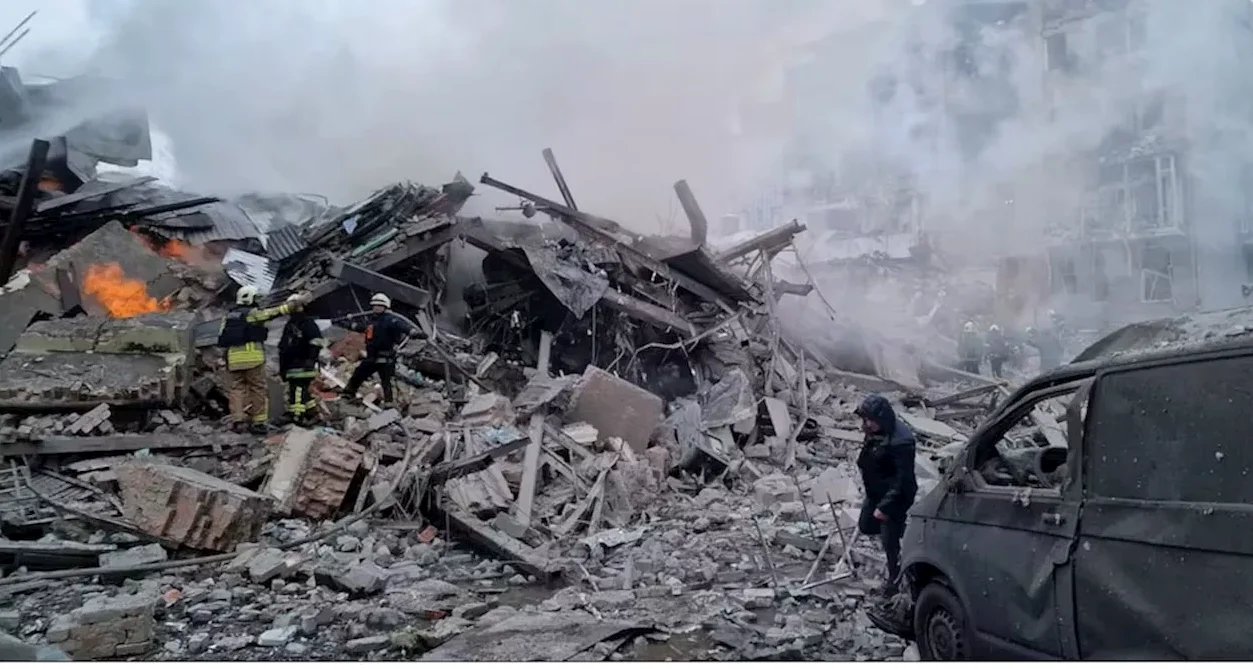
Rebuilding Ukraine’s economy will cost an estimated $588 billion over the next decade, according to a joint report by the World Bank, United Nations, European Commission, and the Ukrainian government. The assessment, released on Monday, marks a 12% increase from the previous year’s estimate, driven by a 21% surge in damage to energy infrastructure from 2024 to 2025. The report covers data from February 24, 2022, through December 31, 2025, and does not include the full impact of Russia’s intensified attacks in early 2026, which have left tens of thousands of Ukrainians without heat, power, and water during the coldest winter in decades.
The Cost of War
The report estimates that direct damage to Ukraine’s infrastructure has reached $195 billion, a nearly 11% increase from the prior assessment. This amount is more than double the damage reported in the first report in 2022. The housing, transport, and energy sectors have been the most affected. Housing alone accounts for $61 billion in damages, or 14% of the total housing stock, while transport infrastructure has suffered $40.3 billion in losses.
The energy sector, a primary target of Russian missile strikes and cyberattacks, has endured nearly $25 billion in damages. In some areas, citizens are experiencing electricity outages of up to 18 hours per day. The report also highlights socioeconomic losses at $667 billion, a 13% increase from last year, due to prolonged disruptions in economic activity, public services, and employment.
Economic Fallout
The war has taken a severe toll on Ukraine’s economy, with its GDP now 21% smaller in real terms than it was in 2021, before the invasion. If the conflict continues, Ukraine’s GDP growth is projected to be limited to around 2% in 2026. However, if a ceasefire is achieved by the end of the year, growth could rise to 4% in 2027 and 4.5% in 2028, according to the report.
Ukrainian Prime Minister Yulia Svyrydenko emphasized the scale of the reconstruction challenge, stating that the $588 billion estimate is nearly three times the country’s projected nominal GDP for 2025. ‘Amid unprecedented Russian attacks on energy infrastructure and homes across Ukraine this winter, our people show resilience, our entrepreneurs keep working. We still manage to recover fast and develop further,’ she said in a statement.
The Ukrainian government has already earmarked $15.25 billion for reconstruction efforts this year, while Ukraine and its partners have spent $20.3 billion since February 2022 on urgent repairs in housing and other sectors. The report notes that Ukraine could cover 40% of its growing reconstruction needs through the private sector if it implements reforms to attract investment in agriculture, industry, and tourism.
Human Cost and Refugee Crisis
The war has triggered the largest refugee crisis in Europe since World War II, with over 6 million Ukrainians living as refugees outside the country and 4.6 million more displaced within Ukraine as of December 2025. The conflict has also led to a significant decline in the population, with UN data showing that Ukraine now has 2.4 million fewer children than before the war.
Matthias Schmale, the UN humanitarian coordinator in Ukraine, stressed the importance of returning refugees, reintegrating veterans, and expanding women’s labor force participation to ensure the country’s long-term economic recovery. ‘Ukraine’s most critical asset is its people,’ Schmale said. ‘Recovery must be human-centered and community-based.’
Ukrainian President Volodymyr Zelensky has faced increasing pressure from US President Donald Trump to agree to a ceasefire that could involve concessions of territory captured by Russian forces. However, recent talks in Geneva failed to produce any breakthrough. The war, which will enter its fifth year this week, shows no signs of abating, with both sides continuing to engage in military operations.
The report highlights the need for a thorough and sustainable economic model to support Ukraine’s recovery. It warns that Ukraine’s current economic system, characterized by weak competition, a large informal economy, and a heavy state presence, will not generate the necessary business dynamism for long-term growth.




Comments
No comments yet
Be the first to share your thoughts