

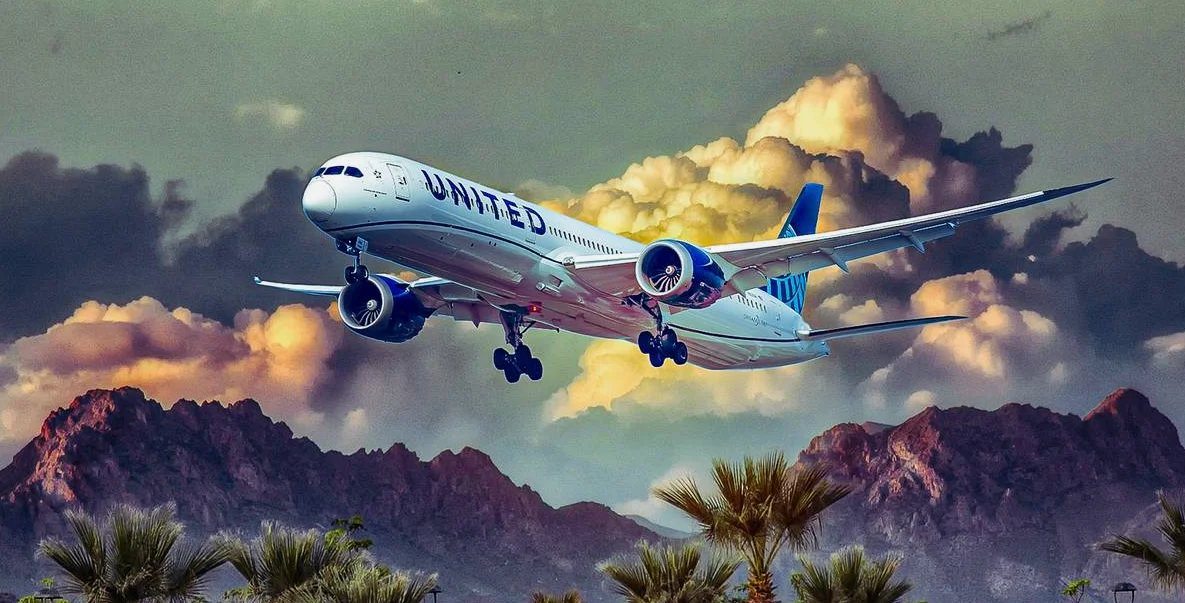
United Airlines, one of the largest carriers in the United States, operates a fleet of 12 Boeing 787-8s, 48 787-9s, and 21 787-10s. This decision to prioritize the Dreamliner over the Airbus A350 is largely due to its long-standing commitments from the 2010 merger with Continental Airlines and a strategic delay in acquiring A350s until 2030.
The Origins of United’s 787 Fleet
The roots of United’s 787 fleet date back to 2004, when Continental Airlines became the first airline in the Americas to order the Dreamliner. In 2007, it took another historic step by becoming the first American carrier to order the 787-9. Ray Conner, Boeing Commercial Airplanes’ Vice President of Sales in the Americas, noted at the time that the 787 would enhance Continental’s fleet with its unmatched fuel efficiency and flexibility for regional and long-haul operations.
Following the 2010 merger of United and Continental Airlines, United inherited a substantial order for Boeing 787s. The newly merged airline committed to honoring 11 787-8s and 14 787-9s. Glenn Tilton, who later served as the Non-Executive Chair of the combined company, stated that the merger would create a “world-class and truly global airline” with a “stronger, more efficient airline, both operationally and financially.”
A Strategic Delay in A350 Orders
United has placed an order for 45 Airbus A350-900s, but the airline has opted to delay receiving these aircraft until 2030. This decision is part of a broader strategy to retire its aging 777-200ERs and 767-300ERs. However, recent developments have raised questions about the timeline for these deliveries, as the A350 order faces potential delays.
The Boeing 787 and Airbus A350 are both considered flagship widebody aircraft by their manufacturers. Both are clean-sheet designs, offering significant improvements in operating costs and environmental impact compared to older models. The table below compares the 787-10 and A350-900, two aircraft with comparable capacity:
Characteristics
A350-900: Range 8,500 nautical miles, Cruising speed Mach 0.85, Maximum takeoff weight 624,000 lbs, Wingspan 64.75 m, Fuel capacity 42,000 US gal (168,000 L).
787-10: Range 6,330 nautical miles, Cruising speed Mach 0.85, Maximum takeoff weight 560,000 lbs, Wingspan 60.12 m, Fuel capacity 33,399 US gal (126,429 L).
The 787-10’s Unique Role in United’s Fleet
United is the only U.S. carrier currently operating the 787-10, which it uses primarily on transatlantic routes. The aircraft’s larger size allows for increased capacity, generating more revenue. The 787-10 also allows United to operate certain routes without needing to reposition its Boeing 777-200ERs.
United has 21 787-10s in its fleet and 48 787-9s. This is in contrast to Delta Air Lines, which has placed an order for the 787-10 but previously opted for the A350. Delta’s initial preference for the A350 was influenced by concerns about Boeing’s reliability and engineering quality following its merger with McDonnell Douglas.
A United Airlines 787-10 experienced mechanical issues in September 2025, forcing it to return to Tokyo Haneda shortly after takeoff. A spokesperson stated that the flight landed safely, and passengers deplaned normally at the gate. Similar issues were reported with an All Nippon Airlines 787, though both aircraft landed safely without casualties.
While such incidents are not uncommon in commercial aviation, they highlight the challenges that both Boeing and Airbus face with their newer aircraft. United’s continued reliance on the 787 is also influenced by its long-term fleet strategy, which includes retiring its aging 767 and 777 fleets by 2030.
United’s decision to stick with the 787 over the A350 reflects a complex interplay of historical commitments, strategic planning, and industry dynamics. As the airline continues to evolve its fleet, the choice between the Dreamliner and the A350 will likely remain a focal point in the ongoing competition between Boeing and Airbus in the widebody market.





Comments
No comments yet
Be the first to share your thoughts