

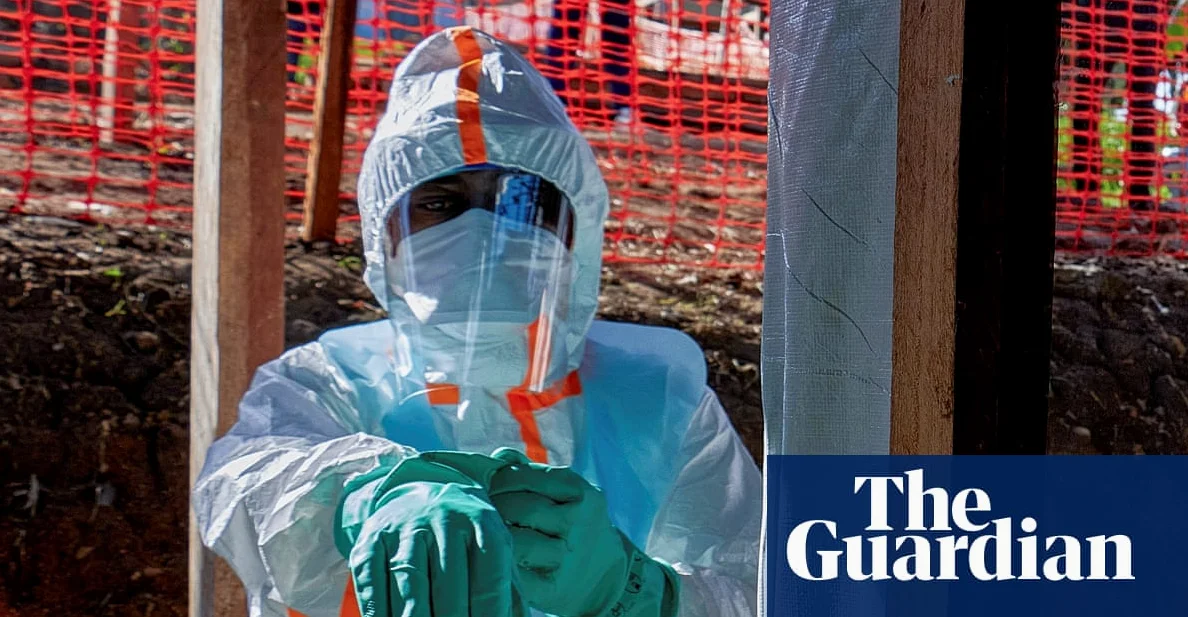
The World Health Organization (WHO) has called for community cooperation to contain the ongoing Ebola outbreak in the Democratic Republic of Congo (DRC), as the situation worsens due to limited funding and local resistance. WHO Director-General Tedros Adhanom Ghebreyesus warned earlier this week that the outbreak is ‘extremely serious and difficult’ and will ‘get worse before it gets better.’
Funding Cuts Hamper Response
The WHO is struggling to provide adequate support on the ground due to a lack of funding. The U.S. withdrawal from the organization—the largest contributor—has significantly reduced resources. Germany, now the largest donor, has also scaled back its contributions. Julia Stoffner, a health policy expert at Brot für die Welt, noted that the 2026 budget has cut funds for the German Ministry for Economic Cooperation and Development (BMZ), which supports health programs in the Global South. This decline, she said, has weakened health systems and allowed the outbreak to go unnoticed for a long time before it became apparent.
Josue Ibulungu, who runs the office, emphasized the difficulty of maintaining health programs with reduced support. The German Protestant aid organization Diakonie, which operates in Goma, the capital of North Tivu Province in eastern DRC, has also faced challenges due to the funding shortfall. CARE and Caritas have also called for more investment in aid and education to better manage the crisis.
Community Involvement Critical
Ghebreyesus stressed the importance of community cooperation during a visit to Bunia, the capital of Ituri province, which is at the epicenter of the outbreak. ‘We can stop this Ebola and anyone who has it can also recover. But the rule… is this thing is everybody’s business and every citizen should be involved,’ he said. However, local resistance has complicated efforts. Protesters have expressed concerns that restrictions on handling victims’ bodies violate burial traditions, a sentiment linked to at least three attacks on health centers.
There is no vaccine for the Bundibugyo strain of the virus, but early treatment can lead to recovery, according to Ghebreyesus. ‘If you come to health facilities when you have symptoms, you can get the support and recover,’ he said. As of his latest statement, five patients had recovered, and four were to be discharged soon, following the earlier discharge of another patient. The WHO has recorded 906 suspected cases and 223 suspected deaths in the DRC. Neighboring Uganda has confirmed nine cases and one death.
Conflict Complicates Relief Efforts
Ongoing conflict in the mineral-rich Ituri region has made it difficult to deliver aid. Ghebreyesus called for a ceasefire, stating, ‘No cause, no conflict, no grievance is worth condemning innocent people to death from a preventable disease.’ Brazil has also reported monitoring two patients in São Paulo and Rio de Janeiro for possible Ebola infection. A 37-year-old man from the DRC who exhibited symptoms such as fever has been classified as a suspected case in São Paulo.
The WHO continues to emphasize the need for international and local cooperation to control the outbreak. With funding cuts and local resistance, the situation remains fragile and requires urgent attention from both global and community actors.


Comments
No comments yet
Be the first to share your thoughts