

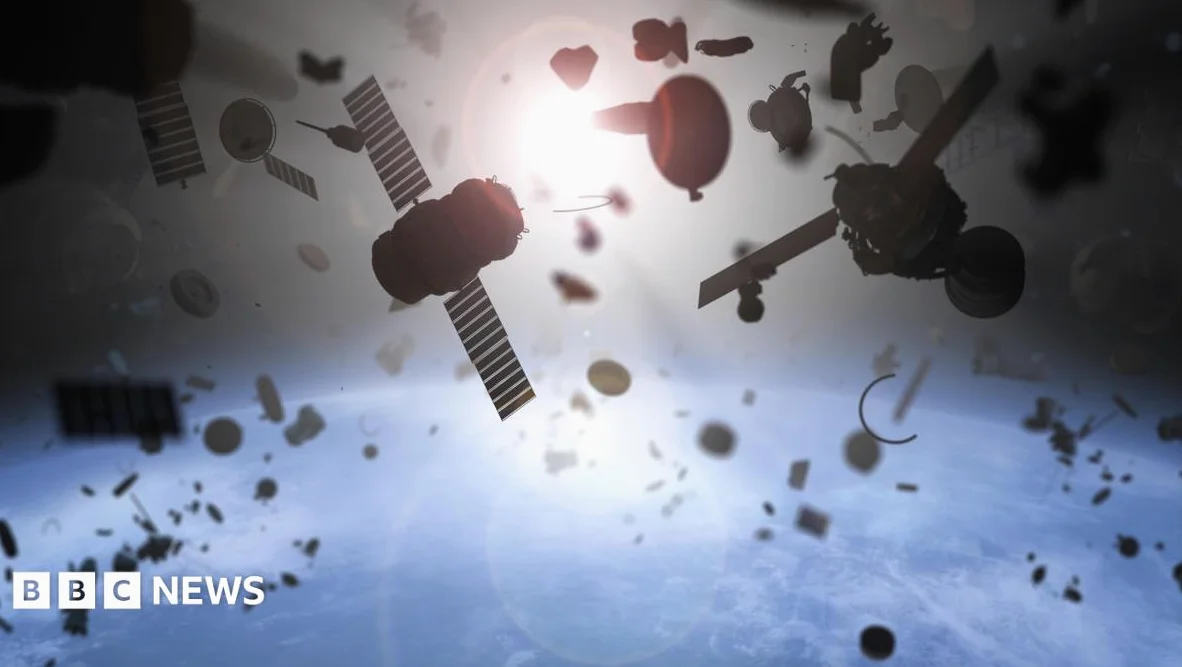
The U.S. military has officially confirmed the deployment of a weapon in Earth orbit,marking the first such acknowledgment in 59 years. According to a statement by Air Force Secretary Troy Mainke, the United States now possesses an ‘on-orbit space control weapon’ capable of defending military forces against hostile actions. This development, framed as a message to rivals China and Russia, raises concerns about a potential escalation in the militarization of space.
What Are These Space Weapons?
Details about the nature, number, or specific capabilities of the deployed weapons remain unclear. At a conference on air, space, and cyber issues, Mainke stated the U.S. now has ‘on-orbit space control weapons’ but did not specify when they were placed in orbit or what they are designed to do. The term ‘space control’ is central to the U.S. Space Force doctrine, which defines it as achieving space superiority—meaning the ability to operate freely while denying the same to adversaries, according to Victoria Samson of the Secure World Foundation.
Risks and Reactions
Experts warn that the militarization of space could lead to a new arms race, while the U.S. deployment may encourage other countries to pursue similar capabilities. Satellites provide critical military and civilian functions, including GPS, communications, and intelligence — If adversaries target these assets, the consequences could disrupt both military operations and infrastructure on Earth.
The U.S. has long emphasized its commitment to space dominance. Mainke said the deployment is a response to ‘evolving threats.’ However, he did not elaborate on what those threats specifically are or how the weapons will be used. Samson noted that the use of the word ‘weapons’ in the context of ‘space control’ is significant, as it signals a shift toward more aggressive posturing in orbit.
Context and Concerns
Separately, the U.S. has accused China of conducting secret nuclear weapons tests in violation of international norms. According to a report from Stiftung Wissenschaft und Politik (SWP), the U.S. has presented evidence at the United Nations suggesting China may have tested nuclear weapons in June 2020. While the seismic data is not conclusive, Beijing has not offered a satisfactory explanation; this alleged violation of the Thorough Nuclear-Test-Ban Treaty (CTBT) highlights growing tensions in global arms control efforts.
In this broader context of strategic competition, the U.S. space weapons announcement adds another layer of uncertainty; Germany and Europe, according to SWP, can only take limited action by promoting transparency and confidence-building measures. The lack of a unified international response to these developments could further destabilize the global security environment.





Comments
No comments yet
Be the first to share your thoughts