

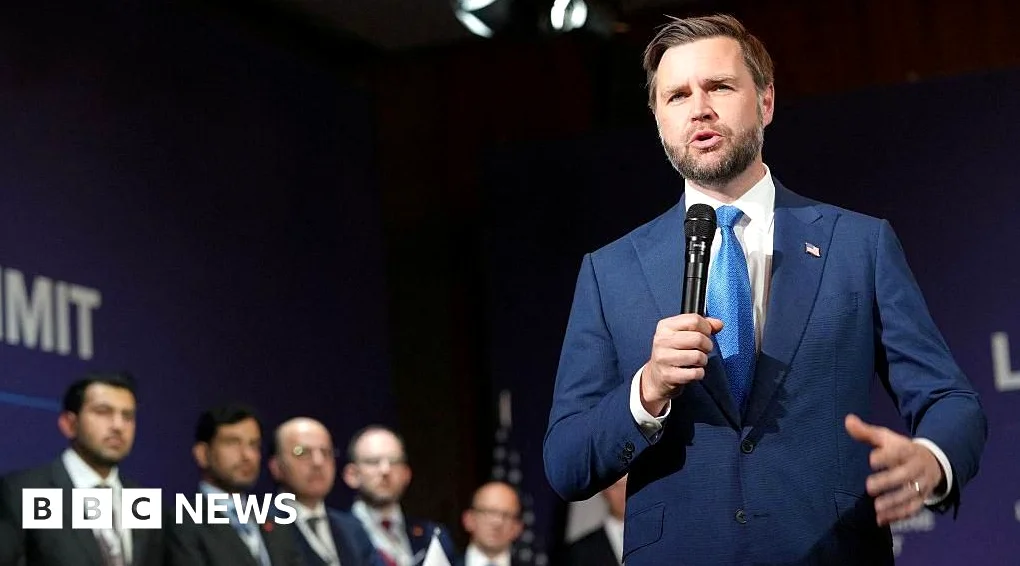
US and Iran began talks on an initial peace deal in Switzerland, with the US offering to transform relations if Iran abandons nuclear ambitions and regional instability. According to BBC, US Deputy President JD Vance said Trump had asked negotiators to “turn over a new leaf.” He added that if Iran’s leadership was willing to give up being a “driver of regional instability” and “nuclear weapons ambitions for the longer term,” then the US “is willing to fundamentally transform our relationship with that country.”
Reopening the Strait of Hormuz and Sanctions Relief
The initial deal includes Iran reopening the Strait of Hormuz, a critical shipping channel through which 20% of the world’s oil and natural gas travels. According to BBC, its effective closure had driven up fuel prices and disrupted the global economy. The US also agreed to lift a military blockade on ships going to and from Iranian ports. The agreement also includes a $300 billion plan for Iran’s “reconstruction,” and the US terminating “all types of sanctions” on it.
Crude Oil Prices Drop as Market Reacts
Crude oil and gasoline prices extended Monday’s sell-off, with crude falling to a 3.25-month low and gasoline dropping to a 2.25-month low. According to TradingView, the decline was driven by the US and Iran agreeing to end their war and reopen the Strait of Hormuz. Goldman Sachs cut its price forecast on Brent crude to $80 a barrel in Q4 of this year, down from $90 a barrel, and expects Persian Gulf crude exports to return to pre-war levels by the end of July.
According to Kpler, nearly 600 vessels are still stuck in the Persian Gulf awaiting departure through the strait, while hundreds more are waiting on the other side. Vortexa noted that if the US-Iran deal is completed and insurance companies are willing to insure the vessels, ballast tankers would increase, followed by the restart of crude production and then the restart of refineries.
Unexpected Postponement of Talks
Talks scheduled for this Friday in Switzerland between the United States and Iran to initiate the peace agreement have been postponed, according to Todo Alicante. Tehran has unexpectedly decided to delay the meeting until it receives assurances that the White House is serious about the pact. The suspension was so abrupt that it surprised Vice President JD Vance’s staff and a small group of journalists at Joint Base Andrews, on the outskirts of Washington, as they awaited boarding the plane.
The White House issued a statement announcing that JD Vance would not travel to Europe, although it hoped to “initiate technical talks as soon as possible.” According to sources close to the White House, the suspension will not affect the mission to reopen the Strait of Hormuz, which may also not be as swift as anticipated. The Guardian reveals today that at least 80 underwater mines need to be deactivated before creating the necessary security conditions for navigation in the strait.
Iranian foreign ministry spokesman Esmaeil Baqaei said in a statement that negotiations for a final deal were contingent on enforcing existing commitments—including stopping all military operations. Sunday’s talks were focused on implementation, he said.
Vance was joined by Trump’s son-in-law Jared Kushner and special envoy Steve Witkoff. For the Iranians, parliamentary speaker Mohammad Bagher Ghalibaf and Foreign Minister Abbas Araghchi arrived in Switzerland late on Saturday. The delegations were joined by Pakistan’s Prime Minister Shehbaz Sharif and the head of the country’s armed forces, Field Marshal Asim Munir.
According to TMGM, the broader cryptocurrency market feels the weight of strained US-Iran negotiations, pushing Bitcoin (BTC) below $63,000 on Friday. Israeli missile strikes over Lebanon bend the first clause of the peace agreement, raising concerns over the renewed passage through the Strait of Hormuz. Sellers hold control amid endless Middle East tensions.






Comments
No comments yet
Be the first to share your thoughts