

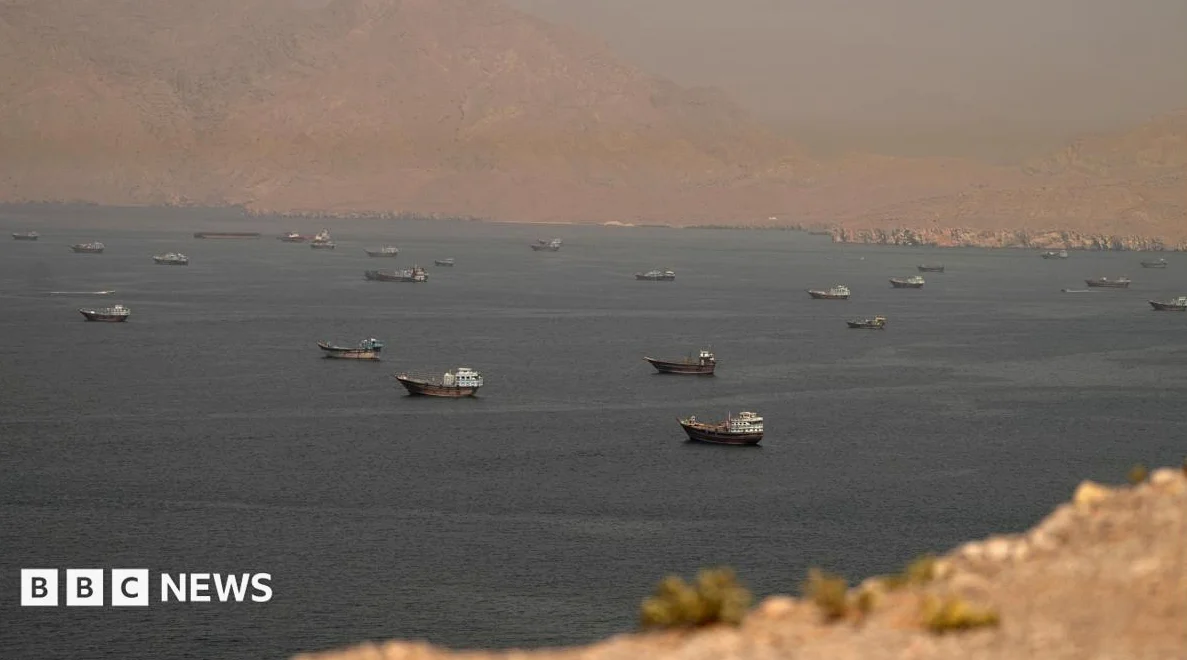
A Singapore-registered vessel. The Ever Lovely, was attacked near the Strait of Hormuz, raising concerns over a fragile ceasefire between the US and Iran, according to Al Jazeera — the UK Maritime and Salvage Organization (UKMTO) reported damage to the vessel’s bridge, but all crew were safe and no environmental damage was reported.
Accusations and Escalations
Iran has accused the US of violating a June 17 Memorandum of Understanding (MoU) signed to stabilize the region, while the US has reciprocated the accusations. The MoU was intended as a precursor to broader negotiations over the Strait of Hormuz, a critical global trade route. Iran had previously warned vessels to obtain permission before working through through the strait, but traffic has continued using alternative routes, according to Al Jazeera.
Iranian Parliament Speaker Mohammad Bagher Qalibaf accused the US of violating three key points of the ten-point plan, and suggested that a bilateral ceasefire was “pointless” under the current circumstances. Iranian Foreign Minister Abbas Araqchi called on the US to ensure Israel halts its attacks on Lebanon, stating, “The conditions for the ceasefire between Iran and the U.S. are clear and unambiguous: The U.S. must decide—either a ceasefire or the continuation of the war via Israel. They cannot have both,” according to Kronen Zeitung.
Regional and Global Reactions
The European Union is working with the Palestinian Authority (PA) to prepare for long-term governance in Gaza, with plans to train 3,000 Palestinian police officers, a number expected to rise to 13,000, according to dw.com. The US, however, insists that the PA must implement reforms before taking control, while Israel has rejected any PA role in Gaza’s future governance.
On Thursday, Israeli strikes in Khan Younis killed five people, according to Hamas-run health authorities in Gaza. The strikes were among the deadliest since the ceasefire began on October 10. Meanwhile, the EU’s chief diplomat, Kaja Kallas, emphasized that Palestinians should lead the rebuilding efforts in Gaza.
The United Nations Security Council approved a US peace plan that calls for a gradual Israeli withdrawal from Gaza, with a mixed force of trained Palestinian police and an International Stabilization Force to take over security. The plan aims to stabilize the region while avoiding further escalation.
Economic and Geopolitical Implications
Despite the flare-up in tensions, oil prices have declined on hopes that traffic through the Strait of Hormuz will continue to recover. However, Iran has reportedly suspended oil tanker traffic through the strait in protest against Israeli actions in Lebanon, contradicting the terms of the US-Iran agreement.
Iranian military officials have warned that oil tankers are being denied passage unless they coordinate with the Major Guards, according to Fars news agency. Only two oil tankers passed through the strait before the suspension, according to the same source.
Geopolitical tensions have also spilled into financial markets. Asian stocks opened lower, though progress in US-Iran peace talks eased concerns about a potential escalation, according to TMGM. Japan’s Nikkei 225 surged over 2% after Qatar and Pakistan announced a 60-day roadmap aimed at securing a final peace deal. South Korea’s KOSPI and Hong Kong’s Hang Seng, however, posted losses of over 1% for the day.
Military analysts warn that if hostilities escalate, the US could be drawn into direct conflict with Iran, particularly if American citizens or assets are targeted. The US has already withdrawn some personnel from the region and issued stern warnings to Iran regarding attacks on its interests.
Iran’s potential withdrawal from the ceasefire and the closure of the Strait of Hormuz have raised fears of a broader regional conflict. The United Nations nuclear watchdog has also warned that any final US-Iran deal would need strong safeguards to prevent Iran from developing a nuclear weapon.





Comments
No comments yet
Be the first to share your thoughts