

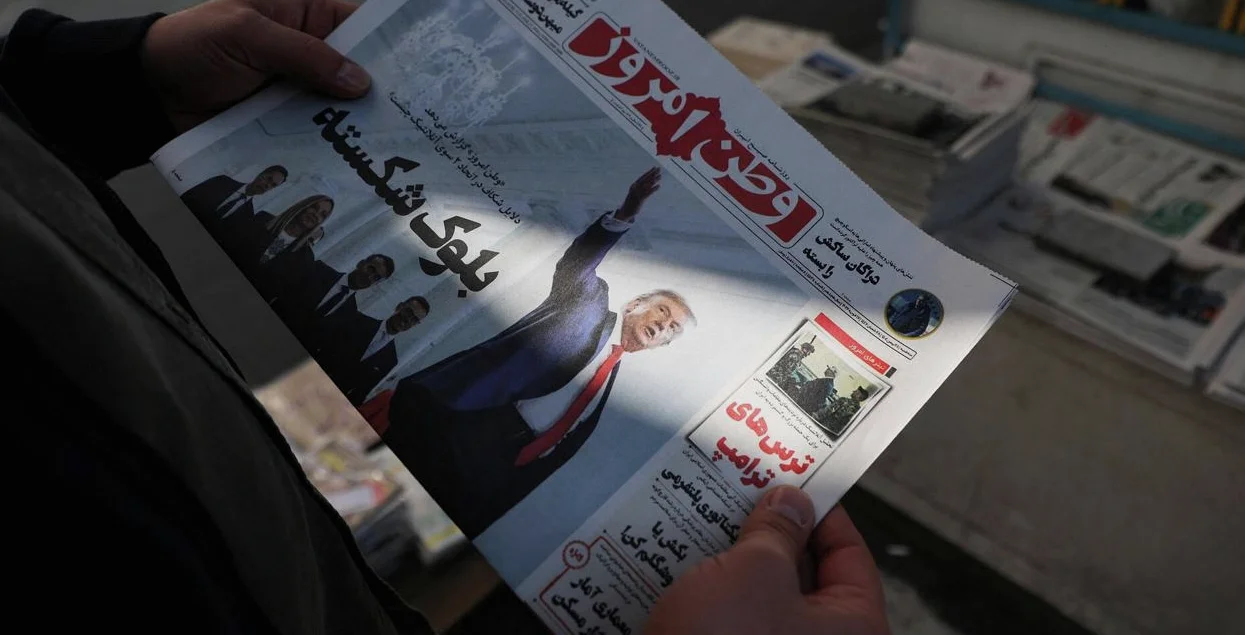
The United States has once again fallen into what analysts are calling the ‘old trap’—a pattern of military overreach and strategic misjudgment that has defined American foreign policy for decades. This time, the misstep involves a bold and controversial operation aimed at eliminating Iran’s supreme leader, a move that has drawn sharp criticism from both regional and global observers. According to CNN, the operation, described as a ‘lightning’ strike, has not only failed to destabilize Iran but has instead intensified the resolve of its people against foreign intervention.
Historical Parallels with Afghanistan
Experts warn that this operation mirrors the disastrous decisions made during the Afghan War, where the United States underestimated the resilience of the local population and overestimated the effectiveness of military force. In 2001, the US invasion of Afghanistan was justified on the grounds of dismantling al-Qaeda and capturing Osama bin Laden. However, the mission quickly expanded into a prolonged conflict that cost over $1 trillion and the lives of more than 2,300 American soldiers, with no clear end in sight. Today, with Iran, the pattern appears to be repeating itself, according to reports.
According to CNN, the White House’s assumption that a swift, high-profile strike would lead to the collapse of the Islamic Republic was misguided. Instead of triggering a regime change, the operation has only reinforced the unity of Iran’s leadership and its people. The Islamic Republic’s state system has not only survived but appears to be more entrenched than before. Analysts note that this is the second time in less than two decades that the US has attempted to destabilize a Middle Eastern state through military means, with both efforts resulting in protracted conflicts and growing regional tensions.
Strategic Miscalculations and Internal Challenges
One of the main miscalculations, according to analysts, was the belief that a ‘decapitating strike’ would be the decisive factor in toppling Iran’s leadership. However, the Iranian government has demonstrated a deep-rooted resilience, with a state apparatus that has evolved to withstand such shocks. The Islamic Republic has also cultivated a strong popular base, with the recent operation sparking a wave of national unity and resistance against foreign aggression.
Moreover, the United States does not have a viable candidate to replace Iran’s supreme leader, a position that has been central to the country’s political and religious structure. This lack of a clear successor has further complicated the situation for Washington, which is now faced with an even more determined adversary. The absence of a diplomatic alternative has left the US in a difficult position, with no clear path forward other than continued military engagement, which is proving to be both costly and ineffective.
According to one anonymous US official, the administration had hoped that the operation would serve as a deterrent to Iran’s nuclear ambitions. However, the opposite has occurred, with Iran now more unified in its stance against foreign interference. The official added that the administration is now re-evaluating its approach to Iran, though no concrete plans have yet been announced.
Escalating Regional Tensions and Global Implications
The operation has also raised concerns among regional powers, including Russia and China, who have expressed support for Iran’s stance. The Russian Foreign Ministry, in a statement, called the US action ‘reckless’ and warned that it could lead to further destabilization in the region. China, meanwhile, has urged all parties to exercise restraint and return to diplomatic channels.
Analysts warn that the US’s repeated attempts to use military force in the Middle East have not only failed to achieve their goals but have also created long-term consequences for global stability. The cost of these operations, both in terms of human lives and financial resources, has been immense. According to the Congressional Research Service, the US has spent over $1.5 trillion on its military presence in the Middle East since 2001, with no lasting peace or security as a result.
The current situation with Iran is expected to have far-reaching implications, particularly in terms of regional security and the future of US foreign policy. Analysts suggest that the administration may be forced to reconsider its approach to Iran, with a potential shift toward diplomacy and economic engagement. However, with the recent operation having already escalated tensions, any such shift is likely to be slow and difficult.
According to a report from the Institute for the Study of War, the Iranian military and intelligence services have been strengthening their positions in recent months, with increased coordination among various factions within the country. This has led to a more unified and determined resistance to foreign intervention, a development that has been largely underestimated by the US.
The next few months will be critical in determining the outcome of this crisis. The US is expected to make a decision on whether to continue with its current strategy or to explore alternative approaches. Meanwhile, Iran is likely to continue its efforts to consolidate power and strengthen its position in the region. The international community is watching closely, with many hoping that a diplomatic resolution can be reached before the situation escalates further.





Comments
No comments yet
Be the first to share your thoughts