

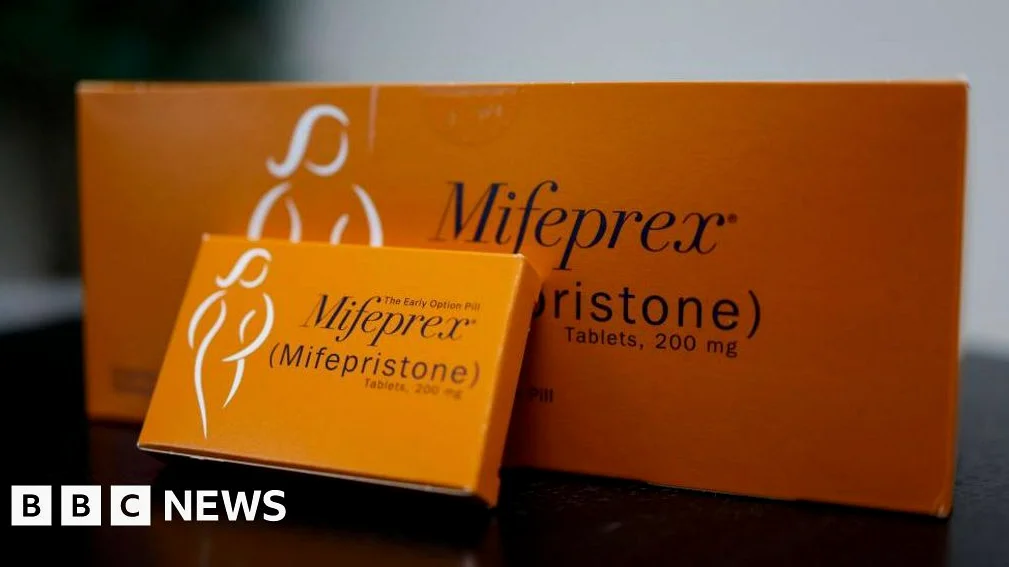
The US Supreme Court has temporarily restored access to the abortion pill mifepristone, blocking limitations imposed by a Louisiana court, though the ruling, issued on Thursday, blocks those restrictions while litigation plays out. Access to the pill will likely remain until the lawsuit is decided, which could happen next year, according to BBC — Abortion pills are the most common method of terminating pregnancies in the US — especially in states where abortion is banned.
Legal Dispute Over Mifepristone
The state of Louisiana sued the Food and Drug Administration (FDA) last October in an effort to prevent delivery of mifepristone, while Louisiana argued that nationwide postage of the drug interfered with the state’s own abortion ban. In 2023. The FDA allowed doctors to send pills without seeing patients in person, giving women the ability to receive the pills by mail or at a pharmacy through telemedicine.
Earlier this month. An appeals court temporarily reinstated a requirement that abortion pills be obtained in person. “Every abortion facilitated by FDA’s action cancels Louisiana’s ban on medical abortions and undermines its policy that ‘every unborn child is a human being from the moment of conception and is, therefore, a legal person,’” the appeals court wrote in that order. Two mifepristone manufacturers then asked the Supreme Court to weigh in while they prepared to bring an emergency case before the court.
Supreme Court Ruling and Dissents
The ruling, which is called a stay, issued on Thursday was part of the court’s emergency docket and came with no reasoning attached. It will remain in place until the justices decide whether to hear the manufacturers’ case. Justice Clarence Thomas and Samuel Alito dissented. According to SCOTUSblog, Justice Samuel Alito had last week temporarily put the lower court’s order on hold until 5 p.m. EDT on Monday to give the justices time to consider a request from two companies that manufacture mifepristone.
Alito extended that hold until Thursday at 5 p.m. Thursday afternoon’s order by the court, which was not sent to reporters until 5:26 p.m., extended that pause once again, and allows mifepristone to continue to be sent through the mail while litigation continues in the lower courts. Alito also dissented, calling the court’s order “remarkable,” and he contended that “[w]hat is at stake is the perpetration of a scheme to undermine our decision in Dobbs v. Jackson Women’s Health Organization,” the court’s 2022 decision overturning the constitutional right to an abortion recognized in Roe v. Wade.
Impact on Access and Provider Responses
The majority of abortions in the US are obtained through medications, usually a combination of mifepristone and a second drug, misoprostol. The availability of those drugs has blunted the impact of abortion bans that most Republican-led states have sought to enforce since a 2022 Supreme Court ruling that overturned Roe v. Wade, according to ABC7 Los Angeles. Louisiana sued to restrict access to mifepristone, asserting that its availability undermined the ban there. Some Democratic-led states have laws that seek to give legal protection to those who prescribe the drugs via telehealth to patients in states with bans.
Alito’s order will remain in effect for another week while both sides respond and the court more fully considers the issue. Manufacturers of mifepristone filed emergency appeals asking the Supreme Court to step in. Kristan Hawkins, president of the anti-abortion group Students for Life, decried the decision. “Pill pushers receive every benefit of the doubt, including today, as Justice Alito allows pill traffickers and big pharma to operate temporarily while arguments are sent to the Court,” she said in a statement.
After Friday’s ruling from the appeals court, some groups that prescribe abortion pills by telehealth had planned to switch to misoprostol-only regimens. Dr. Angel Grow, founder of The Massachusetts Abortion Access Project, said her organization was preparing to send misoprostol only on Monday afternoon but was able to switch back. “Regardless of what happens with this regulatory issue, we and other groups will continue to provide high-quality abortion care to patients in all 50 states,” she said.






Comments
No comments yet
Be the first to share your thoughts