

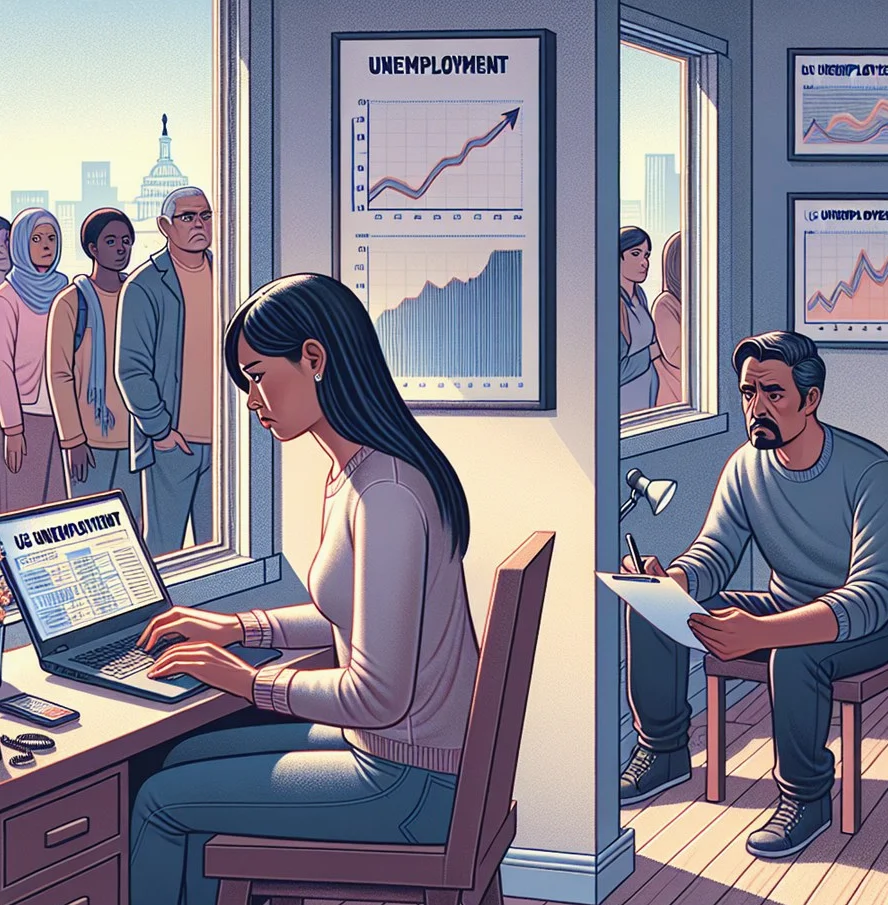
WASHINGTON — Initial claims for unemployment insurance dropped sharply last week, easing some pressure on a U.S. job market shadowed by Federal Reserve worries. The Labor Department reported Thursday that new filings fell 23,000 to 206,000 for the seven days ended February 14. Economists had expected a milder decline around 217,000.
That figure marks the lowest level since mid-December. It signals resilience amid broader economic jitters. Continuing claims, a proxy for the number of people receiving benefits, ticked up slightly by 7,000 to 1.89 million for the week ended February 7, the most recent data available. Officials said the increase reflects ongoing hurdles for workers still job hunting after layoffs.
Federal Reserve minutes from the January meeting, released earlier this week, paint a more cautious picture. Policymakers noted steady job gains, mostly in healthcare and related fields. Yet they flagged risks from softening hiring demand across other sectors. ‘A number of participants commented that labor market conditions could deteriorate more quickly than anticipated,’ the minutes state.
Immigration restrictions and looming import tariffs add fresh headwinds. Businesses face tighter labor supplies, according to analysts. Recent college graduates bear much of the brunt. Entry-level hiring has slowed in manufacturing and construction, where tariff threats loom large. A report from the National Association for Colleges Employers projects a 2.6% drop in starting salaries for the class of 2024 compared to last year.
The labor market’s unexpected strength comes as the Fed holds interest rates steady at 5.25% to 5.50%, the highest in two decades. Chair Jerome Powell has stressed the need for more evidence of cooling inflation before cuts. January’s jobs report showed nonfarm payrolls rising by 353,000, well above expectations. Unemployment held at 3.7%, near historic lows.
Still, cracks appear. Job openings dipped to 8.75 million in December, per separate Labor Department figures. The quits rate, a measure of worker confidence, fell to 2.1%. These trends suggest employers are growing choosier. Healthcare added 83,000 jobs last month alone, buoyed by aging demographics. Government hiring contributed another 74,000 positions.
Tariffs proposed by former President Donald Trump, should he return to office, could hit imports from China and Mexico hardest. Economists at Oxford Economics warn of 100,000 job losses in trade-exposed industries. Immigration policies under the Biden administration have curbed legal inflows by 40% since 2021, tightening the workforce pool. Construction and agriculture feel the pinch most acutely.
For now, the claims data offers a breather. Wall Street reacted mildly, with the Dow Jones Industrial Average up 0.3% Thursday. Bond yields eased slightly. Investors now eye Friday’s consumer sentiment report from the University of Michigan for clues on spending power.
Labor Secretary Julie Su hailed the numbers in a statement. ‘Despite global uncertainties, American workers continue to show strength,’ she said. Critics argue the Fed’s vigilance remains warranted. A Brookings Institution analysis predicts moderate cooling through mid-year, with unemployment possibly climbing to 4.1% by December.






Comments
No comments yet
Be the first to share your thoughts