

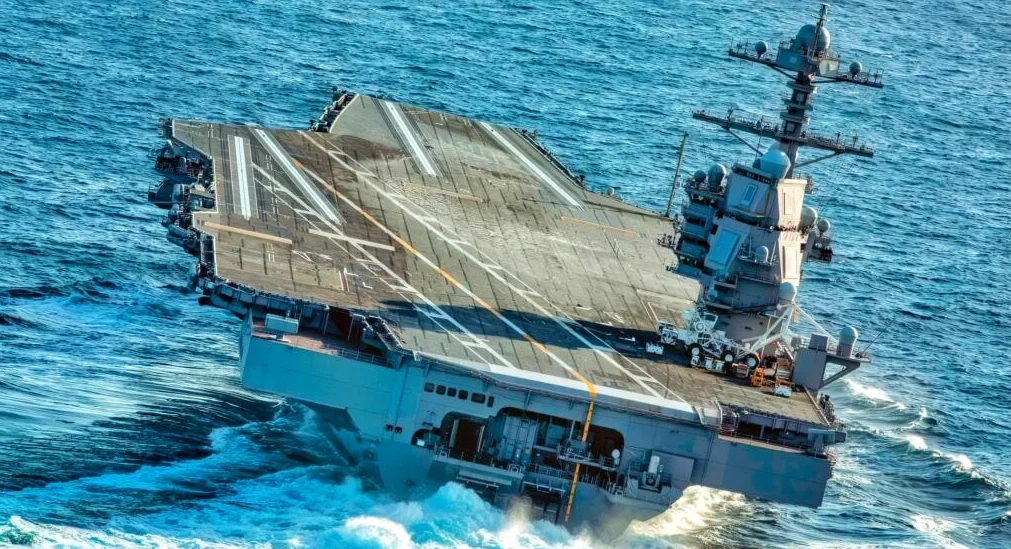
The USS Gerald R. Ford (CVN-78) is on its way to Souda Bay, Crete, to undergo emergency repairs after a fire broke out in the ship’s aft laundry facility on March 12, 2026. The incident, which displaced more than 600 sailors and forced the Navy to airlift 1,000 mattresses from the future USS John F. Kennedy (CVN-79), highlights the challenges of maintaining one of the most advanced warships in the U.S. fleet.
The Fire’s Aftermath and Immediate Response
The fire, which lasted several hours, required extensive damage control efforts and disrupted operations across the ship. According to a senior U.S. official, the Ford is set to spend more than a week at the U.S. Navy base on Crete for pierside repairs. The fire originated in the aft laundry, a critical space for maintaining the ship’s living quarters, and the resulting smoke damage affected berthing areas, forcing the removal of nearly all the mattresses aboard the ship.
Over 200 sailors were treated for smoke inhalation and returned to duty, while one sailor was evacuated after sustaining an injury during the damage control effort. Two others were treated for lacerations. Although the fire did not result in any fatalities, the incident has raised concerns about the safety and resilience of the ship’s crew, particularly during a 260-day deployment as part of Operation Epic Fury.
Operational Impact and Repair Challenges
Despite the fire, the USS Gerald R. Ford remains operational in the Red Sea, continuing to support U.S. Central Command’s tasking under Operation Epic Fury. A spokesperson for the U.S. 5th Fleet confirmed that the ship’s crew is inspecting and overhauling affected spaces, with an investigation into the fire’s cause ongoing.
According to a Pentagon official, the fire resulted in the loss of several berthing spaces and over 100 racks (beds), prompting an immediate plan to acquire replacement cots. The official praised the “resiliency and mental grit of our sailors” in ensuring the ship continues its mission despite the setbacks.
The repair timeline of more than a week may seem optimistic, but it reflects the urgency of the ship’s current operations. Unlike routine maintenance procedures such as refueling and complex overhaul (RCOH), which can take three to six years, the Navy must act swiftly to ensure the Ford remains combat-ready in the high-tempo environment of the Red Sea.
The Symbolism of the Mattress Replacement
The removal of 1,000 mattresses from the future USS John F. Kennedy, the next Ford-class carrier, shows the interconnectedness of the Navy’s fleet operations. The Kennedy, currently under construction, is not yet commissioned, yet its resources were called upon to support the Ford’s emergency needs. This move highlights the logistical challenges of maintaining readiness across multiple vessels simultaneously.
“The ship’s force is inspecting and overhauling affected spaces, and the cause of the fire is under investigation,” a U.S. 5th Fleet spokesperson said. “The ship continues to operate in the Red Sea, accomplishing U.S. Central Command tasking in support of Operation Epic Fury.”
The incident has also sparked discussions about the vulnerabilities of modern warships, particularly in terms of fire safety and the ability to sustain long deployments. The Ford, which has already been involved in multiple combat operations, is now facing a logistical and psychological challenge that could affect the morale of its crew.
As the Ford prepares to dock at Souda Bay, the Navy faces the task of not only repairing the physical damage but also addressing the broader implications for crew welfare and operational readiness. The fire has served as a stark reminder of the risks associated with maintaining one of the most technologically advanced warships in the world.
With the Ford’s current deployment still ongoing, the Navy must balance the need for immediate repairs with the demands of its strategic mission in the region. The coming weeks will be critical in determining how quickly the ship can return to full operational capacity and what lessons can be drawn from this incident to prevent future occurrences.





Comments
No comments yet
Be the first to share your thoughts