

 BBC
BBC 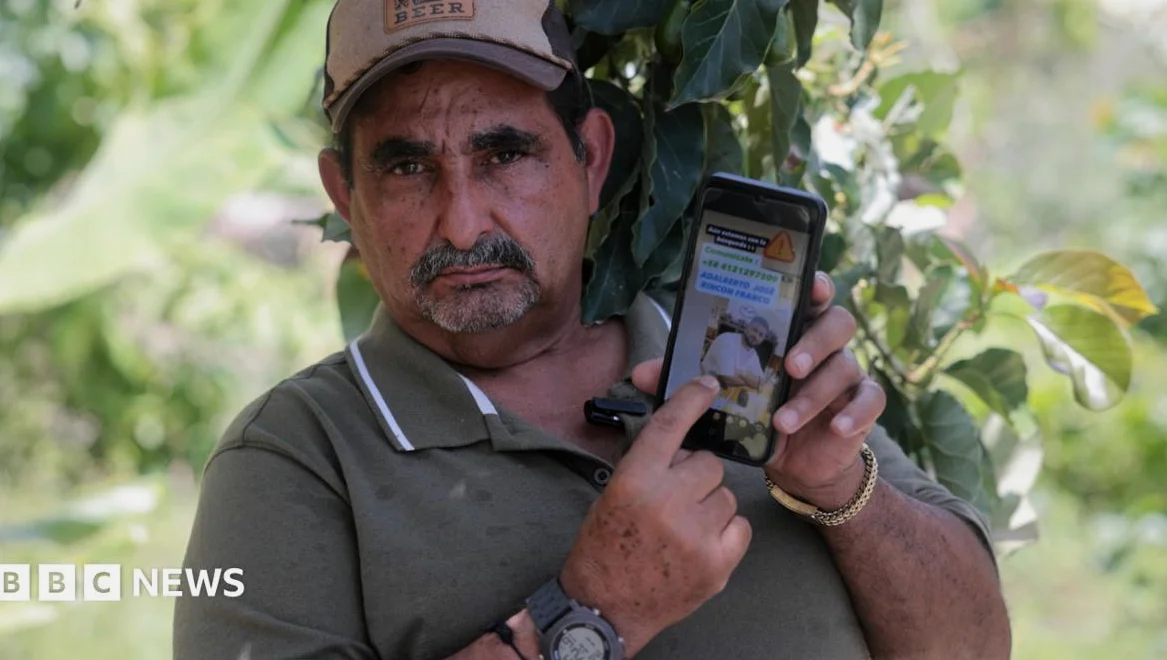
Abelardo Rincón, a 23-year-old Venezuelan, spent six years building a life in the US state of Georgia, working in a car dealership and preparing for the birth of his daughter, before being detained under President Donald Trump’s immigration policies.
Deportation and Tragedy
Rincón’s parents and pregnant wife waited anxiously for news during his detention before he was deported last month along with over 140 other Venezuelans, as he arrived in Venezuela on 24 June and, while still in custody, called his family in Atlanta to inform them of his return.
Rincón and other deportees were housed in a hotel near the coast. Hours later, twin earthquakes devastated the country, killing at least 2,200 people, injuring more than 10,000, and leaving 50,000 missing, according to UN figures.
Rincón, along with several other deportees from Flight 164, was among the missing. Families struggled to cope with the rapid succession of events: arrest, detention, deportation, repatriation, and finally, a natural disaster.
US Immigration Policies and Deportations
The Department of Homeland Security (DHS) stated that the flight had safely reached Venezuela and that all deportees had been returned home. A DHS spokesperson told the BBC, “When an individual is no longer in ICE custody, ICE is no longer responsible for them.” It remains unclear if the deportees were sent back for crossing the border illegally or for other reasons.
Flight 164 reportedly included 19 women and seven children. Upon arrival, they underwent medical exams and received documentation before being housed at Hotel Santuario La Llanada in La Guaira. The area was among the hardest hit by the earthquakes, with widespread damage and collapsed buildings.
Many deportees, including Rincón, had contacted their families to confirm their return to Venezuela before the earthquakes hit. Rincón’s grandfather, Jose Rincón, searched for his grandson among at least 200 bodies at a Caracas morgue and attempted to visit the destroyed hotel where his grandson was staying, but access was denied by Venezuelan authorities.
Survivors and Continued Uncertainty
Darwin Eliecer Serrano Lopez, 35, called his cousin at 05:32 local time to say he had returned to Venezuela after four years in the US. The first earthquake struck less than half an hour later. His cousin, Paola Chacón, said the family had searched for nearly a week without any sign of him. Chacón has resigned herself to the possibility that her cousin is dead and vowed to stay until she can bring his body home.
Lisbeth Portillo, 58, was among the survivors who were trapped in the collapsing hotel. She described the chaos and the desperate calls for help. “I saw the woman next to me start to fall… they were all screaming for help,” she told the Associated Press. “I was born again – God gave me a second chance.”
Anderson Daniel Salcedo, 22, was found at Caracas’s university hospital after spending nearly two days trapped under rubble. He had lived in the US for three years before being deported. His legs were amputated due to the extent of his injuries. His grandmother, Marlene Lozano, expressed gratitude for his survival, even though he would never be the same again.
Other families, like those of Daniel Alejandro Nunez, 28, and Darwin Serrano Lopez, continue to search for answers. Mildrey Sarazo, wife of Darwin Serrano Lopez, had not seen her husband in three years and still had not told their daughters about the situation. She was waiting for confirmation and the return of her husband’s body before she could proceed with burial plans.
The Venezuelan government has offered a hotline for the public to call for information, but access has been limited in the aftermath of the disaster. The families of the deportees, many of whom had already been separated for years, now face the uncertainty of whether their loved ones are alive or among the missing.






Comments
No comments yet
Be the first to share your thoughts