

Virginia is expanding access to maternal mental health services and cervical cancer screenings, targeting rural and underserved communities. The state’s new initiatives aim to reduce disparities in healthcare access and improve outcomes for pregnant and postpartum individuals, as well as women in Southwest Virginia.
Legislation Mandates Maternal Mental Health Coverage
Del. Margaret Franklin, D-Prince William County, introduced legislation during the current General Assembly session that requires health insurance carriers to cover maternal mental health screenings. The bill mandates coverage for at least one screening during pregnancy and one within the first six weeks after birth, as well as additional postpartum screenings when clinically necessary.
In addition, the legislation prohibits insurers from imposing prior authorization requirements or step therapy protocols for prescription medications used to treat maternal mental health conditions. The House passed the bill on Feb. 17, and it has been referred to the Senate Commerce and Labor committee.
This policy effort aligns with broader state initiatives aimed at reducing maternal mortality and improving outcomes for pregnant and postpartum individuals. Virginia ranks 33rd in the nation for postpartum depression, according to America’s Health Rankings. In 2023, about 13% of Virginia women with a recent live birth reported experiencing depressive symptoms, compared with the national average of 11.9%.
Maternal Health Deserts and New Access Programs
Access to care remains a significant challenge. About one-third of Virginians live in a maternal health desert, meaning they reside in a county with no access to or limited access to a hospital with obstetrics services, according to the March of Dimes.
To address these gaps, the Virginia Health Care Foundation launched It Takes a Village, a statewide maternal mental health program that offers free or low-cost counseling to pregnant and postpartum Virginians. The program provides in-person and telehealth options, with services in English and Spanish, and connects patients to a statewide network of community-based and safety-net health care partners.
Participating organizations include a range of clinics, hospitals, and health centers across the state. Each provider offers telehealth services, and clients may contact any participating organization to request virtual maternal mental health care.
State data show some recent improvement in pregnancy-associated deaths from suicide. According to the 2024 Virginia Maternal Mortality Review, the pregnancy-associated death rate from suicide declined from 3.1 in 2021 to 2.1 in 2022. All of the suicides in 2022 occurred between 43 and 365 days after the end of pregnancy and involved women ages 15 to 29.
Expanding Cervical Cancer Screenings in Southwest Virginia
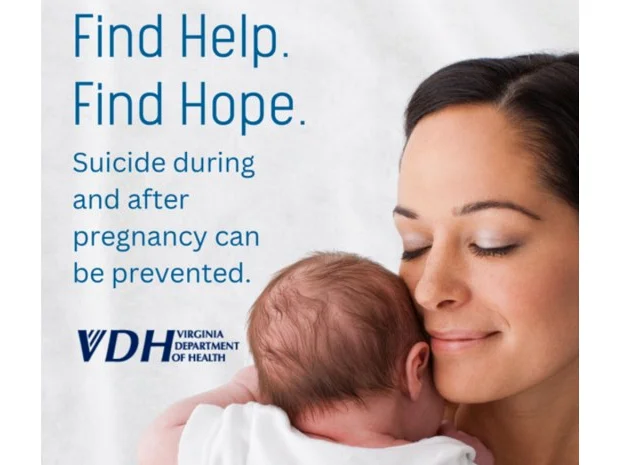
The Virginia Department of Health has also renewed efforts to raise awareness. Although it launched its online suicide prevention toolkit for pregnant and postpartum women in 2024, the office recently used a newsletter and social media campaign to encourage providers and community partners to promote the resource. The toolkit includes posters, informational videos and social media graphics designed to support outreach and prevention efforts.
The University of Virginia launched a new initiative this month to expand cervical cancer screenings in Southwest Virginia. Through the Appalachian Women’s Digital Cervical Cancer Prevention Initiative, UVa partnered with Liger Medical, a Utah-based manufacturer, and the Health Wagon, a free clinic based in Wise, to bring advanced screening technology to the state’s westernmost counties.
The initiative introduces small, portable, AI-powered digital colposcopy tools that support cervical cancer screening and documentation, according to a UVa press release. Because providers can easily transport the devices, clinicians can use them in both mobile clinics and the Health Wagon’s stationary sites, expanding access to care in remote communities.
According to the release, women in Southwest Virginia experience cervical cancer incidence and mortality rates that exceed national averages, largely due to limited access to specialists, geographic isolation and barriers to follow-up care. However, the Virginia Department of Health does not provide publicly available data on cervical cancer rates in the state.
The program will serve women in Lee, Wise, Scott, Buchanan and Dickenson counties, as well as the city of Norton. Nurse practitioners at the Health Wagon, who are licensed to perform colposcopy procedures, will lead patient care locally. Physicians at UVa will provide consultation and oversight through telehealth platforms, creating a hybrid care model that connects rural patients to specialty expertise.
According to the release, the initiative aims to increase cervical cancer screening and colposcopy completion rates by 50% to 75%, reduce diagnostic timelines to fewer than 30 days and improve follow-up compliance through nurse navigation and virtual consultations. The U.S. Department of Agriculture’s Emergency Rural Health Care program and UVa Health’s Center for Telehealth funded the initiative through grant support.






Comments
No comments yet
Be the first to share your thoughts