

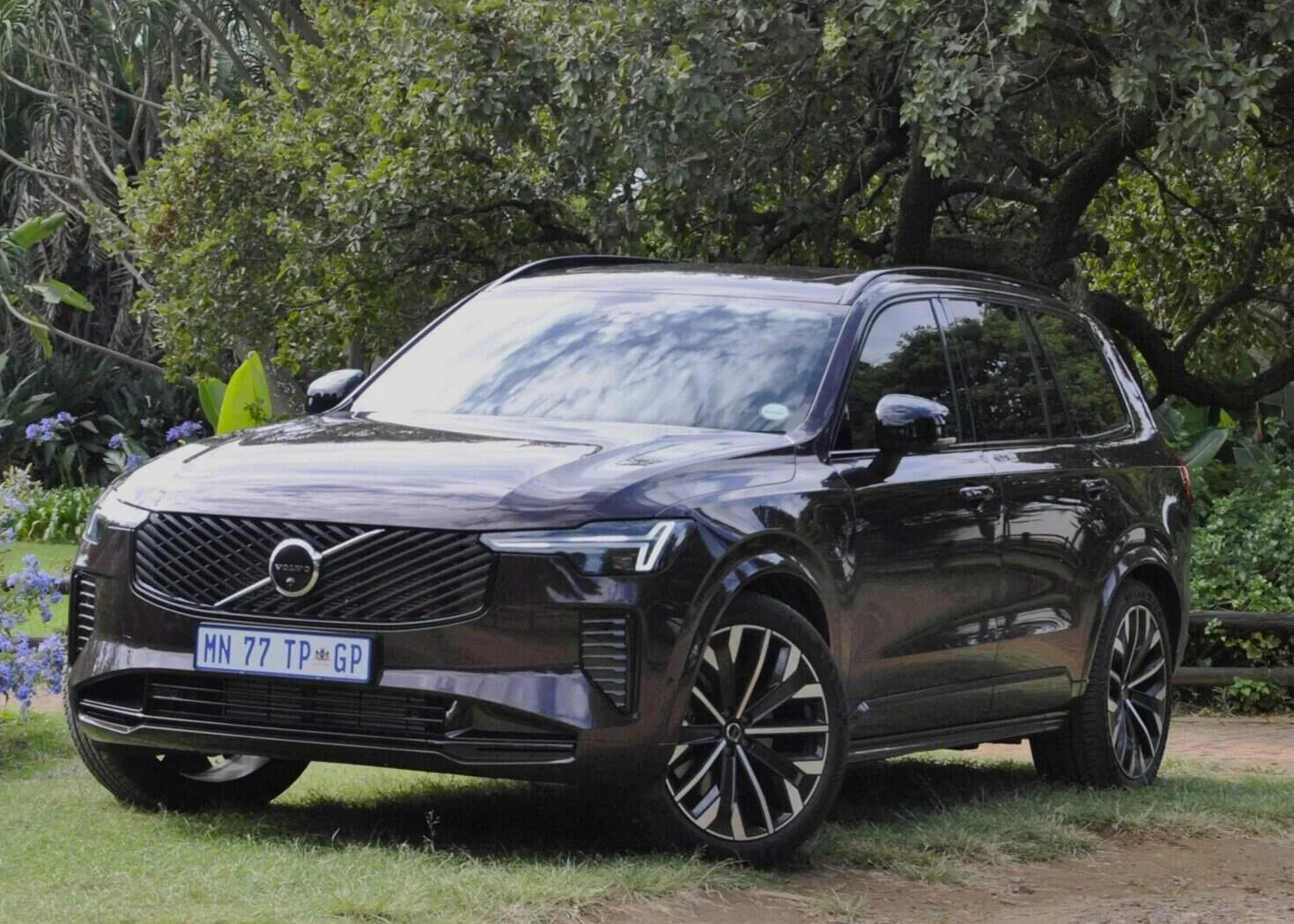
Volvo’s XC90, now 11 years old since its 2015 debut, has received a significant facelift that rectifies previous shortcomings and strengthens its position in the luxury SUV market. The latest updates, introduced globally in 2024, focus on refining the design, interior, and technology of the plug-in hybrid T8 model, which remains a key player in Volvo’s evolving strategy.
Design Upgrades and Exterior Enhancements
The XC90 T8 now features a redesigned front grille with diagonal slates, a new lower air intake, and a redesigned front bumper with vertical side inlets. These changes, along with restyled Thor’s Hammer LED headlights, give the vehicle a more modern and dynamic appearance. The exterior also introduces a new Mulberry Red color option, which highlights the XC90’s aging well and adds a fresh aesthetic to its already iconic silhouette.
At the rear, the bumper has been restyled, and the lights have been reworked with new graphics and a blacked-out finish for the clusters. The alloy wheels have also been revised, with the test unit featuring 21-inch wheels instead of the optional 22-inch size. Despite these changes, the XC90 retains its Iron Mark styling language, which many still consider one of the best-looking large SUVs on the market.
Interior Improvements and Technology Overhaul
Inside the XC90 T8, the interior has undergone a relatively minor but impactful overhaul. The test unit featured a ‘blond’ interior option with Nappa leather upholstery, a charcoal dashboard, and simulated grained wood inserts. While the denim-like finish on the dash was visually striking, the faux wood trim was criticized for feeling cheap and impractical in the long run.
Volvo has made several improvements to the infotainment system, including the new 11.2-inch display, which replaces the older nine-inch ‘winged’ display. The new system is significantly more user-friendly, with a simplified layout and fewer sub-menus. The integration of the latest Google software has improved the overall experience, making the system more intuitive and responsive.
Physical buttons on the steering wheel and the Orrefors glass crystal gear knob have been retained, offering a tactile experience that many drivers appreciate. The centre console has also been redesigned, with a slimmer profile and a wireless smartphone charger replacing the previous lidded storage area. Additional standard features now include quad-zone climate control, heated and electric front seats, a panoramic sunroof, ambient lighting, and a heated steering wheel.
Performance and Practicality
Despite the design and interior updates, the XC90 T8 maintains its practicality and performance. The vehicle is powered by a 2.0-litre Drive-E petrol engine combined with an 18.8-kWh electric motor, producing a combined output of 340 kW and 709 Nm of torque. This makes it the most powerful combustion engine Volvo has ever produced, with a 0-100 km/h time of 5.4 seconds.
The plug-in hybrid system offers an all-electric range of 70 km, although the T8 lacks DC charging capability, which can be a limitation for some users. The battery can be managed through three settings: Auto, Hold, and Charge, with the Charge mode using the petrol engine to recharge the battery. During a weeklong test, the vehicle was driven in Pure mode for three days without combustion assistance, though the exact distance could not be accurately measured.
The XC90 T8 also features air suspension, which provides a smooth and refined ride, with imperfections well dampened. The eight-speed Geartronic transmission shifts smoothly, and the transition between electric and combustion power is smooth. The vehicle’s weight of 2,230 kg is notable, but the T8 handles it with agility, particularly when switched to Power mode.
In terms of space, the XC90 T8 remains practical, with ample headroom and legroom in the second row. However, access to the third row is limited, as the seats slide rather than fold forward. With the third row in use, boot space is 262 litres, but this increases to 1,005 litres with the third row folded and 1,816 litres with both the second and third rows folded.
Volvo’s Strategic Shift
The facelift of the XC90 T8 comes as part of Volvo’s broader strategy to balance its transition to all-electric vehicles by 2030 with the continued development of plug-in hybrids and mild hybrids. This approach reflects a pragmatic response to market demands and the gradual nature of the shift to full electrification.
While the EX60 and EX90 all-electric models are in development, the XC60 and XC90 will continue to receive updates rather than being phased out entirely. This strategy ensures that Volvo can maintain its market presence and cater to a diverse range of consumer preferences, from those ready to embrace full electrification to those who prefer hybrid technology.
What’s Next for the XC90 T8?
Volvo’s latest upgrades to the XC90 T8 highlight its commitment to refining and improving its existing models as it moves toward a fully electric future. With the 2024 facelift, the XC90 T8 is now more refined, technologically advanced, and practical than ever before.
Looking ahead, Volvo is expected to continue updating its plug-in hybrid models as part of its transition strategy. The XC90 T8 will likely remain a key player in the luxury SUV segment for several more years, offering a compelling blend of performance, practicality, and sustainability.
For consumers, the updated XC90 T8 represents a significant step forward, addressing long-standing criticisms and enhancing the appeal of the plug-in hybrid variant. With its improved design, technology, and performance, the XC90 T8 is well-positioned to remain a top choice in the competitive luxury SUV market.






Comments
No comments yet
Be the first to share your thoughts