

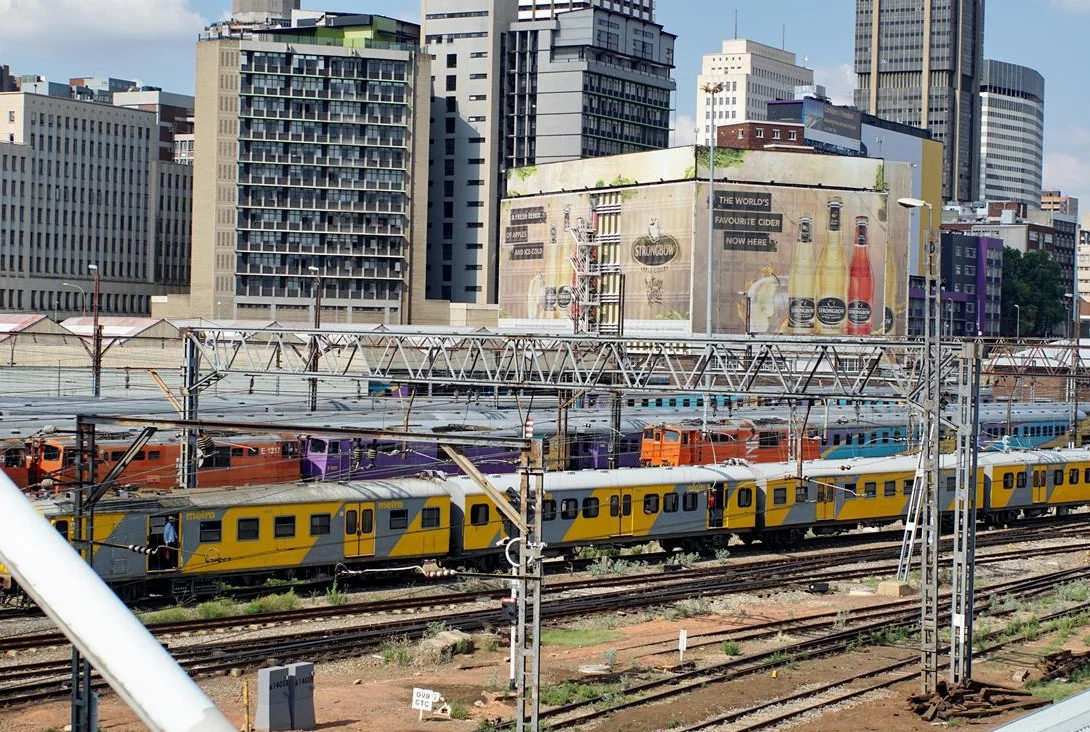
South Africa’s Transport Minister Barbara Creecy announced on February 19 that Transnet Rail Infrastructure Manager (TRIM) is seeking private sector participation in three rail freight infrastructure projects. The government plans to use a 25-year build, operate, transfer model for these concessions, with requests for proposals expected later this year. In addition, the government is exploring private sector investment in a proposed high-speed rail line connecting Durban, Johannesburg, Tshwane, Musina, and Mbombela.
Freight Concession Plan
On February 20, TRIM issued a request for qualifications to identify a private partner for the development of the Richards Bay Dry Bulk Terminal. The private partner would hold a stake in the terminal and invest in increasing its handling capacity from 18.5 million tonnes to 26.9 million tonnes. TRIM is also seeking a private partner to upgrade the manganese shipment corridor connecting Hotazel in the Northern Cape to the ports of Gqeberha (formerly Port Elizabeth) and Ngqura.
The concessionaire is also expected to create a bulk terminal with a capacity of 12 million tonnes at Ngqura, supporting a long-standing plan to reroute freight trains away from Gqeberha. Additionally, TRIM is seeking private sector interest in improving the performance of the intermodal corridor linking Durban to Johannesburg and the City Deep container terminal in Gauteng.
Companies Show Interest
Youssef Elgonaid, CEO of the private freight operator and logistics provider African Rail Company, told Railway Gazette International that the company is seriously considering participating in the planned concessions for the Natcor Container Corridor (Durban – Johannesburg / City Deep). He said that several third parties have approached them to partner on the project. ‘We are also interested in participation in the manganese corridor bids, but the container corridor remains our main priority,’ Elgonaid added.
Pragasen Pillay, Head of Rail Logistics at Menar Ports & Rail, a subsidiary of a local mining company, said the company is open to engaging in concession or co-investment discussions on selected operational lines. ‘We support investments that improve track conditions, operational safety, and overall corridor efficiency for the benefit of our customers and the broader freight system,’ Pillay said.
James Holley, CEO of Traxtion, also expressed interest in the opportunity. ‘We support concession and public-private partnership models that create durable, performance-based frameworks for private investment in both rolling stock and infrastructure,’ Holley said. ‘South Africa’s freight network requires significant capital to modernise track, signaling, and operational systems. The private sector can deploy capital at scale where concession structures provide long-term certainty, operational accountability, and a balanced allocation of risk.’
Holley added that his company is actively assessing corridor opportunities aligned with proven freight demand and their operating footprint. ‘As concession models are clarified, we remain open to participating in priority corridors. However, reliability, performance accountability, and industrial participation must be embedded in their design,’ he said.
High Speed Aspiration
The Department of Transport continues to assess investor appetite for commuter rail, including rapid regional rail, linking Gauteng (Johannesburg and Tshwane), Musina, Mbombela, and eThekwini (Durban area), according to Creecy. President Cyril Ramaphosa said on February 24 that the government is committed to the development of high-speed rail connections on strategic routes, including eThekwini to Johannesburg and Johannesburg to Musina.
Ramaphosa noted that nearly 30 companies indicated their willingness to participate in high-speed rail corridors when the government issued a request for information last year. ‘We are preparing to send out a request for proposals,’ he added.
The proposed high-speed rail line would connect major economic hubs and could significantly reduce travel times between cities. However, the project faces challenges such as funding, regulatory hurdles, and the need for international expertise. The government is expected to provide more details on the proposed route and financing mechanism in the coming months.
Transport Minister Creecy said that the government is keen to attract private sector investment to support the development of the country’s rail infrastructure. ‘We are interested in private sector participation to ensure the successful implementation of these projects,’ she said.
The involvement of the private sector is seen as a critical factor in the success of these rail projects. Private companies can bring in much-needed capital, technical expertise, and operational efficiency. However, the government will need to ensure that the concession models are transparent, fair, and aligned with national development goals.
With the proposed freight and high-speed rail projects, South Africa is positioning itself as a regional transport hub. The success of these projects could have a significant impact on the country’s economy, trade, and regional connectivity.






Comments
No comments yet
Be the first to share your thoughts