

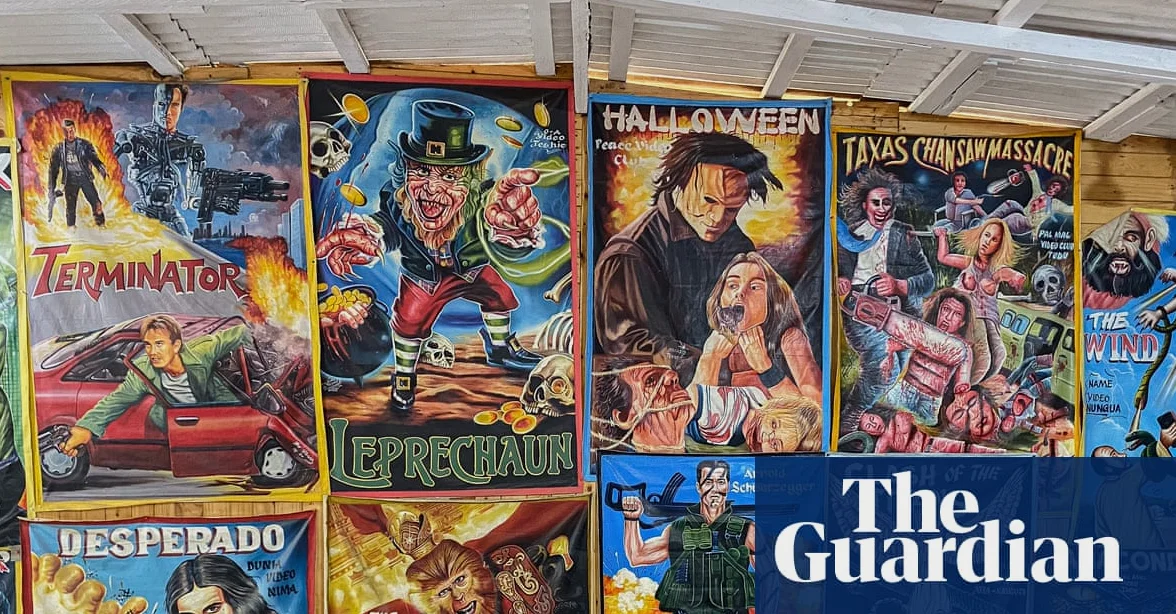
Sitting on his porch in Teshie near Accra, Heavy J,whose real name is Jeaurs Affutu—dipped a brush into red oil paint and added blood to a knife being wielded by a man. Higher on the canvas. He started an outline of a skull, the poster was for the animated fairytale The Little Mermaid, with the man with the knife being the film’s kind-hearted prince, Eric. The skull was unrelated to the story; “We add more to make people interested,” said Heavy J, according to The Guardian.
Origins of a Unique Tradition
Hand-painted film posters by local artists became a hallmark of Ghanaian film culture from the late 1970s to the early 2000s; these posters were used to advertise screenings at neighborhood venues known as video clubs after organizers realized that original posters were not attracting enough audiences. According to Columna Digital, plot lines were regarded as little more than jump-off points for humorous and surreal flights of fancy. Artists competed to create the best “forgery,” which they described as their interpretations of the films.
Shift in Media Consumption and Revival
The practice began to wane around the turn of the century as more Ghanaians gained access to electricity and personal TV sets and video players. Many video clubs went out of business, and painters pivoted to create other work. However, the posters had already gained global interest, popularized in books and foreign exhibitions, making old and rare paintings prized collectibles according to The Guardian. Despite a lull in interest in newly painted posters in the early part of the 21st century, demand has risen again, driven by online marketing and a receptive customer base of film lovers in the West, according to Columna Digital.
Global Recognition and Artistic Legacy
Deadly Prey Gallery, established in 2012, plays a decisive role in preserving this artistic culture by linking local talents to global audiences. The gallery and similar platforms have helped sustain the tradition despite the decline of video clubs. The posters, once functional s, are now seen as vibrant cultural artifacts. The tradition of hand-painted film posters has thus evolved into a collectible art form, preserving a piece of Ghana’s cultural history.






Comments
No comments yet
Be the first to share your thoughts