

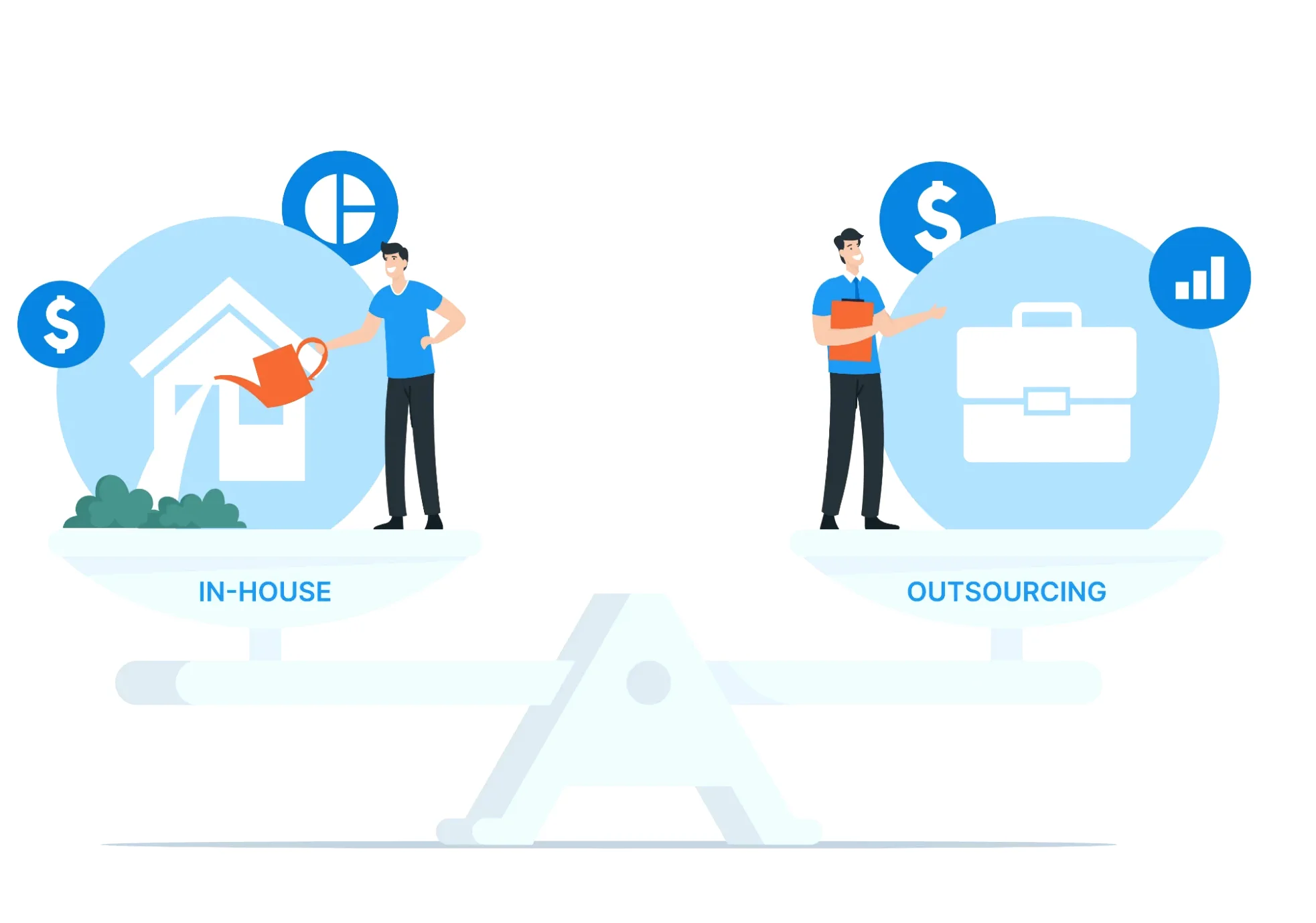
WealthTech founders are increasingly recognizing that building every component of their software internally is not the only way to protect their intellectual property, nor is it always the most effective. Many have fallen into the trap of spending months recruiting specialized engineers, only to burn through their funding and miss crucial market opportunities.
Strategic Resource Allocation in Financial Tech
The reality of modern financial technology demands a more fluid approach to technical resource allocation. Engineering leadership must look beyond traditional hiring methods to keep pace with evolving market demands and regulatory landscapes.
While maintaining a fully internal team offers deep institutional knowledge and alignment with company goals, it also comes with significant hidden costs. Recruitment for niche financial technology skills is time-consuming and expensive, especially when competing with large financial institutions with vast hiring budgets and stock option pools.
According to industry experts, finding a backend engineer who understands both complex distributed systems and financial compliance can delay a feature launch by up to three quarters. Once such engineers are hired, retaining them becomes a challenge, as top-tier talent often seeks to solve complex problems rather than maintain legacy code indefinitely.
Outsourcing vs. Strategic Augmentation
Many engineering leaders mistakenly equate outsourcing with a loss of control. However, the distinction between blindly outsourcing core product development and strategically augmenting technical capabilities is crucial. The former is a risk, while the latter is a necessity financial technology landscape.
Building a strong wealth management platform requires integration with dozens of external APIs, banking gateways, and market data feeds. These tasks, while technically demanding, are where external teams often excel. Internal teams can focus on user experience and proprietary algorithms while outsourcing the heavy lifting of backend plumbing.
When selecting external partners, strict vetting criteria are essential. WealthTech companies cannot afford to hand over critical financial infrastructure to generalist coders who learn on the company’s dime. Security and regulatory compliance must be native to the external team, and they must demonstrate deep domain expertise in financial protocols, ledger mechanics, and data security frameworks.
Many wealth management platforms make the mistake of partnering with large global IT vendors. These giants often assign a senior architect to sell the contract, then staff the project with junior developers to maximize profit margins. The result is often low-quality code and bloated management structures that slow down communication and responsiveness.
A better strategy involves partnering with smaller, specialized firms that offer direct access to the developers working on the product. These boutique software companies prioritize long-term technical health over billing maximum hours and provide faster communication and more personalized attention than large vendors.
Hybrid Allocation Models and Contract Structures
The most successful engineering organizations operate on a hybrid allocation model, treating external talent as an elastic extension of their internal workforce. This requires strict structural discipline, with internal lead engineers defining coding standards, security protocols, and deployment pipelines.
External teams must operate within these guardrails, ensuring that their code is indistinguishable from that written by internal developers. This model prevents knowledge silos and keeps technical debt manageable. External developers must document their work thoroughly and participate in regular code reviews alongside internal staff.
Leadership must frame external teams as tools that free up internal engineers to focus on high-value, creative problem-solving. Regular cross-team meetings can build trust and set clear expectations for both sides.
The structure of vendor agreements directly impacts the quality of the software delivered. Traditional time and materials contracts often misalign incentives, while fixed-price contracts can hinder agile development. A middle ground that protects both parties and prioritizes quality is essential.
Consider structuring contracts around specific deliverables or sprint outcomes. Tie financial incentives to code quality metrics, defect rates, and successful deployment milestones. If a vendor consistently delivers bug-free code ahead of schedule, they should be rewarded for their efficiency.
Most importantly, contracts must explicitly state that the organization retains full ownership of all code, intellectual property, and architectural diagrams at all times. Controlling the source code from day one is non-negotiable.
Technical resource allocation is not a binary choice between hiring employees and outsourcing tasks. It is an ongoing strategic balancing act. WealthTech platforms that scale successfully treat their engineering capabilities like an investment portfolio, diversifying their risk by relying on multiple talent streams rather than putting all their faith in a single hiring channel.
By blending internal vision with external execution, WealthTech companies can build products that are not only technically sound but also agile enough to survive and eventually dominate the market.






Comments
No comments yet
Be the first to share your thoughts