

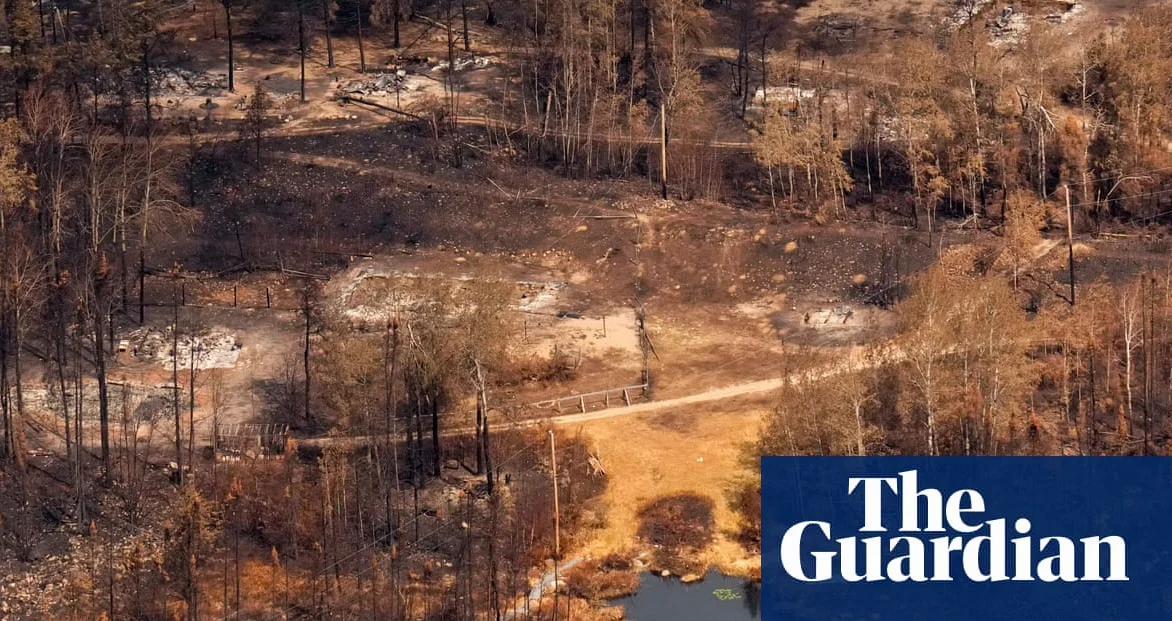
More than 900 wildfires are currently burning across Canada, scorching about 3 million hectares of land, according to The Guardian; these fires are particularly concentrated in the Northwest Territories and Ontario, where several remain out of control. The poor air quality from these fires has been reported to extend into the United States and even across the Atlantic to northern Europe.
Residents Bracing for Evacuation
In Kimberley. British Columbia. Residents are preparing for the possibility of evacuation as wildfires encroach on the town — Schaun Goodeve, a local resident, shared his concerns about preparing his family, especially his 13-year-old daughter, for potential evacuation. He keeps a go-bag ready and relies on communication from the BC Wildfire Service to stay informed.
Goodeve noted the increasing reality of wildfires for communities across Canada, while “Unfortunately, it’s a bit more of a new reality, right, for communities across Canada,” he said. The town of Kimberley. Home to around 9. 000 people, received an evacuation alert on July 19, and Nearby, Boston Bar has been under an evacuation order since Tuesday, and the village of Clinton was placed on an evacuation alert on Wednesday.
Broader Wildfire Season Outlook
British Columbia is expected to face a wildfire season as harsh as some of the worst on record, according to The Globe and Mail. This year’s season is anticipated to resemble the devastation seen in 2017, 2018, and 2021. The fires were initially sparked by hot and dry conditions followed by lightning strikes, leading to multiple blazes in the province.
Seven fires are currently burning more than 1,119 hectares near Kimberley. The situation has prompted officials to issue alerts and orders, ensuring residents are prepared for potential evacuation. Goodeve, who works in economic development and urban planning, sees the evacuation alert as a “wake-up call” for the community to ensure everyone is prepared for such scenarios.
Global Weather Anomalies
While the focus in Canada remains on wildfires, unusual weather patterns are also being observed globally. The city of Salta in Argentina recorded its warmest-ever overnight minimum temperature on Saturday, with the temperature failing to drop below 26°C (79°F), according to The Guardian. This is particularly notable as Argentina is in the middle of winter, when the average night-time minimum in Salta is around 3°C.
This unusual warmth was driven by the Zonda wind, which forms when westerly air flows over the Andes before descending, warming and drying as it sinks back to ground level. This process is known as the Foehn effect, a phenomenon common on the downwind side of mountain ranges worldwide. However, the intensity of the event in Salta was unusual and may have been influenced by the rapidly developing El Niño in the eastern Pacific, which warmed the air mass before it descended.
Elsewhere, the strengthening El Niño is expected to increase typhoon activity in the western Pacific. Tropical Depression 11 formed on Tuesday before developing into Tropical Storm Noul north of the Philippines on Thursday night.






Comments
No comments yet
Be the first to share your thoughts