

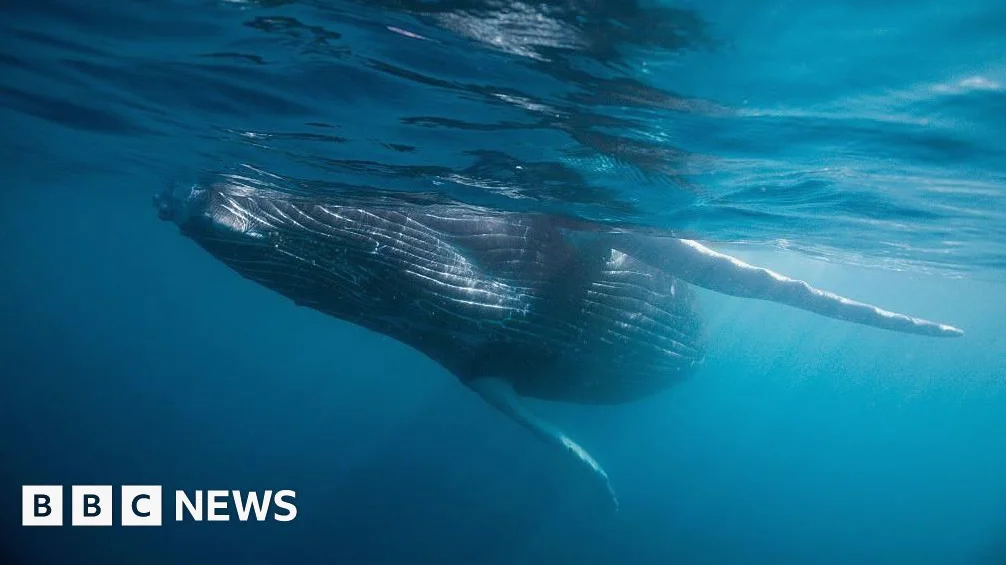
An enormous whale graveyard has been discovered in the south-eastern Indian Ocean, covering an area approximately 1,200 km (745 miles) long and 7 km (four miles) deep. The site. Located in the Diamantina fracture zone. Has been identified as containing remains dating back as far as 5.3 million years; this unmatched find has generated significant interest among scientists.
International Collaboration and Unique Findings
The discovery was made by a team of researchers from China, Italy, and New Zealand, while During 32 dives to the site, the team collected samples from 485 whale-fossil sites and active whale falls. The remains include a treasure trove of fossils, including one extinct whale’s skeleton; the beaked Pterocetus benguelae, which is 5.3 million years old, was identified as one of the fossilised skulls in the graves. In addition. A five-metre long Antarctic minke whale’s carcass was the largest discovery made at the site.
Ecological Significance and Scientific Impact
According to the journal Nature, the site is teeming with organisms and species that may be new to science, but the community of creatures living off the huge spread of carcasses includes jellyfish, worms, and crustaceans. Xiaotong Peng of the Chinese Academy of Sciences noted that discovering a necropolis of this scale was completely unexpected. He added that the size of distribution, the depth, and the age range were far beyond anything they had imagined.
Broader Implications and Expert Reactions
Nick Pyenson, a paleontologist at the Smithsonian Institution’s National Museum of Natural History, who was not involved in the new research, described the discovery as a unique find. He stated that the team has captured something novel. The discovery is detailed in a study published in Nature. Pyenson added that it is a cool study and really neat to see. Five of the whale skeletons found were recent enough to be hosting the type of dynamic network that scientists associate with “whale falls.” Such systems support a shifting cast of scavengers and then microbes specialized to these fleeting feasts.
Peng and colleagues’ encounter with a vast fossil graveyard is a truly unique discovery, according to Stephen J Godfrey of the Calvert Marine Museum, as quoted in Nature.






Comments
No comments yet
Be the first to share your thoughts