

 The Guardian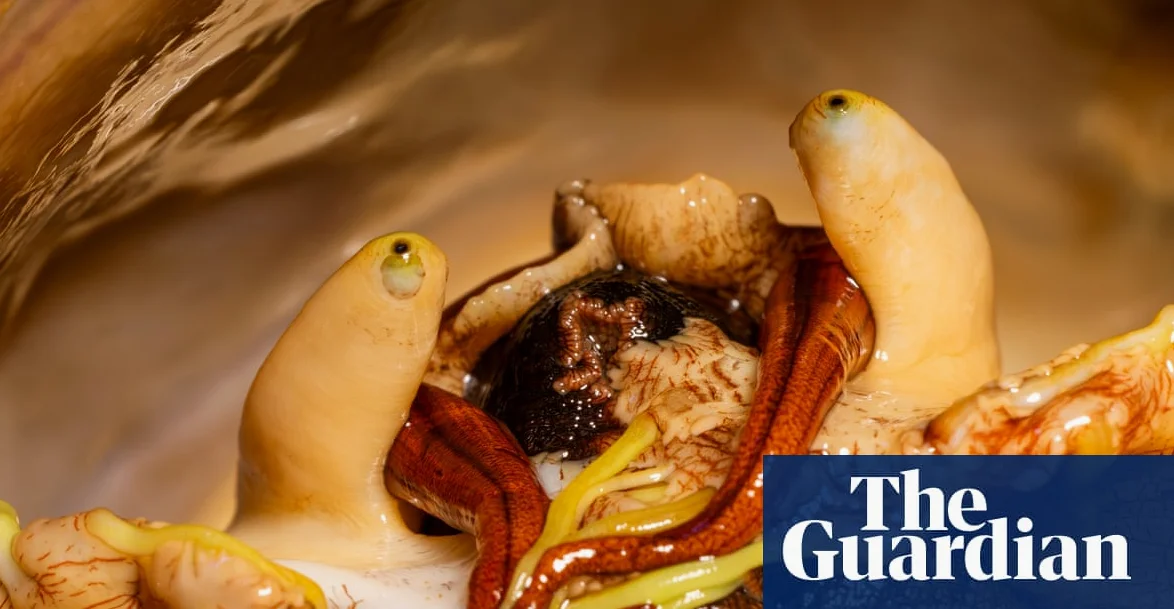
At the UC Davis Bodega Marine Laboratory, nestled along the rugged coastline of Bodega Bay, scientists are racing against time to ensure the survival of one of the ocean’s most critically endangered species: the white abalone. On a recent spawning day, the lab buzzed with activity as volunteers and biologists prepared to coax the iridescent sea snails into reproducing. With only about 1% of the population remaining in the wild in 2001, the lab’s work has become a symbol of hope for the species.
From Brink of Extinction to Breeding Success
The white abalone, once a staple of California’s coastal ecosystems and indigenous diets, had all but vanished by the early 2000s. Overfishing and habitat loss had reduced their numbers to just 2,000 individuals. In 2001, the first artificial spawning program was launched to save the species from extinction. Since then, the Bodega Bay lab has released over 20,000 abalone into the ocean, a tenfold increase in their population.
Alyssa Frederick, the lab’s program director, explained that the abalone’s survival depends on both scientific rigor and a touch of creativity. On spawning days, researchers dim the lights and play soft music, hoping to create the right conditions for the mollusks to reproduce. ‘It’s totally unscientific, but it makes us feel like we’re doing something,’ she said with a laugh.
Despite these efforts, the lab faces significant challenges. In 2024, a proposed budget cut by the Trump administration threatened to halt funding for the National Oceanic and Atmospheric Administration (NOAA), which supports the lab’s work. The cuts, which included a three-year grant covering salaries and operational costs, left the lab in limbo. However, anonymous donors and a subsequent federal funding boost have provided temporary relief, with the lab likely to receive full funding through 2026.
Ecological and Cultural Significance
The white abalone is not just a biological marvel but also a cultural icon. Historically, they were a vital food source for indigenous tribes, whose communities used their shells for jewelry, tools, and currency. In the early 20th century, writers like Jack London celebrated the abalone in his poetry. Today, however, the species is on the brink of extinction, with only a fraction of its former population remaining.
According to a 2021 study by UC Santa Cruz, the loss of kelp forests has further complicated the abalone’s recovery. The study found that 95% of kelp forests along the northern California coast have disappeared, largely due to warming waters and the proliferation of purple sea urchins. The absence of their natural predator, the sunflower sea star, has allowed the urchins to decimate the kelp forests, leaving the abalone without a crucial food source.
The lab’s scientists are not only fighting to save the white abalone but also to restore the delicate balance of the marine ecosystem. ‘If you want to save a species, you can no longer rely fully on federal funding,’ Frederick said. ‘That’s just poor risk management.’
Looking Ahead: A Fragile Future
The future of the white abalone remains uncertain. While the lab has made significant strides, the political climate surrounding environmental funding is unpredictable. ‘We need to find alternative sources of support,’ Frederick said. ‘If we can’t secure stable funding, the progress we’ve made could be reversed.’
Despite the challenges, the lab remains optimistic. On a recent spawning day, scientists hope to see millions of larvae fill the troughs, a sign that the species is on the path to recovery. If successful, these larvae could be released into the wild, where they might eventually grow into a self-sustaining population.
For now, the work continues. Each abalone brought back from the brink represents a step forward in the fight to preserve California’s marine biodiversity. As Frederick put it, ‘It’s just so hopeful. So many people studying the ocean or studying endangered species have a really hard job. They have to believe in the future.’






Comments
No comments yet
Be the first to share your thoughts