

 The Guardian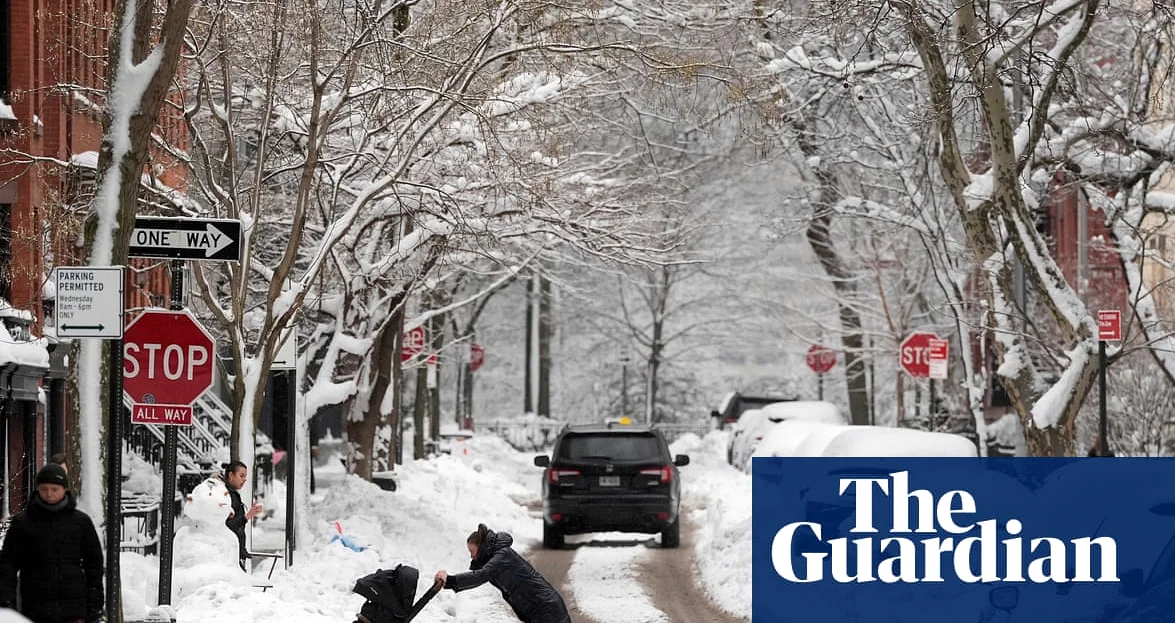
Winter Storm Hernando, a powerful ‘bomb cyclone’ that rapidly intensified over the weekend, buried large parts of the northeastern United States in heavy snowfall and severe winds. The storm, which swept through the region on Sunday and into the early part of the week, led to widespread disruptions, including school closures, flight cancellations, and power outages affecting more than 650,000 homes and businesses.
Historic Snowfall and Record-Breaking Wind Gusts
Major cities such as New York City, Boston, and Portland were under blizzard warnings as the storm brought sustained snowfall and gale-force winds. Coastal areas of Massachusetts and Rhode Island recorded wind gusts of up to 70 mph, with Montauk Point in New York experiencing gusts of 84 mph. In Central Park, snowfall totals reached 38 cm (15 inches), while John F. Kennedy International Airport saw similar accumulations.
Some areas endured more than six hours of continuous snowfall, with snow depths exceeding 76 cm in parts of Massachusetts and Long Island, New York. By Monday night, Rhode Island had recorded snowfall of up to 96 cm, and Fall River, Massachusetts, saw nearly 104 cm of snow, marking one of the most significant storms in the region since 2016.
Bomb Cyclone Intensifies Rapidly
The storm was classified as a ‘bomb cyclone’ due to its rapid intensification, a meteorological phenomenon known as ‘bombogenesis.’ This occurs when a mid-latitude storm drops its central pressure by at least 24 millibars in 24 hours. In the case of Hernando, the pressure fell by about 40 millibars in less than 12 hours, indicating explosive development.
The rapid deepening of the storm was fueled by a sharp contrast between warm, moisture-laden air from the Atlantic and colder air from Canada. This temperature gradient intensified the storm’s circulation, leading to heavy snowfall and significant accumulations. The slightly warmer air also contributed to heavier, wetter snow, increasing the weight and impact of the snowfall on infrastructure and transportation.
Disruptions and Fatalities
The storm caused chaos across the region, with more than 10,000 flights canceled and schools closed in multiple states. Power outages affected over 650,000 homes and businesses at the height of the storm, though conditions began to ease by midweek. Lighter snow, sleet, and freezing rain continued through Thursday and Friday, prolonging the impact of the storm.
At least two deaths were attributed to the severe weather, highlighting the dangers posed by such extreme winter conditions. Emergency services and local governments worked to clear roads and restore power, while residents were advised to stay indoors and avoid unnecessary travel.
Heavy Rain in Australia
While the northeastern US grappled with snow, an unusually slow-moving weather system brought torrential rain to central Australia, drenching vast areas of the Northern Territory, South Australia, Queensland, and New South Wales. The system, which has been in place since early in the week, has caused heavy rainfall and raised concerns about flooding in already saturated regions.
In Nappa Merrie, south-west Queensland, more than 165 mm of rain fell in 24 hours on Wednesday, an extraordinary amount for a region that typically receives 100-200 mm of rain annually. The weather system is expected to remain over the interior of the country until at least Saturday, increasing the risk of further heavy rainfall and potential flooding.
Authorities in affected areas have issued flood warnings and urged residents to prepare for potential water-related hazards. The prolonged rainfall has also raised concerns about agricultural impacts, with farmers monitoring soil conditions and crop health.
As the storm systems continue to evolve, meteorologists are closely monitoring the weather patterns to provide updated forecasts and warnings. In the US, the focus will shift to the gradual clearing of snow and the restoration of normal operations, while in Australia, the emphasis will be on flood preparedness and water management.






Comments
No comments yet
Be the first to share your thoughts