

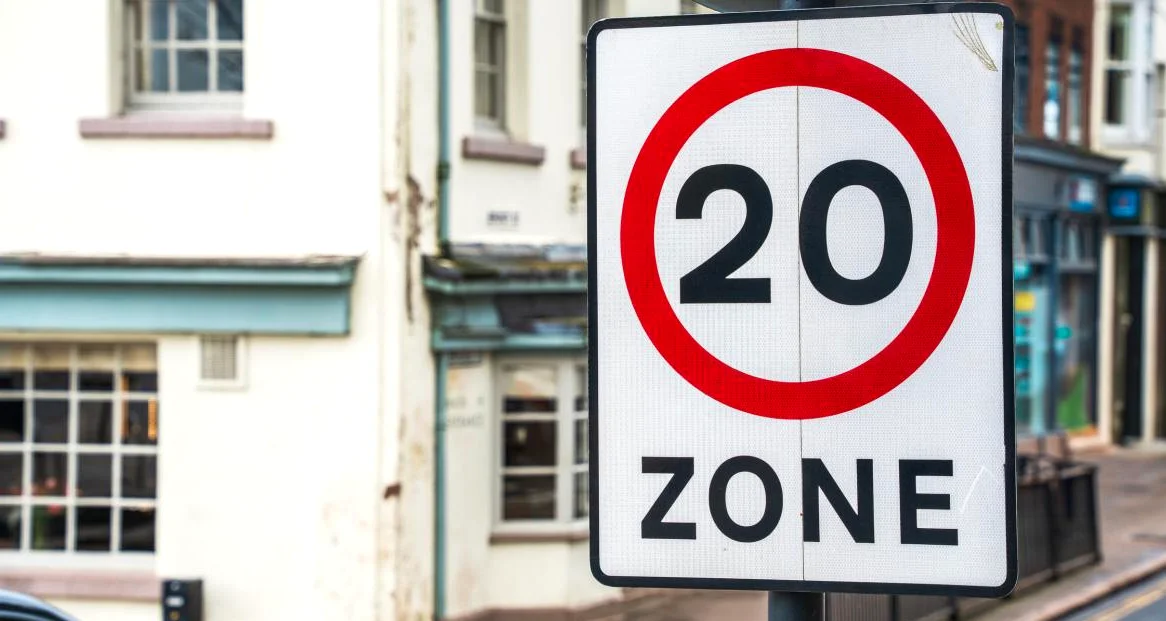
Worcestershire County Council has confirmed it has no plans to introduce widespread 20mph speed limits across the county, despite growing calls for safer roads. The decision comes after a recent environment committee meeting where officials discussed the potential for implementing lower speed limits in accident-prone areas or to promote active travel, but ultimately ruled out a broad rollout.
Focus on Targeted Measures, Not Widespread Changes
According to highways chief Karl Perks, the council is not looking to punish car drivers but rather to ensure that the county’s roads function effectively for all road users. At an environment committee meeting on Wednesday, March 11, the council’s head of traffic management, Sarah Gilmour, noted that a 20mph limit is “most effective when it is the default across an area.” However, she added that implementing this across Worcestershire would require “funding into the millions.”
Gilmour emphasized that a speed limit alone does not make a road safer. “A speed limit doesn’t make the road safer,” she said. “It is a tool, but it does not reduce collisions as a standalone.” The council appears to be leaning toward targeted measures rather than a sweeping policy shift, focusing on areas with high accident rates or where active travel is encouraged.
Public Safety Concerns and Environmental Impact
Councillor Louis Stephen voiced support for reducing speed limits from 30mph to 20mph, arguing that it would create a safer environment for people to use the roads. He highlighted that many residents want to walk their children to school or accompany their grandparents to the shops but feel unsafe doing so due to traffic speeds.
Stephen noted that some people who do not feel safe using the roads may not appear in official accident statistics. “In the real world, lots of people want to see their children walk to the school and their grandparents walk to the shops,” he said. “Some people don’t feel safe using the roads, so they won’t show up on accident statistics.”
Councillor Alan Bailes, meanwhile, called for the council’s speed limit policy to be more proactive and preventative. He did not explicitly mention environmental benefits, but he did note that reducing speeds by six percent can reduce traffic noise by up to 40 percent. This insight hints at the potential environmental and quality-of-life benefits that lower speed limits could offer.
Driver Behavior and the Role of Enforcement
Cllr Perks, the cabinet member for highways, emphasized that the issue is not about speed limits but about driver behavior, which he says has “categorically worsened since Covid.” He noted that the majority of road users stick to the speed limit, but the exceptions are “notorious.”
“The exceptions will continue to be the exceptions irrespective of what that speed limit is,” Perks said. “They don’t speed by one or two miles an hour — they speed excessively, in excess of 10, 20, 30 [mph above the limit]. Speed limits won’t change that. Road engineering could potentially, but there’s a cost element to that. And once residents realise what that entails, they don’t want that.”
Perks has launched a “strategic partnership” — the first of its kind in Worcestershire — with West Midlands Police, police and crime commissioner Jon Campion, and Hereford and Worcester Fire and Rescue Service. This taskforce will examine speeding, fatal crashes, and drink and drug driving. The initiative aims to address these issues through both education and enforcement, rather than relying solely on speed limit changes.
The council’s decision to avoid widespread 20mph speed limits reflects a broader debate across the UK about the effectiveness of such measures in reducing accidents and improving road safety. While some local authorities have introduced 20mph zones in residential areas, others are hesitant due to the cost and complexity of implementation.
The impact of this decision on local communities remains to be seen. Residents who advocate for safer streets may feel their concerns are not being fully addressed, while others may support the council’s stance that targeted interventions and improved road design are more effective solutions.
With the taskforce now in place, the focus is shifting toward a more thorough approach to road safety, one that includes not only speed limits but also driver behavior, infrastructure, and law enforcement. This may provide a more sustainable solution for the long term, though it is unclear whether it will satisfy those calling for immediate action.
The council’s decision also raises questions about the role of local government in shaping national road safety policies. As pressure mounts from both the public and environmental groups, the council may face increasing scrutiny over its stance on 20mph limits.





Comments
No comments yet
Be the first to share your thoughts