

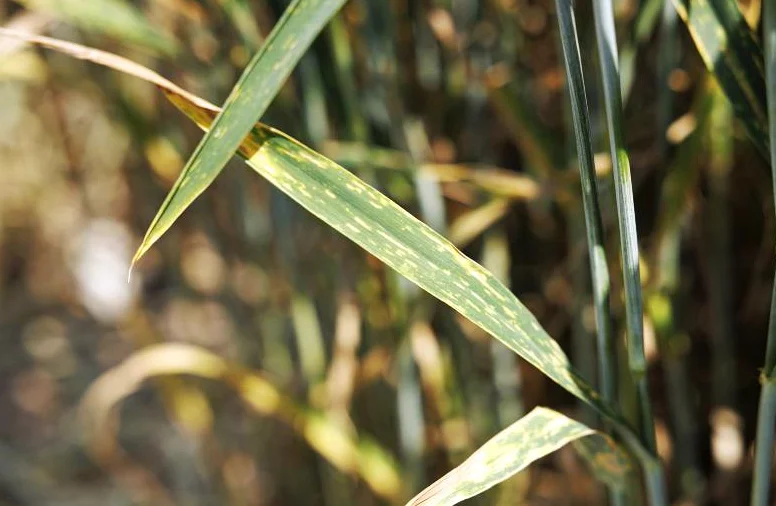
DUBLIN — Winter wheat growers must treat yellow rust as a top threat this spring. The disease surged after the YR15 gene failed last year, leaving the majority of varieties vulnerable, Teagasc’s Steven Kildea told attendees at the National Tillage Conference workshop on crop diseases.
Kildea stressed scouting fields regularly. Farmers need to factor yellow rust into T0, T1 and T2 fungicide applications. Early detection stops it from taking hold, especially on susceptible types.
Several fungicide options work well if applied protectively, before infection starts. Kildea pointed to azoles and strobilurins as strong choices. But he warned against relying solely on multi-site products like folpet or sulphur at T0. Those two lag behind others in yellow rust control, even though growers often use them alone against septoria.
On fields with susceptible or moderately resistant varieties showing early signs, pair an azole or strobilurin with the multi-site at T0, Kildea advised. Switch to an azole-strobilurin mix outright if yellow rust appears on susceptible wheat.
T1 sprays target leaf three and prioritize septoria. Still, they should pack some yellow rust protection too. Kildea reviewed Teagasc’s provisional 2026 wheat fungicide star ratings for septoria during the session. The ratings, from one star for poor control to five for excellent, saw only minor tweaks from 2025. Last year’s low disease pressure kept changes small, officials noted.
Elatus Era and prothioconazole underperformed in 2025 trials, dropping in effectiveness. Folpet and sulphur-based Thiopron picked up an extra star when used protectively. Researchers plan more tests this season to confirm the shifts.
No resistance has emerged yet to Inatreq, Kildea reported. Univoq delivered solid protective results at Oak Park trials. Revystar XL and Thiopron also held up well against septoria.
Poor performers included benzovindiflupyr plus prothioconazole in Elatus Era, solo prothioconazole as Proline, pyraclostrobin in Comet, tebuconazole in Folicur and the Proline-Prosaro combo of prothioconazole plus tebuconazole. Only Folicur topped 40% septoria control among those five.
Azole and SDHI resistance levels have stabilized, with no further decline in sensitivity, according to Kildea. Timing fungicide sprays correctly stays the biggest factor for beating septoria. He emphasized protective applications on high-risk varieties to head off both yellow rust and its fungal rival.
Irish tillage farmers face a busy scouting season ahead. With fewer resistant options, precise chemistry mixes and vigilant monitoring will define spring outcomes.






Comments
No comments yet
Be the first to share your thoughts