

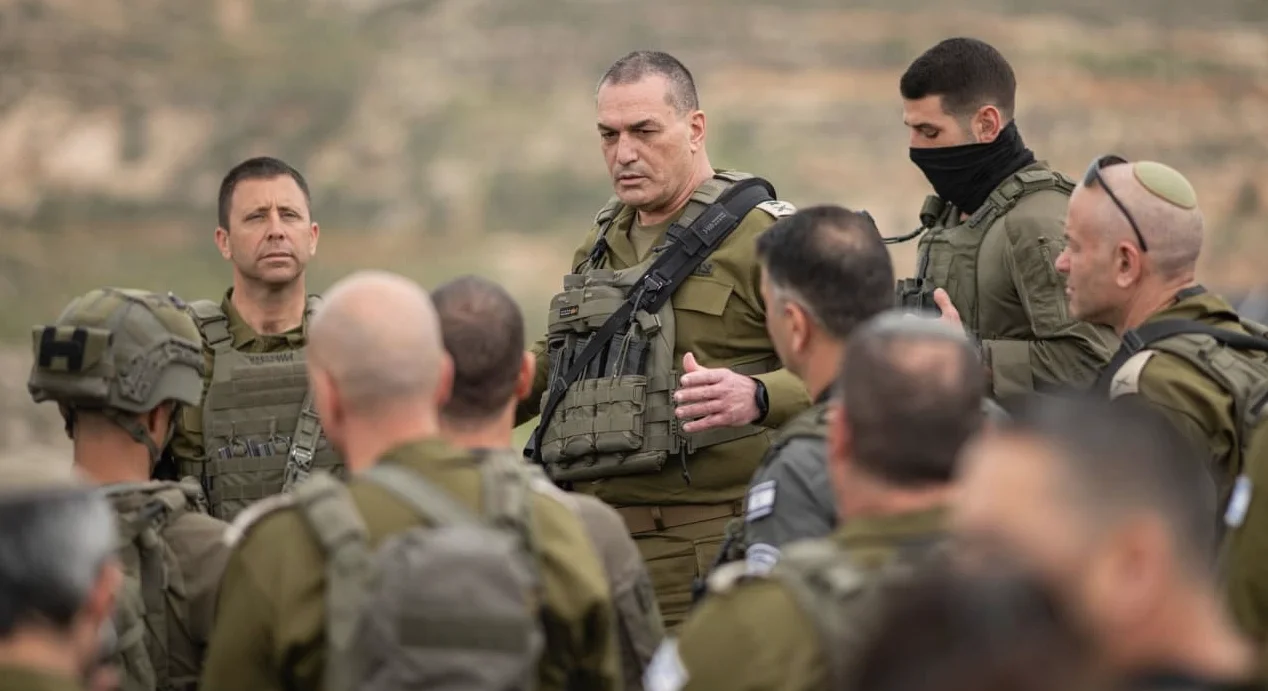
IDF Chief of Staff Lt.-Gen. Eyal Zamir has raised concerns about the impact of settler violence in the West Bank on Israel’s national security, particularly during the ongoing multi-front war against Iran and its regional proxies. Speaking during a visit to Central Command on Tuesday, Zamir emphasized that while terror incidents in the region have reached their lowest level in a year, the rise in nationalist crimes by a ‘threatening minority from within’ is posing a serious challenge to Israel’s security posture.
Settler Violence as a Strategic Threat
Zamir noted that the number of terror incidents in the West Bank over the past year has been ‘among the lowest we have known,’ attributing this to the ‘offensive and professional activity being carried out here’ by the IDF. However, he warned that the increasing acts of violence by settlers are not only morally and ethically wrong but also causing ‘extraordinary strategic damage’ to the IDF’s efforts in the region.
During his visit, Zamir met with forces in the Binyamin and Samaria regional brigades and held a situational assessment with divisional and brigade commanders. He highlighted the importance of maintaining a high level of alertness and strong protection for communities in the area, while also emphasizing the need for a ‘determined and uncompromising war on terror,’ which includes addressing the issue of settler violence.
Zamir called on state authorities to take a firm stance against such activities and to ‘cut it off before it is too late.’ He stressed that those who believe these actions help security are ‘mistaken,’ and that the violence ‘endangers the settlement enterprise, security stability, and our values as a people and as a state.’
He also criticized the lack of public discourse that supports commanders working to eradicate terror and safeguard Israel’s security. ‘There is no place in public discourse for statements or incitement against commanders who work every day to eradicate terror and safeguard Israel’s security,’ Zamir said.
Multi-Front War and Regional Campaign
Zamir described the current situation as ‘a historic and unprecedented multi-front campaign against the Iranian terror regime and its proxies throughout the region.’ He noted that the IDF is currently conducting operations in Lebanon and in Tehran, while also defending on the front lines across all borders.
The IDF has carried out several high-profile assassinations targeting senior Iranian figures, including Esmaeil Khatib, Ali Larijani, and Aziz Nasirzadeh. Zamir praised these actions, indicating their strategic importance in countering the Iranian threat.
‘At this moment,’ Zamir said, ‘the IDF is striking in Lebanon and in Tehran, while defending on the front lines across all borders.’ He emphasized the need for the military to remain focused on its primary mission of ensuring Israel’s security, while also addressing internal threats such as settler violence.
Zamir acknowledged the ‘exceptional work’ of Central Command, led by the regional commander and the commander of the Judea and Samaria Division. He praised the regional brigade commanders for their efforts in maintaining security and ensuring the availability of forces to respond to threats in the field.
‘We need to provide security and maintain high availability, reaching every point in the field within short timeframes, in order to thwart terror in the area,’ Zamir said. His comments come at a time when Israel is engaged in a complex and complex conflict that requires constant vigilance and strategic focus.
Implications for National Security and Civilian Life
The warnings from Zamir highlight a growing concern about the impact of internal violence on Israel’s overall security strategy. While the IDF has been successful in reducing terror incidents in the West Bank, the rise in settler violence could complicate efforts to maintain stability in the region.
Ordinary citizens living in the West Bank, particularly in areas with high settler populations, may face increased risks from both external and internal threats. The dual challenge of fighting an external enemy while dealing with internal unrest could strain resources and divert attention from the primary mission of the IDF.
Experts suggest that the current situation is not unique, as similar tensions have emerged in the past during periods of heightened military activity. For example, during the Second Intifada, internal violence and incitement posed significant challenges to Israel’s security apparatus. However, the current context of a multi-front war adds a new layer of complexity.
The IDF’s ability to manage both internal and external threats will be critical in the coming months. As Zamir noted, the last thing the military wants is for its forces to be burdened with additional challenges beyond their existing responsibilities. This could have serious implications for the overall effectiveness of the IDF in the current conflict.
What’s next for Israel’s security strategy will depend on how effectively the government and military can address the issue of settler violence. With upcoming elections and ongoing military operations, the need for a unified approach to national security is more pressing than ever.






Comments
No comments yet
Be the first to share your thoughts