

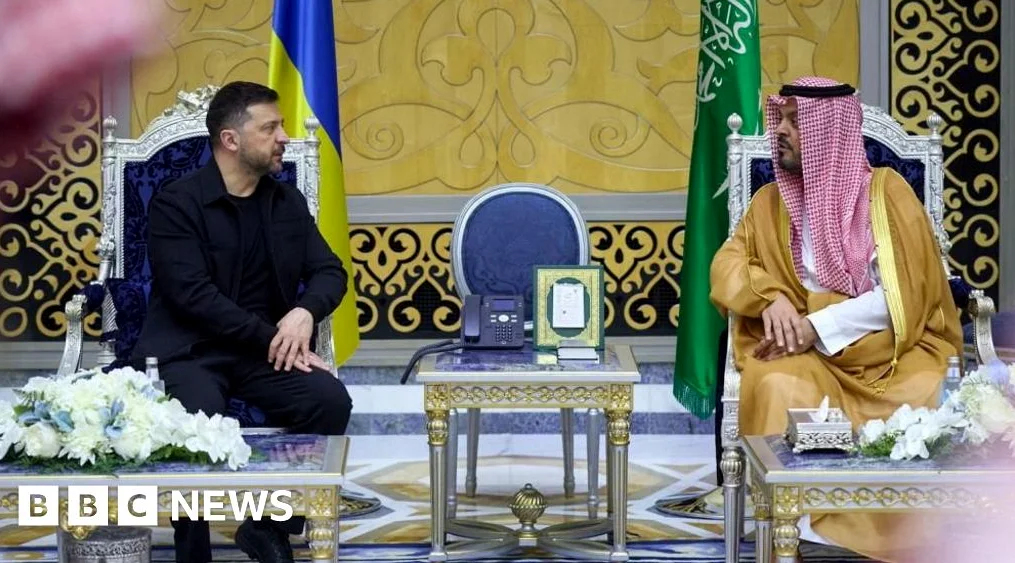
Zelensky’s recent visit to Saudi Arabia has sparked international attention, particularly as Ukraine offers its drone expertise to Gulf states. According to the BBC. The Ukrainian leader met with Saudi officials to discuss defense cooperation, following reports that Ukraine has shared its experience in countering Iranian drones. This visit occurs against the backdrop of a 15-point peace plan sent by a U.S. special envoy to Iran, though Iran reportedly responded with its own conditions.
Ukraine’s Drone Technology and Regional Security
The Los Angeles Times reports that Ukraine has been sharing its drone technology with other countries, particularly in the context of countering Iranian drone threats. This expertise is seen as important for Gulf nations facing increasing drone attacks from Iran-backed groups — Ukrainian officials have emphasized that their experience in drone warfare could be vital for regional security. According to the LA Times. This knowledge transfer is part of a broader effort by Ukraine to build international alliances in its ongoing conflict with Russia.
A Japanese news outlet. NHK, reported that an Iranian envoy dismissed the idea of Ukraine offering support to the U.S. and Gulf states, calling it a ‘joke.’ The Iranian official reportedly criticized the perceived hypocrisy of Western nations, suggesting that such cooperation would not yield meaningful results. This skepticism highlights the complex diplomatic dynamics at play in the region.
Zelensky’s visit to Saudi Arabia comes as part of a larger strategy to secure military and economic support for Ukraine — the country has faced increasing pressure from Russian forces, and international backing is critical for its survival. The sharing of drone technology may be seen as a way to build long-term partnerships with Gulf states, which have significant economic and military influence in the Middle East.
U.S. Peace Plan and Iranian Response
According to the BBC. U.S. special envoy Steve Witkoff has confirmed that a 15-point peace plan has been sent to Iran. The plan outlines conditions for de-escalation and dialogue between the U.S. and Iran, which has been a source of tension for years — However, Iran reportedly responded with its own set of conditions, indicating that a resolution to the conflict is still far from certain.
The U.S. has been pushing for a diplomatic solution to the ongoing tensions, particularly in light of the increasing use of drones by Iran-backed groups in the Middle East. The peace plan is seen as an attempt to reduce the risk of further escalation, but Iran’s response suggests that negotiations may be complicated by regional and internal factors.
Analysts suggest that the U.S. peace initiative may be influenced by the broader geopolitical landscape, including the situation in Ukraine — the involvement of Gulf states in the region’s security dynamics could play a key role in any potential resolution to the U.S.-Iran tensions. Zelensky’s visit to Saudi Arabia may be part of a larger effort to align regional interests in addressing shared security concerns.
Regional Reactions and Implications
The Japanese news outlet NHK highlighted that Iran’s envoy expressed skepticism about the value of Ukraine’s drone expertise for the U.S. and Gulf states. The Iranian official reportedly questioned the sincerity of Western nations in seeking cooperation, suggesting that such efforts would not lead to meaningful change. This perspective reveals the deep mistrust between Iran and the West, particularly in the context of ongoing regional conflicts.
In contrast, Gulf states have shown interest in Ukraine’s drone technology, recognizing its potential to enhance their own defense capabilities. Saudi Arabia, in particular, has been involved in various regional security initiatives and may view Ukraine’s expertise as a strategic asset. The visit by Zelensky is likely to strengthen ties between Ukraine and Gulf states, which have been increasingly vocal in supporting Ukraine’s position in the war against Russia.
Local reactions in the Gulf suggest that there is growing interest in international cooperation to address regional security challenges. The involvement of Ukraine in this process may signal a shift in the balance of power, as non-Western states begin to play a more active role in global security discussions.
Why It Matters and What’s Next
The sharing of Ukraine’s drone expertise with Gulf states is a significant development that could reshape the regional security landscape. For Ukraine, this move represents an opportunity to secure long-term international support while also enhancing its strategic position in the Middle East. For Gulf states, the acquisition of drone technology could provide a critical advantage in countering Iranian aggression and ensuring their own security.
The U.S. peace plan sent to Iran adds another layer of complexity to the situation, as both sides must handle a delicate diplomatic balance. The outcome of these negotiations could have far-reaching implications for the broader Middle East, including the role of non-traditional players like Ukraine in regional security.
Looking ahead, the success of Zelensky’s visit to Saudi Arabia will depend on the willingness of Gulf states to engage in long-term cooperation with Ukraine. Similarly, the effectiveness of the U.S. peace plan will hinge on whether Iran is willing to engage in meaningful dialogue. The coming weeks are likely to see increased diplomatic activity as both sides seek to advance their respective interests in the region.






Comments
No comments yet
Be the first to share your thoughts