

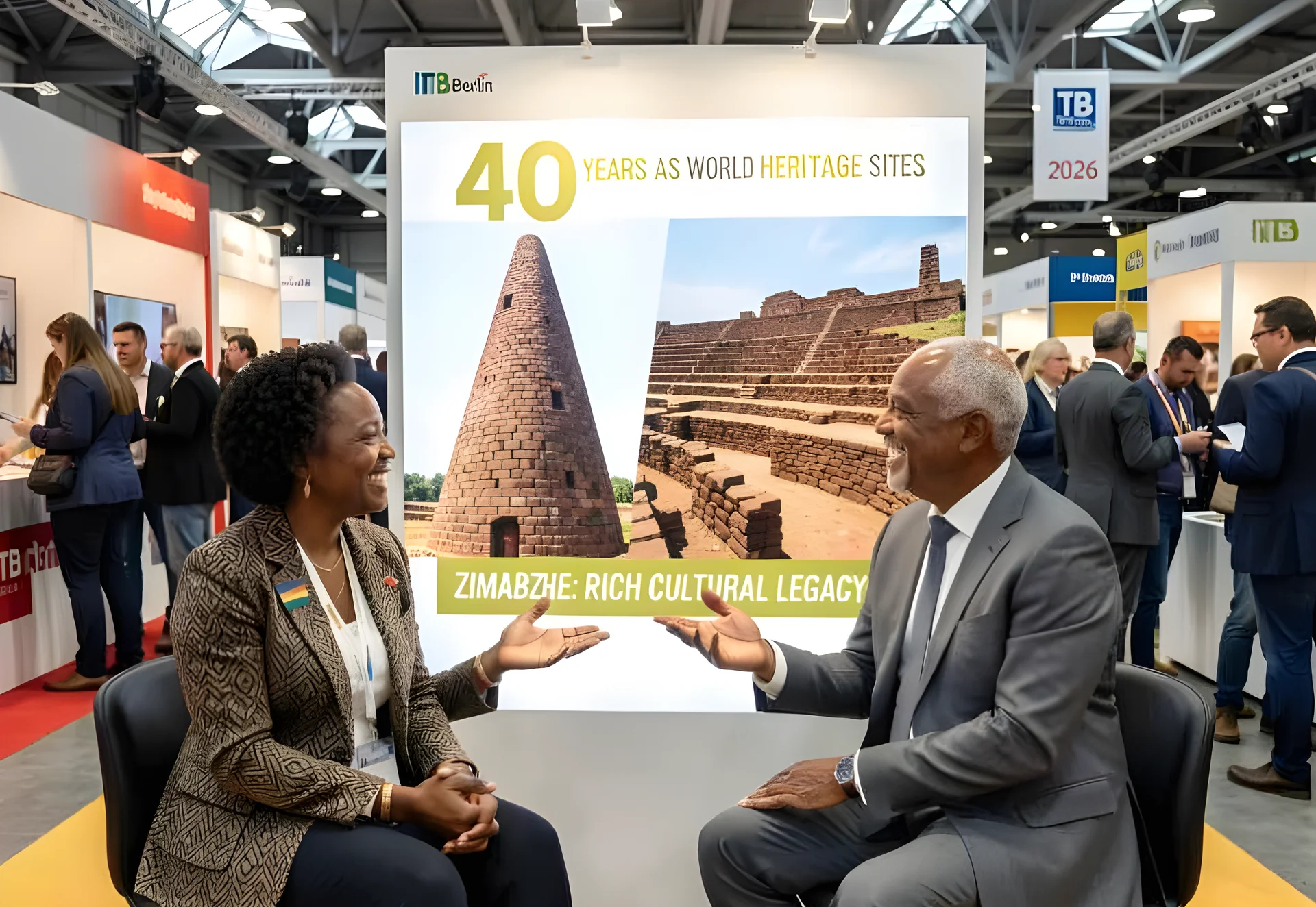
Zimbabwe has made a significant push to elevate its heritage tourism at ITB Berlin 2026, marking the 40th anniversary of its UNESCO World Heritage Sites. The country’s delegation used the event to spotlight its ancient stone cities, aiming to shift global perceptions of African travel from traditional safari experiences to rich cultural narratives.
Focus on Cultural Legacy
The Zimbabwean delegation highlighted the Khami Ruins and Great Zimbabwe, both designated UNESCO World Heritage Sites in 1986. These ancient structures, representing the sophisticated civilizations of Southern Africa, were at the heart of the country’s promotional strategy. Officials said the goal was to move beyond the safari-centric image and showcase Zimbabwe’s centuries-old cultural heritage.
Under the theme ‘Leading Tourism into Balance,’ the Ministry of Tourism and Hospitality Industry led high-level diplomatic engagements with exhibitors and policymakers. The Zimbabwe Tourism Authority and diplomatic representatives from Germany were part of the delegation, emphasizing strategic partnerships to boost the country’s profile in the global cultural tourism market.
Heritage Preservation and Global Collaboration
A key moment at the summit involved discussions with the UNESCO Directorate, led by Director Peter Warren. These talks reinforced the long-standing relationship between Zimbabwe and UNESCO, focusing on the historical significance of Great Zimbabwe and the Khami Ruins. Officials emphasized that the sites’ four-decade status on the World Heritage List should not only be celebrated but also serve as a foundation for continued preservation and sustainable promotion.
The integration of heritage conservation with modern tourism strategies was identified as a priority for the coming decade. This includes efforts to protect the sites while making them more accessible and appealing to international visitors.
Expanding Global Outreach
Zimbabwe’s delegation also explored new media and marketing alliances to enhance its global visibility. Strategic talks were held with CNN International Commercial to develop sophisticated marketing campaigns aimed at increasing the country’s presence on the international stage. A specific focus was placed on the European market, particularly the Benelux region and German-speaking nations.
Plans are underway for a dedicated German-language publication in collaboration with Africa Magazine. This publication will provide tailored content to one of Zimbabwe’s most consistent source markets, bridging the gap between African wonders and European travelers seeking authentic cultural experiences.
Logistics for luxury travel across Southern Africa were also a major point of discussion. The delegation engaged with Rovos Rail, a pioneer in rail tourism, to explore the expansion of regional travel corridors. New routes were envisioned, linking South Africa and Beitbridge to the historic Great Zimbabwe, extending further into Malawi and Mozambique. An emerging corridor was also identified that would connect South Africa with Victoria Falls, Zambia, and the Democratic Republic of the Congo.
These proposed routes are designed to create a more integrated regional tourism product, allowing high-end travelers to experience the continent’s diverse landscapes and cultures in a single, cohesive journey.
Improving Accessibility and Visitor Experience
The Zimbabwean government also addressed the issue of visa facilitation, recognizing that ease of access is crucial for destination competitiveness. The Ministry of Home Affairs and Cultural Heritage, along with the Ministry of Foreign Affairs and International Trade, is conducting a thorough assessment of countries for potential removal from visa requirements. This move is intended to support a more smooth travel environment, encouraging longer stays and repeat visits.
In an era where data is a valuable asset, the delegation also prioritized the use of technology and analytics. Engagements with Amadeus for Destinations were centered on using data-driven insights to better understand traveler behavior and market trends. These partnerships are expected to empower Zimbabwe with tools to refine its marketing strategies and improve the overall visitor experience.
By using data, the tourism sector can make informed decisions regarding infrastructure development and service delivery, ensuring sustainable growth aligned with global standards.
The Zimbabwean government’s efforts at ITB Berlin 2026 demonstrate a shared commitment to transforming the country into a premier destination for heritage and culture. The presence of the Zimbabwean Ambassador to Germany and the CEO of the Zimbabwe Tourism Authority reinforced the vision of a professionally managed and globally integrated tourism sector.
As the event concluded, the groundwork was laid for a new era of tourism, one in which the echoes of the past at Great Zimbabwe and Khami will shape a prosperous and vibrant future for the country’s hospitality industry.





Comments
No comments yet
Be the first to share your thoughts