

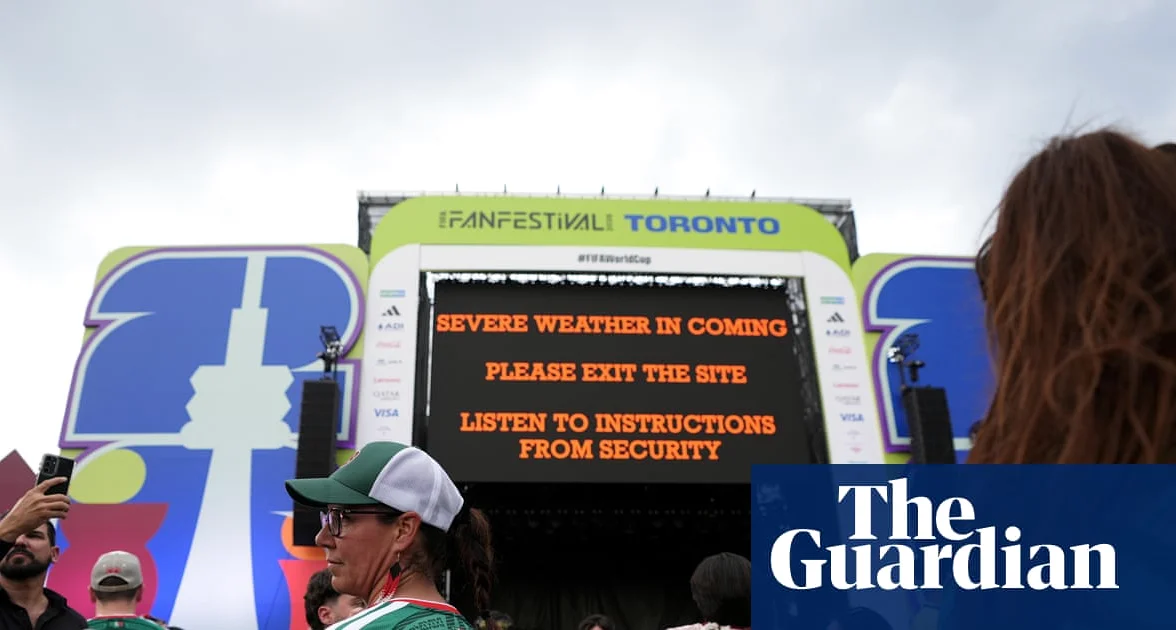
The 2026 World Cup is being held across 16 cities in North America, from southern Mexico to Canada, where weather conditions pose significant risks for players and spectators. According to The Guardian. Matches will face challenges such as heat, humidity, and thunderstorms, with the wet bulb globe temperature (WBGT) used to assess heat-stress levels, while many exercise physiologists consider 28°C WBGT the threshold for unsafe play, while FIFA’s own threshold is 32°C.
Weather Disruptions Before the Tournament Began
Before the World Cup had even started, weather already disrupted matches. England’s warm-up game against Costa Rica in Orlando was delayed by about an hour due to lightning and heavy rain that waterlogged the pitch, according to The Guardian. In the US. Safety regulations require play to be suspended if lightning is recorded within roughly 8 miles of a stadium and not to resume until 30 minutes after the last strike.
FOX Weather reported that the 2025 Club World Cup provided a preview of the weather challenges expected in 2026; Several matches were delayed or suspended due to severe weather, with hours-long interruptions causing concern for players and fans. Extreme heat. In particular. Was cited as a major issue. With temperatures near or above 90°F causing physical strain for participants.
Regional Weather Risks Across Host Cities
Thunderstorms are expected to be most prevalent in the central, eastern, and south-eastern US. According to The Guardian, Miami and Houston are among the most lightning-prone host cities, though Houston’s stadium has a retractable roof. Further north-east, the risk of severe storms capable of strong gusts and large hail threatens matches in Toronto, Boston, and New York, according to The Guardian.
Temperatures in Monterrey, Mexico, are high in themselves, but the greatest heat strain is expected in the south-eastern US due to high humidity, even at lower temperatures. FOX Weather noted that while extreme heat is a major concern, severe thunderstorms could also stop play altogether, making them equally disruptive.
Weather Protocols and Safety Measures
FIFA requires host venues to adhere to local severe weather safety regulations, meaning that matches in the US will follow established lightning-safety protocols. If lightning is detected within a safety radius of a stadium, play can be suspended until the threat has passed, according to The Guardian.
For heat-related issues, FIFA uses WBGT readings to guide decisions, with higher values potentially leading to additional cooling measures or even match delays and postponements, according to FOX Weather. These measures are intended to protect both players and officials from the physical toll of playing in extreme conditions.






Comments
No comments yet
Be the first to share your thoughts