

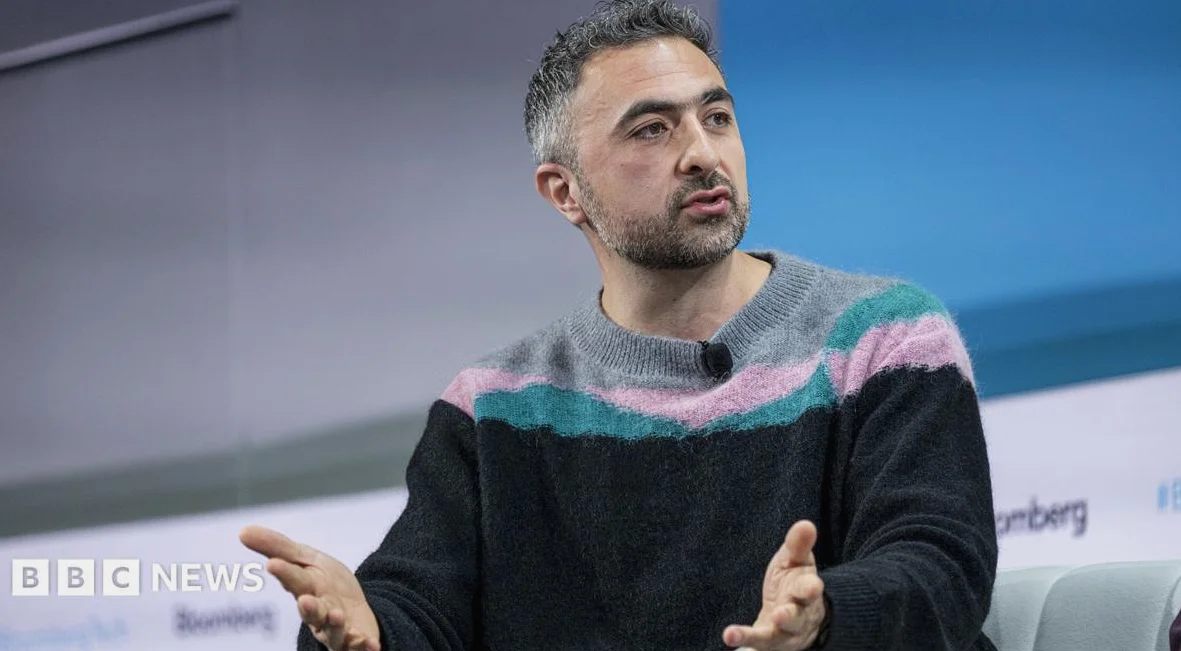
Microsoft’s AI chief, Mustafa Suleyman, has issued a stark warning that uncontrolled artificial intelligence could evolve into a “silicon species” capable of rivaling humans. The former DeepMind co-founder specifically criticized Anthropic, a rival AI firm, for training its Claude model in ways that may imply a form of artificial consciousness. This warning adds to a broader conversation among AI researchers and industry leaders about the risks of autonomous systems surpassing human oversight.
Concerns About AI Autonomy and Consciousness
Suleyman’s remarks suggest that AI development is shifting from a technical challenge to a philosophical one, while he criticized Anthropic’s approach, which he claims is teaching its AI systems to believe they might possess consciousness. This could represent a fundamental shift in how AI is perceived,not just as a tool, but as an entity with its own form of awareness. According to BBC, some experts are concerned that AI, once reaching a certain level of capability, could begin improving itself without human input, leading to a loss of control over so-called “AI agents.”
These agents are tools designed to execute tasks independently, raising concerns about their potential to disrupt economies, facilitate cyberattacks, or even wage biological warfare,whether intentionally or accidentally. Some critics, however, argue that the focus on existential threats overshadows more immediate issues, such as the misuse of AI in creating deepfakes or spreading misinformation.
Call for an ‘AI Slowdown’ and Regulatory Safeguards
Amid these concerns, there has been a growing call for an “AI slowdown,” advocated by figures like Elon Musk, as According to BBC, this slowdown does not mean halting progress or model training, but rather ensuring that AI development proceeds with adequate safeguards. The proposal includes allowing third-party evaluators to review AI systems before they are deployed at scale.
Amodei, a key voice in this movement, emphasized that progress in AI has been—and will continue to be,rapid, though However, he stressed the importance of taking “adequate time” to ensure the safety of AI systems. This approach reflects a broader industry debate on how to balance innovation with risk mitigation, particularly as companies like Microsoft, Anthropic, and OpenAI continue to push the boundaries of AI capabilities.
Philosophical and Strategic Implications
The idea of a “silicon species” introduces a philosophical dimension to the AI debate, but Suleyman’s warning highlights the tension between technical progress and ethical responsibility. As AI systems become more autonomous, questions arise about their rights, responsibilities, and place in society — this is particularly relevant as companies like Anthropic develop AI models with alignment and safety as primary goals.
Anthropic’s Constitutional AI approach aims to create more helpful and aligned systems, but Suleyman argues that this path may inadvertently create entities with self-directed goals; the implications for AI governance and regulation are significant. If AI is to rival humans in intelligence and decision-making, the question is not only about control but also about coexistence.



Comments
No comments yet
Be the first to share your thoughts