

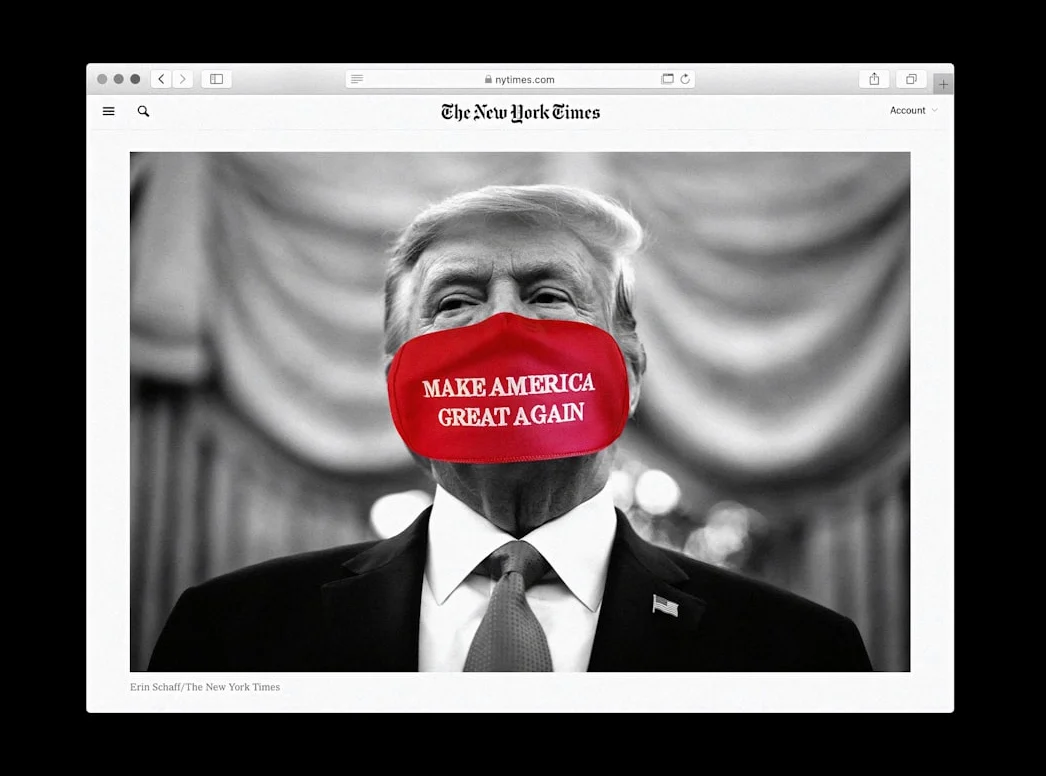
U.S. President Donald Trump has dismissed calls to slow down artificial intelligence (AI) development, asserting that the United States is already ahead of China in the field. According to 경향신문, Trump emphasized that the country that wins the AI race will be the global leader. During a visit to Ireland on the 13th (local time), Trump told reporters at his Doonbeg golf course that whoever wins the AI race is the winner.
Competitive vs. Cautionary Approaches to AI
While the Trump administration favors rapid AI development and reduced regulation, the scientific community has raised concerns about existential risks, as According to elciudadano.com, over 350 AI executives, researchers, and engineers signed a declaration in May 2023 published by the Center for AI Safety (CAIS). The declaration stated that “mitigating the risk of extinction caused by artificial intelligence should be a global priority, on par with other large-scale social risks, like pandemics and nuclear war.”
Signatories included Sam Altman from OpenAI, Demis Hassabis from Google DeepMind, Dario Amodei from Anthropic, and Geoffrey Hinton and Yoshua Bengio, known as two of the «godfathers» of AI. The declaration reflects a growing call within the scientific community for a more cautious and regulated approach to AI development.
China’s Strategic AI Approach
China, in contrast, seeks to carve out a third path in AI governance, prioritizing development while maintaining sovereign control, while According to elciudadano.com, China is promoting open-source solutions and rejecting U.S. dominance in setting the global AI agenda based on security narratives. The Chinese approach is seen as an alternative to both the U.S. competitive model and the scientific community’s cautionary stance.
China’s strategy includes a focus on domestic innovation and state-led AI initiatives, allowing it to bypass some of the regulatory hurdles seen in other countries; this approach has enabled China to rapidly expand its AI capabilities, particularly in areas such as facial recognition and surveillance technologies.
Global Implications and Policy Divergence
The divergence in AI policy approaches between the U.S., China, and the scientific community has global implications — the U.S. model emphasizes technological leadership and economic competitiveness, while the scientific community calls for a more measured and risk-averse strategy. China, on the other hand, is pursuing a state-centric model that emphasizes self-reliance and control over AI development.
Trump’s comments reinforce the U.S. stance of maintaining a competitive edge in AI, even in the face of industry warnings. Kevin Hassett, chair of the White House National Economic Council, appeared on CNN to vigorously defend the president’s remarks, suggesting that regulatory restraint will help the U.S. maintain its technological supremacy.
The debate over AI governance is likely to intensify as the technology continues to advance, while While the U.S. prioritizes speed and innovation, the scientific community warns of potential existential risks. China, meanwhile, is building its own AI network with a focus on state control and open-source collaboration.




Comments
No comments yet
Be the first to share your thoughts