

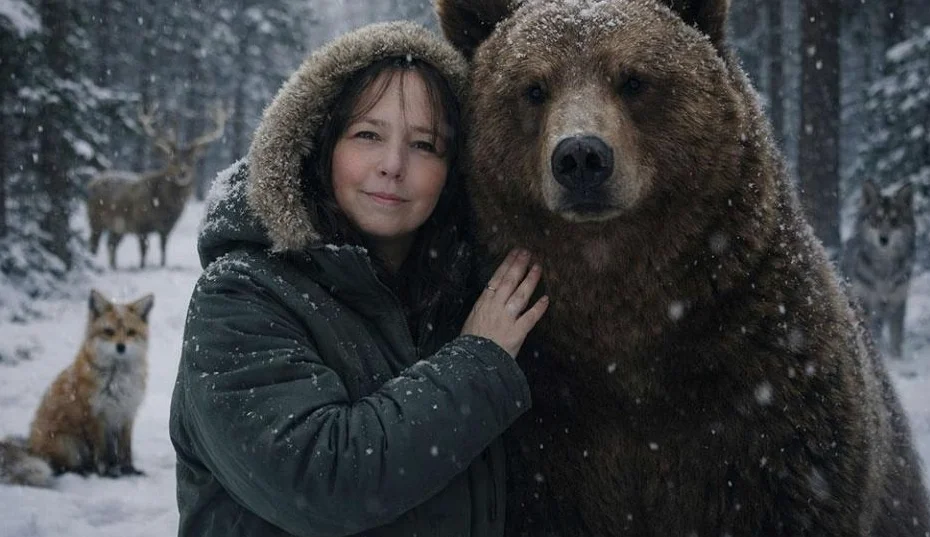
THIMPHU — A tiger strolling calmly beside a researcher. A leopard chased away by a house cat. Bears bouncing on backyard trampolines. These are just a few of the wildlife videos now circulating online, blurring the line between reality and fabrication. As these videos gain traction on social media platforms like TikTok, YouTube, Facebook, and Instagram, conservationists in Bhutan are sounding the alarm over the potential impact on public understanding and wildlife safety.
Distorting Public Perception
The spread of wildlife content has raised concerns among experts who warn that such videos are not only misleading but could also influence how people interact with wild animals. In one widely shared video, a leopard appears in a backyard while a domestic cat bravely confronts and drives it away. Another video shows deer and bears bouncing on a trampoline — scenes that are entirely artificial but appear real to many viewers.
Conservationists argue that these fabricated clips are distorting natural behavior and could encourage dangerous interactions with wildlife. In India, an video of a tiger attacking a man outside a house spread rapidly on social media before officials confirmed the incident never occurred. Similarly, in Japan, authorities have warned about a wave of bear videos that could mislead the public on how to behave around wildlife.
Even experts can be misled. In Djibouti, a video showing a lioness crossing a road briefly excited conservationists before experts confirmed it was entirely . Such incidents highlight the growing concern that content is influencing public perception of wildlife behavior in ways that could have real-world consequences.
Impact on Bhutan’s Conservation Efforts
Bhutan, a global leader in conservation, has seen its own share of wildlife content. Recently, a video circulating on TikTok depicted tigers in Bhutan calmly interacting with a researcher, suggesting the animal was approachable and non-threatening. However, the Department of Forests and Park Services (DoFPS) strongly refuted the portrayal, stating that tigers in Bhutan are wild, territorial apex predators that do not naturally engage in friendly or human-like interactions with people.
According to a DoFPS official, such content could create a false sense of safety, particularly among young viewers who consume large amounts of digital media. ‘In Bhutan, many communities live close to forests and protected areas,’ the official said. ‘It is essential that people understand that tigers and other wild animals are unpredictable and must always be respected from a safe distance.’
Beyond public safety, the department also expressed concern that misleading content could undermine conservation messaging built over decades. ‘Bhutan’s reputation as a global conservation leader is grounded in science-based wildlife management and ecological integrity, not romanticized or fabricated narratives,’ the official added.
The Department of Forests and Park Services is monitoring misleading content and issuing clarifications through official communication channels when necessary. However, the challenge lies in distinguishing between authentic wildlife documentation and imagery, especially as the latter becomes increasingly realistic and difficult to detect.
AI as a Conservation Tool and a Challenge
While the misuse of AI is a growing concern, the technology itself is not inherently problematic. In fact, AI is becoming an essential tool in conservation science. Around the world, researchers are using machine learning to analyze camera-trap images, identify species, track animal movements, and process vast amounts of ecological data more efficiently.
In Bhutan, the DoFPS is also using AI to enhance its conservation efforts. The department has begun deploying AI-supported monitoring systems to detect animals early and warn nearby communities about potential human-wildlife conflicts. These technologies can enhance public safety and strengthen conservation responses.
However, the challenge lies in ensuring that AI is used responsibly. The DoFPS is now working with communication and ICT authorities to explore digital guidelines that encourage clearer labeling of wildlife content. Environmental education programs and school Nature Clubs are also being strengthened to help young people distinguish between authentic wildlife documentation and fabricated imagery.
Experts warn that as AI continues to reshape the digital landscape, critical thinking and responsible sharing of content are becoming essential. ‘Wildlife conservation ultimately depends on a shared understanding of the reality where animals live, how they behave, and the risks they pose,’ a conservationist said. ‘When images blur that reality, the challenge of protecting wildlife becomes even harder.’
With wildlife videos blurring reality, the need for clear communication, education, and responsible use of technology has never been more urgent. As Bhutan and other nations grapple with the implications of this digital transformation, the focus remains on balancing the benefits of AI with the responsibility to preserve the integrity of wildlife conservation.






Comments
No comments yet
Be the first to share your thoughts