

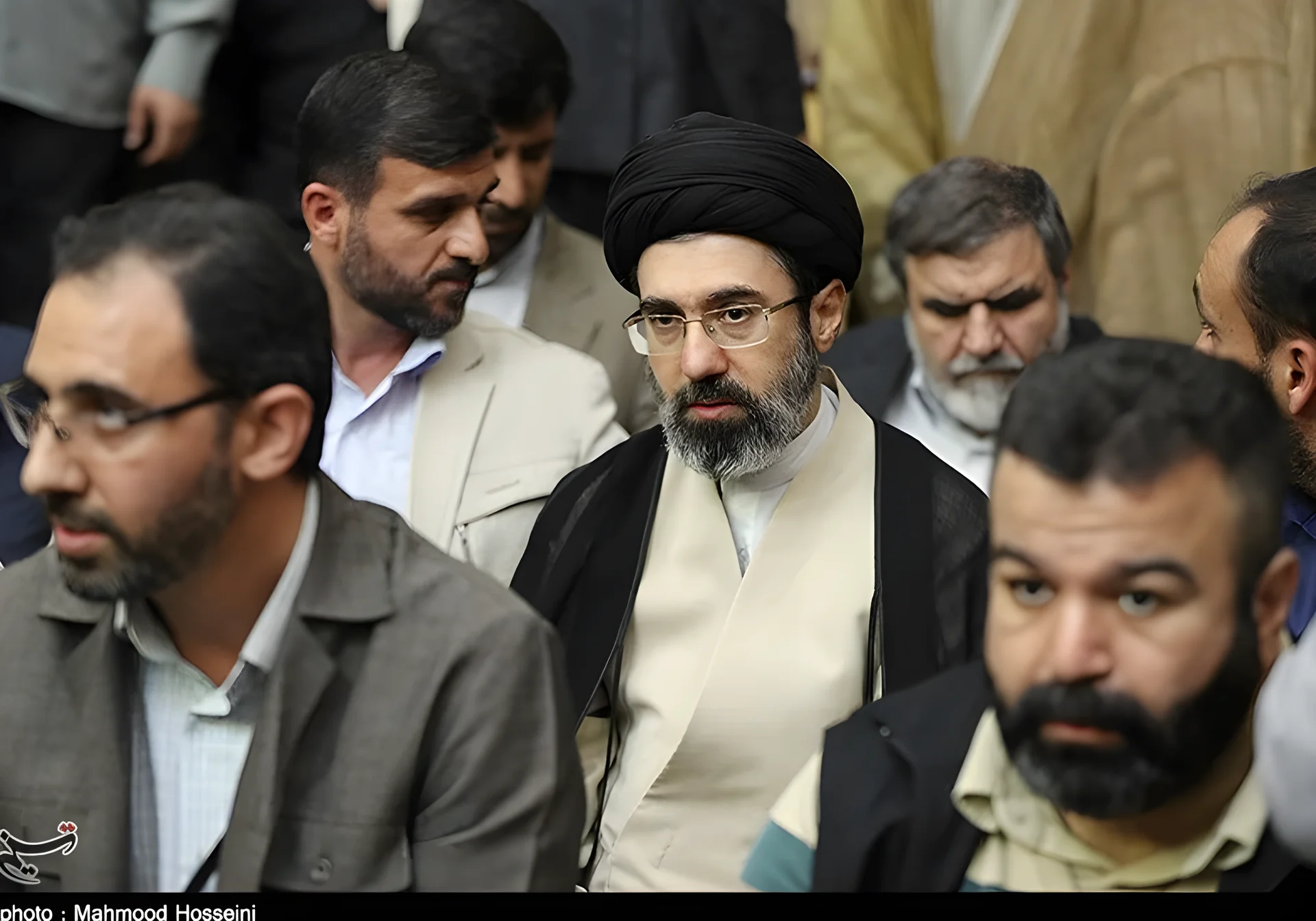
Mojtaba Khamenei, the son of late Supreme Leader Ali Khamenei, has been named as Iran’s next supreme leader, according to reports from Iranian and regional media. The claims come amid unverified reports that Ayatollah Ali Khamenei was killed in U.S. and Israeli strikes on February 28. However, no independent confirmation of the succession has been provided, and the claim should be treated with caution until Iran’s formal constitutional process is clearly documented.
Background on Mojtaba Khamenei’s Potential Role
Mojtaba Khamenei has long been discussed as a potential heir within Iran’s complex and opaque power structure. As the second-eldest child of Ali Khamenei, he is widely considered the most influential of his father’s sons. Despite speculation, questions remain about whether his religious standing aligns with the traditional expectations of the supreme leader position.
According to reports, an interim leadership council may have taken over the supreme leader’s duties while a successor is selected. However, the composition of this council varies by outlet. Al Jazeera reported a three-member council, while a related Wikipedia entry mentioned four named officials. This inconsistency highlights the difficulty in assessing Iran’s next move from afar.
Biography and Controversies
Mojtaba Khamenei was born in Mashhad on September 8, 1969. He spent part of his childhood in Sardasht and Mahabad before pursuing religious studies in Qom from 1999. He also served in the Iran-Iraq war from 1987 to 1988, a period that remains significant within Iran’s major mythology.
His role in the suppression of protests following the 2009 election has been a point of controversy. Some reports suggest he was directly in charge of the Basij, the paramilitary force responsible for maintaining order. Reformist candidate Mehdi Karroubi accused him in an open letter of conspiring to rig the election in favor of Mahmoud Ahmadinejad. Ahmadinejad later accused Mojtaba of embezzling from the state treasury.
Financial Allegations and Sanctions
While there is no verified public figure for Mojtaba Khamenei’s net worth, there are numerous allegations and denials surrounding his financial activities. The Guardian and Libération have cited claims that he controls large financial assets. However, an Iranian political group led by his uncle Hadi Khamenei has rejected these allegations.
A Bloomberg investigation in January 2026 reported that Mojtaba is linked to an offshore network used to hold and move assets outside Iran. These assets include high-value real estate in London and Dubai, as well as interests in shipping, banking, and hospitality in Europe. According to the report, these assets are generally not held in his name and are structured through intermediaries and layered corporate entities across jurisdictions. Some of these assets have been sold or restructured amid scrutiny.
One name associated with these claims is Ali Ansari, an Iranian businessman sanctioned by the United Kingdom. Ansari has denied the allegations and stated he would challenge the UK sanctions.
Additionally, Mojtaba Khamenei was sanctioned by the U.S. in 2019 for acting in place of the supreme leader without being elected or appointed to an official position. He was also sanctioned for working closely with the Quds Force commander, alongside allegations of ties to the Basij and advancing his father’s regional and domestic objectives.
Implications of the Succession
If the succession report proves accurate, it would make the hereditary undertone of Iran’s leadership impossible to ignore. This would challenge the narrative of a republic that has always insisted it is not a monarchy. It would also raise the question of whether a man long portrayed as a behind-the-scenes operator can step into a role that is meant to embody both religious authority and political command.
The selection of Mojtaba Khamenei as the next supreme leader would not only be a domestic decision but also a global one. Iran would be asking its public and the international community to accept that the state’s most sensitive office can be passed along a family line while still claiming the legitimacy of a revolution.
With no clear timeline for the formal confirmation of the succession, the situation remains fluid. Analysts are closely watching for any official announcements or constitutional developments that could confirm or refute the claims. The implications for Iran’s political and economic landscape are significant, and the world is waiting for more clarity.






Comments
No comments yet
Be the first to share your thoughts