

 World Headlines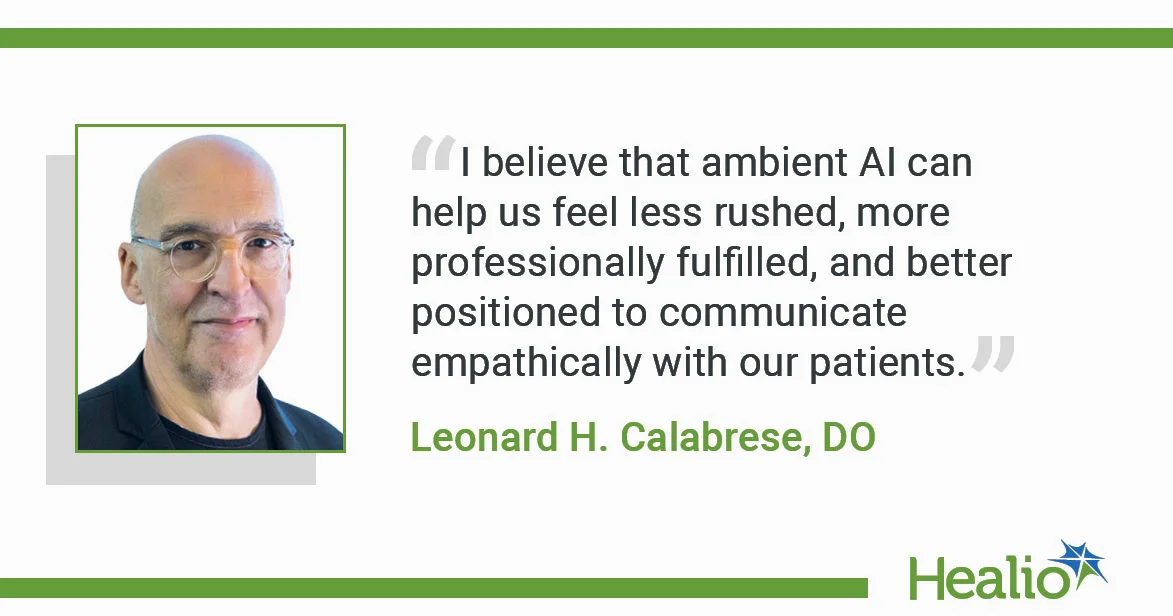
CLEVELAND (AP) — Leonard H. Calabrese, a rheumatology expert at Cleveland Clinic, calls ambient AI a game-changer for doctor-patient interactions. In a recent editorial, the professor of medicine at Cleveland Clinic Lerner College of Medicine of Case Western Reserve University said these tools — now accessible at low or no cost on smartphones — slash time spent on electronic medical records. That shift, he contends, lets physicians focus on patients.
Calabrese builds on his prior comments from last month about generative AI’s role in decision-making. He received emails from colleagues praising that piece. Now he pushes further: ambient AI strengthens the emotional core of care. ‘AI in the exam room has the potential not only to enhance the scientific and technical aspects of care, but also to strengthen that ineffable core of the practitioner-patient dyad,’ Calabrese wrote.
Electronic medical records have long frustrated doctors. For decades, physicians hunched over keyboards during visits, turning their backs on patients. Calabrese references a famous crayon drawing by an 8-year-old girl: it shows her doctor typing, ignoring her family. That image, he notes, captures how computers erode human connection.
Studies back ambient AI’s benefits. The technology records conversations and generates notes automatically. Evidence shows it saves time, lifts professional satisfaction and fights burnout, according to Calabrese. More crucially, it frees doctors for nonverbal empathy — eye contact, facial expressions, posture and presence. Helen Riess, MD, author of The Empathy Effect, states 80% of empathic communication is nonverbal.
Empathy yields tangible results. Calabrese cites research linking it to better pain control in chronic back pain patients, quicker recovery from respiratory infections and even immune system modulation. Advances in neuroimmunology and vagal nerve therapies explain how relationships trigger placebo effects in routine care, he adds.
Pre-EMR era doctors may need to relearn face-to-face skills. Younger clinicians, raised with screens in every visit, face a new exam room dynamic: patient and doctor, computer optional. Calabrese urges training in these skills.
AI already outshines humans in some written responses. Literature shows AI replies to patient emails or portal messages as efficient and more empathic than physicians’ rushed notes. Calabrese admits his own responses often feel transactional due to time pressures.
One worry lingers. Administrators might exploit ambient AI to ramp up productivity, Calabrese warns. He urges doctors to champion it instead for humanism — restoring meaning to medicine. ‘We should be lobbying for its use as a tool to enhance medical humanism,’ he writes.
Calabrese, chief medical editor for Healio Rheumatology and RJ Fasenmyer Chair of Clinical Immunology at Cleveland Clinic, invites feedback at [email protected] or [email protected].






1 Comment