

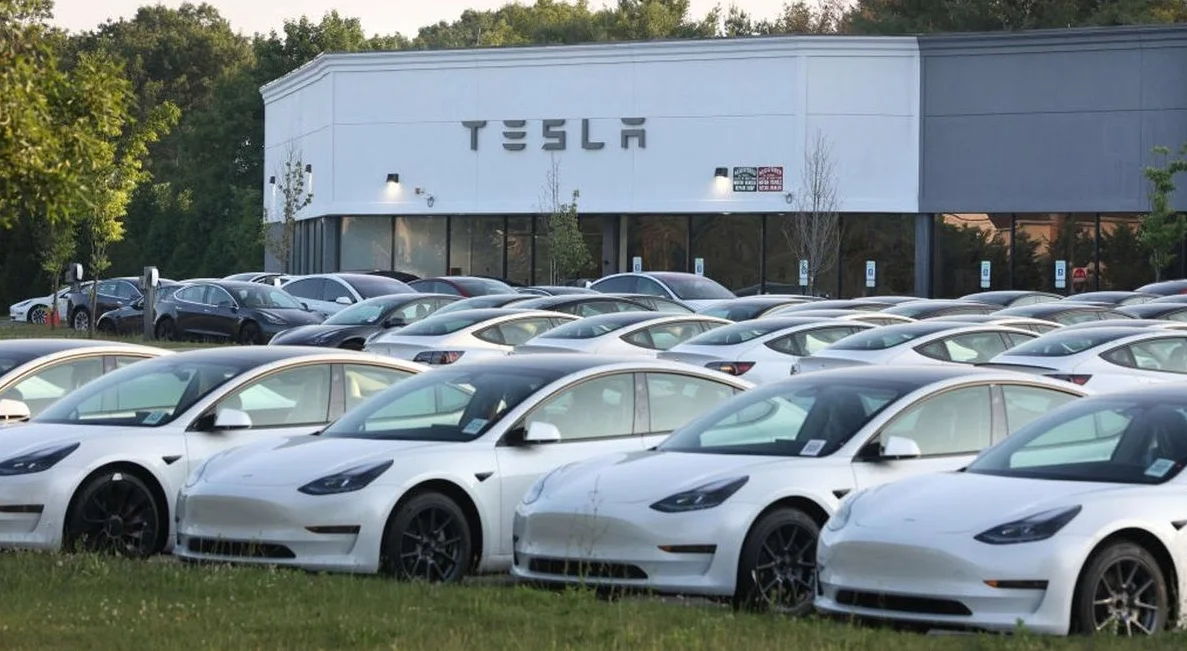
With oil prices spiking amid heightened military activity in the Middle East, drivers in the United States are finding that switching to an electric vehicle like a Tesla can result in significant savings at the pump.
Conflict Drives Oil Prices to Record Levels
Gas prices have surged as the United States and Israel launched strikes against Iran on February 28, killing the country’s Supreme Leader Ayatollah Khomeini. In response, Iran has targeted U.S. military installations across the region, escalating the conflict.
According to defense officials, the U.S. military operation has already cost $6 billion in just one week of fighting. As the conflict continues, oil markets have been thrown into chaos, with Brent Crude prices surging to a record high of $119 per barrel before slightly easing.
The Strait of Hormuz, a critical global shipping route through which 20 to 30 percent of the world’s oil and gas supplies pass, has become a focal point of concern. Security threats, including drone attacks, have disrupted shipping traffic through the narrow strait, reducing supply and pushing prices higher.
Electric Vehicles Offer Substantial Cost Savings
For drivers who have transitioned to electric vehicles, the cost savings are becoming increasingly apparent. According to data from Energy Sage, charging a Tesla at home costs around $20 for a full charge, compared to the roughly $50 it would cost to fill up a traditional petrol car.
This difference translates to a saving of approximately $30 per full ‘fill’ equivalent for drivers who charge their electric vehicles at home. A typical petrol car can travel between 350 and 450 miles per tank, averaging around 400 miles, while a Tesla can travel between 303 and 405 miles per charge, averaging roughly 354 miles.
While petrol cars have a slight edge in range, the cost per mile is significantly lower for electric vehicles. Petrol works out to roughly 12.6 cents per mile, compared to about 5.6 cents per mile for a Tesla charged at home. That’s a saving of roughly 7 cents per mile.
According to a report by Energy Sage, these savings are not just theoretical. Drivers who have made the switch to electric vehicles are currently saving around $30 every time they power up instead of filling up their gas tanks.
What’s Next for Gas Prices and EV Adoption
With the conflict in the Middle East showing no signs of abating, experts warn that oil prices could remain high for the foreseeable future. This could further increase the cost savings for electric vehicle owners, potentially accelerating the shift toward EVs in the U.S.
According to analysts, the U.S. government is closely monitoring the situation in the Middle East and has contingency plans in place to ensure energy security. However, the long-term impact of the conflict on oil prices and consumer behavior remains uncertain.
Meanwhile, the rising cost of gasoline is also prompting more Americans to consider purchasing electric vehicles. With the average savings of $30 per full charge, the economic incentive for switching is becoming more compelling, especially as the price of oil continues to fluctuate due to geopolitical tensions.
As the situation in the Middle East evolves, the financial benefits of driving an electric vehicle are likely to become even more pronounced, offering a tangible alternative to the rising cost of traditional fuels.






Comments
No comments yet
Be the first to share your thoughts