

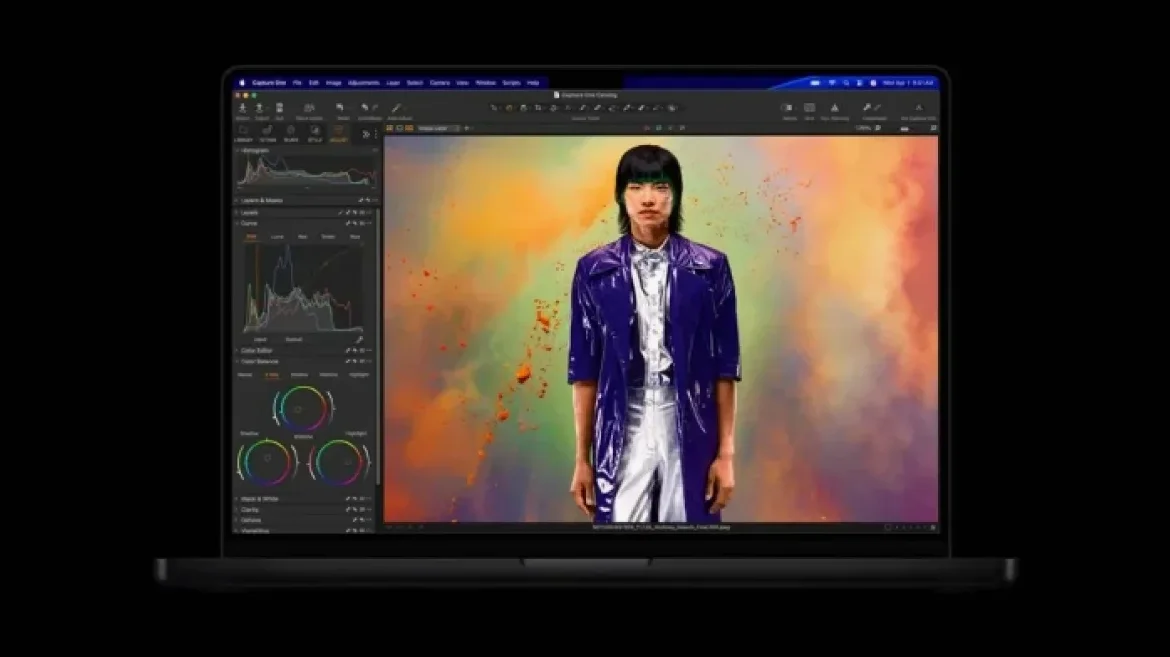
Apple Newsroom has announced the latest generation of MacBook Pro laptops, featuring the M5 Pro and M5 Max chips. The 14- and 16-inch models are being positioned as powerful tools for professionals, developers, and creatives, with a focus on AI capabilities and performance improvements. However, the company’s decision to introduce a third type of CPU core and rename existing ones has raised questions about how consumers will interpret the new specifications.
Performance Claims and AI Capabilities
According to Apple’s announcement, the new MacBook Pro models deliver up to 4x faster performance compared to the previous generation and up to 8x faster AI performance compared to the M1 chips. The M5 Pro and M5 Max chips include a Neural Accelerator in each GPU core, allowing users to run advanced large language models directly on the device without compromising battery life.
Apple’s product description highlights several hardware updates, including up to 2x faster SSD speeds, an Apple-designed N1 wireless networking chip supporting Wi-Fi 7 and Bluetooth 6, and a Liquid Retina XDR display with a nano-texture option. The models also feature Thunderbolt 5 connectivity, a 12MP Center Stage camera, and a six-speaker sound system, along with Apple Intelligence features and macOS Tahoe. The laptops are available in space black and silver.
Confusion in Core Naming
The most significant technical change is the introduction of a new Fusion Architecture that combines two dies into a single system-on-chip. Apple describes the M5 Pro and M5 Max as featuring an ‘up-to-18-core CPU with 6 super cores’ and ’12 all-new performance cores,’ designed for multithreaded professional workloads and power efficiency.
Apple has changed the naming scheme for its CPU cores, introducing a third type that sits between the previous ‘efficiency’ and ‘performance’ cores. The company has reclassified what was once called ‘performance’ cores as ‘super’ cores, while the new middle tier is now labeled ‘performance.’ This shift could confuse buyers who are used to the previous naming conventions.
John Ternus, Senior Vice President of Hardware Engineering at Apple, emphasized the new CPU design, stating that the M5 Pro and M5 Max chips are ‘now up to 4x faster than the previous generation.’ However, the reclassification of core types may make it harder for consumers to compare the new models with previous generations without additional context.
Pricing and Storage Changes
The new MacBook Pro models come with higher starting storage and prices. The 14-inch M5 Pro starts at $2,199 with 1TB of storage, while the 16-inch M5 Pro starts at $2,699. The M5 Max configurations begin at $3,599 with 2TB of storage. These prices are higher than the previous generation’s starting points.
Despite the performance and AI improvements, several hardware features remain unchanged, including the port selection, Mini-LED display, speakers, webcam, and the claimed 24-hour battery life. This contrast between aggressive performance marketing and a familiar hardware design places more emphasis on how Apple communicates ‘performance’ to its customers.
Apple Newsroom has positioned the M5 Pro and M5 Max as a leap forward in capability, but the reclassification of core types and the shift in naming could create confusion for buyers. The challenge for Apple is to ensure that the new definitions of ‘performance’ and ‘super’ cores are clearly communicated to the public.
With pre-orders beginning on March 4 and availability starting on March 11, Apple Newsroom has set a tight timeline for the release of the new MacBook Pro models. The company will need to provide clear explanations of the new core terminology to avoid misinterpretation and ensure that consumers understand the value proposition of the new chips.






Comments
No comments yet
Be the first to share your thoughts