

Mass Illness at High School in Rembang
In the latest case, 777 people became unwell after consuming the food at a high school in Rembang, Central Java, the institution’s headteacher said — the meals were provided through a multibillion-dollar scheme that is one of President Prabowo Subianto’s signature policies, aiming to improve nutrition for Indonesia’s schoolchildren.
A total of 752 students and 25 teachers experienced symptoms of food poisoning after eating meals provided through the Makan Bergizi Gratis (MBG) programme at the high school in Lasem on Wednesday lunchtime. “They had diarrhoea and took turns using the toilet,” headteacher Juhartutik told BBC News Indonesia. “There are 40 toilets in total, so they can’t accommodate everyone.”
The school has since sent nearly 1,200 pupils and 95 members of staff home, while several were taken to hospital. Juhartutik said the government would cover any medical costs and that the local food distributor had come to the school to “take responsibility.”
Previous Outbreak in Sidoarjo
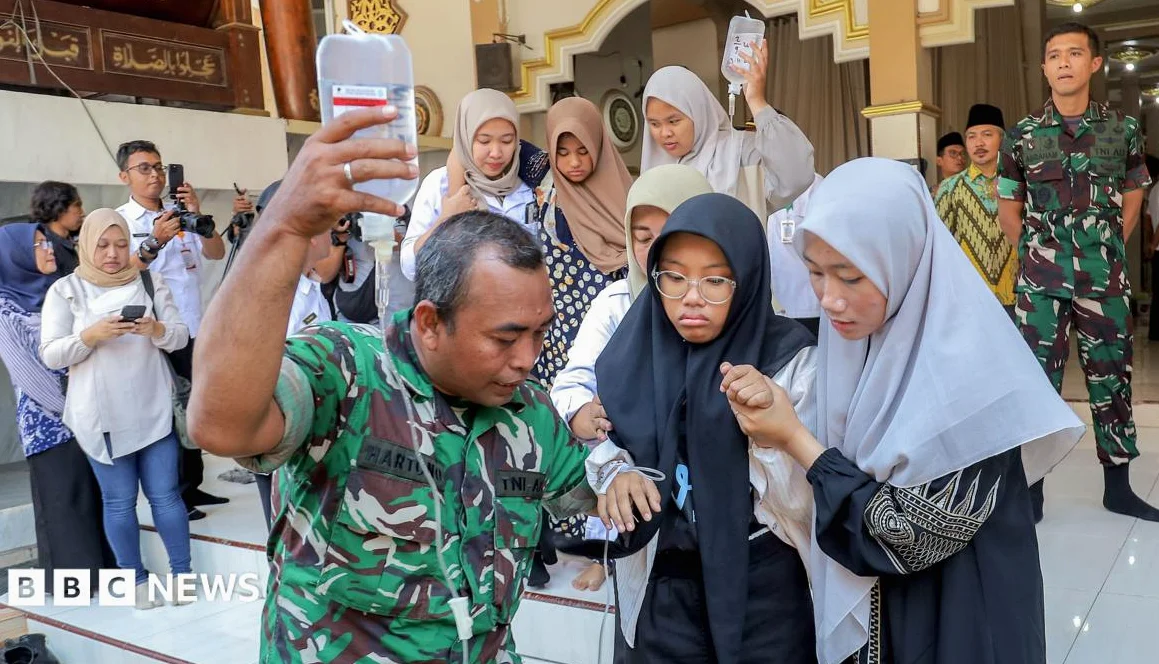
The suspected outbreak came after 730 people fell ill after consuming MBG meals at an Islamic boarding school in Sidoarjo, East Java, on Tuesday, a local health official said. Reni said their child felt dizzy and nauseous before developing stomach problems after eating the meal, and some of those affected required hospital treatment, with some students being transported in wheelchairs because they were too weak to stand.
Hundreds of others have been affected by suspected cases of food poisoning linked to the free school meals this week, including hundreds across several schools in Tana Toraja, South Sulawesi. Improper storage or poorly prepared food are often to blame for cases of food poisoning, in which the body rejects the contaminated food.
Parents and teachers have told reporters of slimy chicken, as well as food that appeared undercooked and had a fishy odour — Local authorities are investigating the cause of the suspected outbreaks, with food samples being tested for possible contamination.
Response and Accountability
The head of the food distribution unit in Lasem, Achmad Sholeh Syarifudin, apologised and took “full responsibility for the recovery of students and teachers.” He said the unit would conduct a wide-ranging evaluation of its operation following the incident. The head of Indonesia’s National Nutrition Agency has said: “If it is identified that there was negligence and there are criminal elements, I apologise, we cannot help.”
The meals were provided through a multibillion-dollar scheme that is one of President Prabowo Subianto’s signature policies, aiming to improve nutrition for Indonesia’s schoolchildren. But, as well as being the suspected source of a string of mass food poisonings, the programme has been dogged by allegations of corruption and criticism of its cost.




Comments
No comments yet
Be the first to share your thoughts