

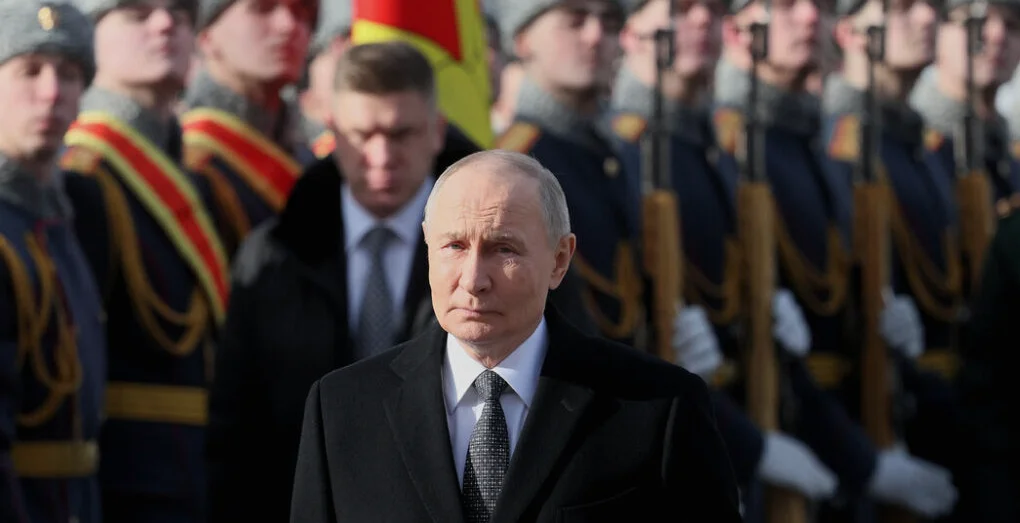
Russia has seen unexpected gains from the full-scale U.S.-Israeli attack on Iran, with President Vladimir V. Putin benefiting from higher oil and gas prices that could alleviate the country’s economic struggles. At the same time, he is using Russia’s geopolitical weight as an alternative energy supplier and stands to gain from the Middle East conflict if it strains the supply of U.S.-made air defenses for Ukraine. However, Putin is also grappling with a new world order under Trump, which is checking Russia’s influence and disrupting Moscow’s long-standing strategies for international partnerships.
Trump’s Unchecked Power Challenges Putin’s Global Strategy
For years, Putin has supported anti-American authoritarian regimes in Iran, Venezuela, and Cuba, assuming Washington would not act decisively against their leaders. That assumption has been upended under Trump, who has demonstrated a willingness to disregard international norms and use U.S. military might aggressively. This has put pressure on Russia’s alliances and weakened its position in the global arena.
Despite Iran’s support for Russia during the initial stages of the Ukraine invasion, Moscow has largely remained silent as the U.S. and Israel have targeted Iran’s leadership and military. The Kremlin has issued only mild condemnations, avoiding direct criticism of Trump.
According to Angela Stent, a Russia expert and professor emerita at Georgetown University, this reflects the limits of Russia’s influence: ‘What does it mean to be a partner of Russia?’ she said, highlighting the stark contrast with Iran’s role in aiding Moscow during the Ukraine conflict.
Russia’s Silence Amid Rapid U.S. Actions
The last two months have seen a series of dramatic U.S. actions against Russia-friendly leaders, including the killing of Iran’s supreme leader, Ayatollah Ali Khamenei; the capture of Venezuelan President Nicolás Maduro; and a U.S. economic blockade targeting Cuba’s leadership. In each case, Russia has offered little support.
Bobo Lo, a Russia analyst and former Australian diplomat in Moscow, noted that Trump’s aggressive tactics have shifted the balance of power: ‘Now he’s no longer the baddest guy in town,’ Lo said, adding that ‘the mantle has gone over to Trump.’ He described Putin as appearing ‘a little bit pathetic’ in this new reality.
Alexander Gabuev, director of the Carnegie Russia Eurasia Center, pointed out that Russia, already engaged in the war in Ukraine, could not realistically intervene in Iran’s defense without risking a larger conflict with the U.S. or Israel. ‘There was very little that Russia, even in tandem with China, could have done to undo this,’ Gabuev said, referring to the intelligence penetration of Iran.
A Complex Foreign Policy Landscape
Despite these challenges, Putin may still have long-term strategies in play. Trump has not explicitly sought to unseat Russia-friendly elites in the countries where he has intervened, leaving room for Putin to maintain relationships with them. This dynamic could be a double-edged sword for the Kremlin.
Trump’s foreign policy has had both positive and negative effects for Russia. By hosting Central Asian leaders and brokering a peace pledge between Azerbaijan and Armenia, Trump has encroached on what Putin views as his sphere of influence. However, Trump’s public criticism of Ukrainian President Volodymyr Zelensky and his dismantling of U.S.A.I.D. have pleased Moscow, which sees these actions as a blow to Western influence.
Trump’s recent threats to take Greenland from Denmark have also risked fracturing NATO, a long-standing goal for Putin. Despite these developments, Putin has been cautious in his public criticism of Trump, focusing instead on securing his desired outcome in Ukraine.
During an interview with Politico, Trump reiterated his criticism of Zelensky, not Putin, as the main obstacle to peace. Despite Ukrainian forces making territorial gains in February, Trump repeated his claim that Ukraine lacks the necessary use.
The geopolitical landscape is shifting rapidly, with Trump’s actions changing the dynamics of international relations. As Russia’s influence wanes, the question remains how Moscow will adapt to this new reality and whether it can maintain its strategic partnerships in the face of growing U.S. assertiveness.






Comments
No comments yet
Be the first to share your thoughts