

Amid rising geopolitical tensions and a global shift in power dynamics, Asian nations are exploring the creation of an ‘Asian CERN’ to support scientific innovation and reduce dependence on Western technology. This idea has gained traction as China’s stalled Circular Electron Positron Collider (CEPC) project highlights the challenges of developing such high-tech infrastructure in isolation.
Asia’s Growing Tech Powerhouse
Asia’s dominance in critical technologies like semiconductors, artificial intelligence, quantum computing, and clean energy has positioned the region as a global powerhouse. Countries such as China, South Korea, and Japan are leading the charge in manufacturing and innovation, while nations like Indonesia and the Philippines are playing key roles in critical mineral supply chains.
China’s Made in China 2025 policy has propelled the country to the forefront of semiconductors and AI, but its ambitious CEPC project is facing significant cost overruns and delays. Meanwhile, Taiwan’s TSMC remains the world’s largest contract chip manufacturer, while Japan and South Korea continue to lead in robotics and digital electronics.
The Case for an Asian CERN
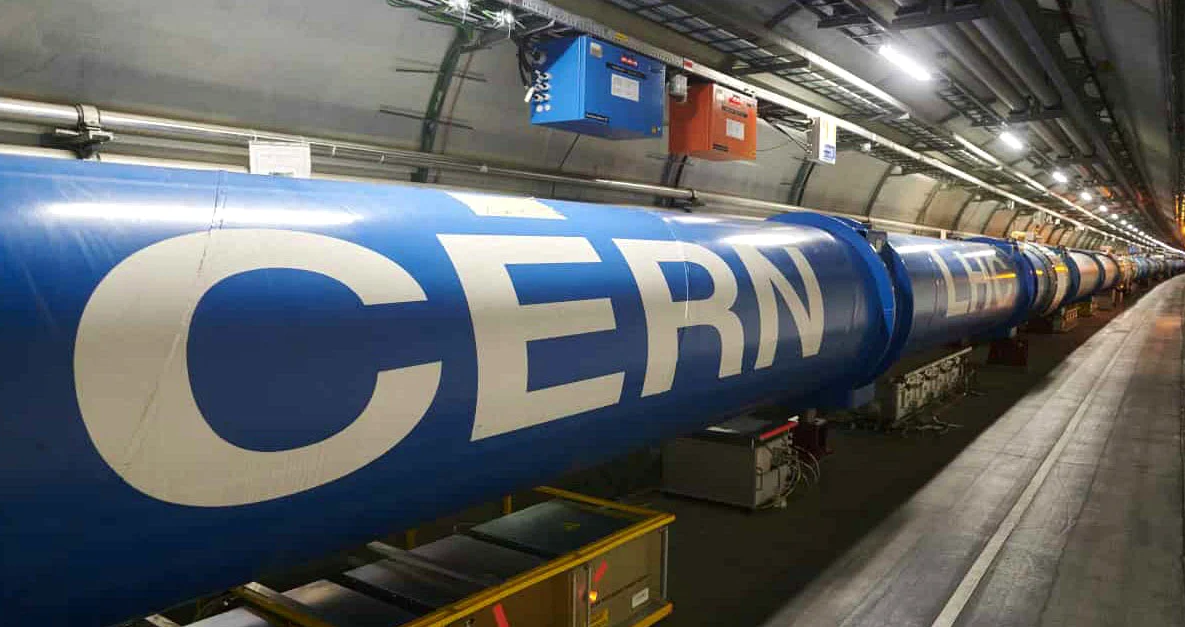
The European Organization for Nuclear Research, CERN, was established in the 1940s to promote peace through scientific collaboration. It has since become a global hub for research in particle physics, computing, and data processing, with breakthroughs like the invention of the World Wide Web.
Today, Asia is considering its own version of CERN—an ‘Asian Organisation for Scientific Research and Innovation’—to combine fundamental research with technological translation and manufacturing. The initiative could focus on semiconductors, AI, quantum computing, and clean energy, using regional strengths and reducing reliance on Western technology.
According to experts, such an organization would require significant coordination among major Asian economies, including China, Japan, South Korea, India, and Southeast Asian nations. Singapore, Thailand, and Vietnam are emerging as key players in logistics and digital infrastructure, further strengthening the region’s potential for collaboration.
India, while not a major manufacturing hub, has demonstrated its ability to drive innovation through digital infrastructure and space technology. Its demographic dividend also positions it as a key player in the region’s future scientific and technological landscape.
Challenges and Opportunities
Despite Asia’s growing technological prowess, the region still lacks the same level of scientific cohesion as Europe. China’s CEPC project, for instance, has faced setbacks, highlighting the need for regional cooperation to overcome financial and technical hurdles.
Experts argue that an Asian CERN could serve as a diplomatic tool, similar to how CERN helped mend post-war European relations. In a time of rising China-Taiwan tensions, such an initiative could also provide a neutral ground for dialogue and collaboration, promoting peace and stability in the region.
According to the original CERN convention, the organization was established to remain free from military concerns and to promote open sharing of research. An Asian counterpart would need to adopt similar principles to ensure its success and global relevance.
With the global order shifting and conflicts increasing, the need for such an organization has never been more pressing. The initiative could also attract participation from Western-backed allies like Japan and South Korea, as well as Russia, which has historically been discontent with Western technological dominance.
As the world becomes more interconnected, the role of scientific diplomacy in supporting cooperation and reducing geopolitical tensions is becoming increasingly important. The time for an Asian CERN may be approaching, but it will require a strong commitment from all stakeholders to make it a reality.






Comments
No comments yet
Be the first to share your thoughts