

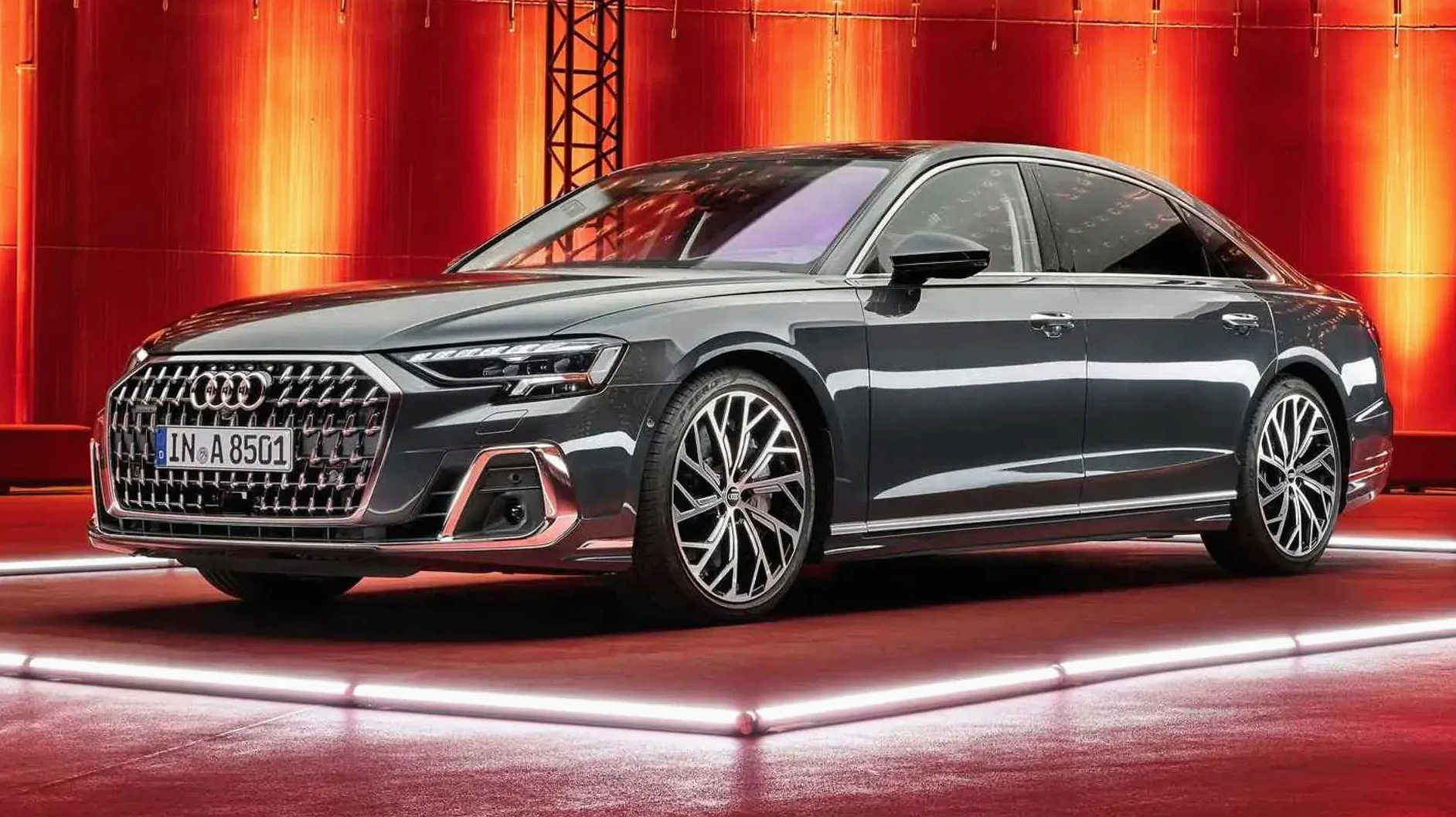
Audi has quietly closed the order books for its flagship A8 sedan in Germany, signaling the potential end of the full-size luxury sedan era. The decision comes as other automakers also reevaluate their strategies in the face of shifting consumer preferences and regulatory pressures.
End of an Era for the A8
The Audi A8, once a symbol of German engineering excellence, is no longer available for ordering in its home market. According to Audi spokesperson Marcel Bestle, the order books for the A8 closed approximately two weeks ago, with the final configurations available to customers on February 18. This move effectively marks the end of the D5-generation A8, which has been in production since 2017.
The D5-generation A8, introduced in 2017, was last facelifted in late 2021. However, this update failed to significantly boost sales or attract buyers away from competing models like the BMW 7 Series and the Mercedes S-Class. Despite efforts to revive the model, including a further-stretched version for the Chinese market under the historic Horch name, these initiatives have not yielded the desired results.
Uncertain Future for the A8
While Audi has not confirmed when production of the A8 will end, the closure of the order books in Germany suggests that the model’s end is imminent. Bestle told Motor1 that the company will communicate further details about a possible successor at a later date. However, the use of the word “possible” indicates that a fifth generation of the A8 has not yet been greenlit.
Currently, there are no confirmed spy shots of a new A8, and with no official announcement, it is unlikely that a successor will reach the market in the next few years. The lack of concrete plans for a new model raises questions about Audi’s commitment to the full-size sedan segment.
Regulatory and Market Pressures
Audi’s decision to close the A8’s order books in Germany is also influenced by regulatory challenges. Last October, German publication Automobilwoche reported that Audi is searching for a platform for a possible successor to the A8. However, a further facelift of the D5 generation is no longer feasible due to stricter emissions regulations, particularly the looming Euro 7 standards.
These regulations require vehicles to meet significantly lower emissions, making it more difficult to justify the continued production of large combustion-engine sedans. As a result, Audi may be forced to reconsider its approach to the full-size sedan market.
Audi initially aimed to transition to a fully electric lineup by 2032, but this goal has since been revised due to slower-than-expected adoption of electric vehicles. This shift has led to renewed interest in combustion engines, which could potentially lead to a new, ICE-powered A8. However, the company is also exploring the possibility of using the Premium Platform Combustion (PPC), which is compatible with large vehicles like the next-gen Q7 and the upcoming Q9.
Despite the technical feasibility of producing a new A8, the demand for full-size sedans has been declining. SUVs have overtaken sedans in popularity, and in some Asian markets, luxury minivans are gaining traction. This trend suggests that a new A8 may not be the most prudent investment for Audi at this time.
If a new A8 is approved for production, there could be a multi-year gap between the current model and its successor. This delay would benefit Audi’s domestic rivals, as both BMW and Mercedes are moving forward with their large sedans. Mercedes has confirmed that the next S-Class will arrive around 2029 with both combustion engine and electric power options.
The closure of the A8’s order books in Germany marks a key moment for Audi and the luxury sedan market. As the automotive industry continues to evolve, the future of the full-size sedan remains uncertain, with Audi, BMW, and Mercedes all handling the challenges of changing consumer preferences and regulatory demands.






Comments
No comments yet
Be the first to share your thoughts