

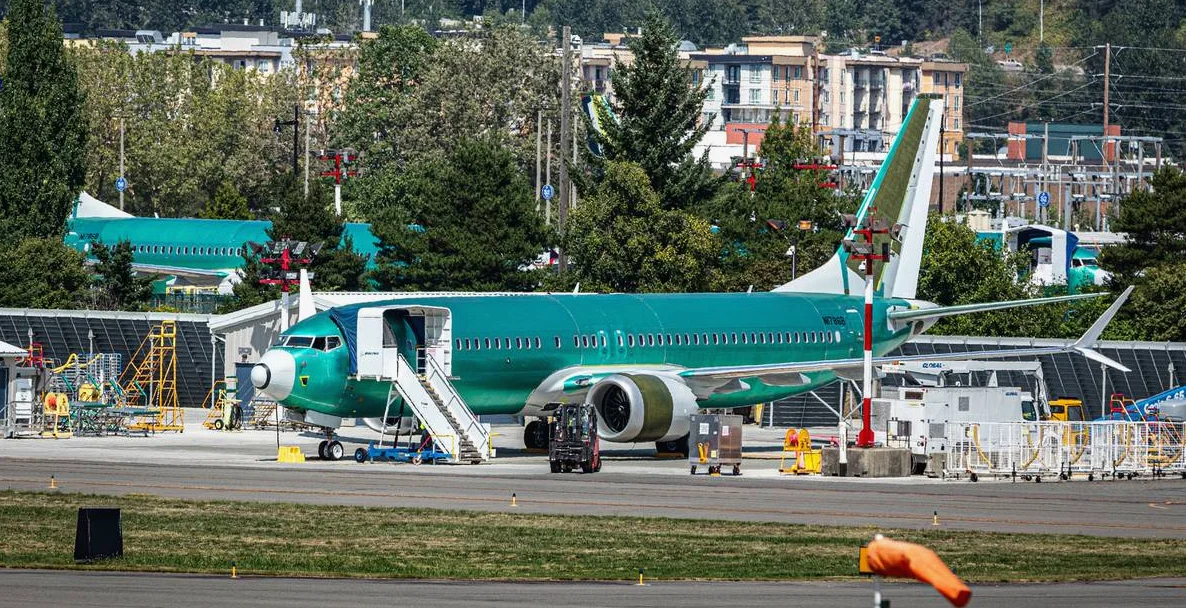
Boeing has delivered 2,157 aircraft from the 737 MAX family as of January 2026, signaling a major recovery for the manufacturer. This milestone reflects a significant push to stabilize production and clear the long-standing inventory of jets that had been parked at storage sites like Moses Lake during the global grounding.
According to industry data, Boeing handed over 46 commercial jets in January 2026, with 38 of those being 737 MAX units. This performance outpaced Airbus’s deliveries for the same month, which totaled 19 aircraft. The delivery pace highlights Boeing’s progress in rebuilding its production capabilities and restoring confidence in the MAX program.
Major global carriers continue to be the primary recipients of these airframes as they expand their networks. For instance, India’s Akasa Air received its 34th 737 MAX 8-200 on February 16, 2026, marking its third delivery in less than two months. The high-density MAX variants are increasingly dominant in delivery totals, as low-cost carriers seek to benefit from the aircraft’s 20% fuel-efficiency improvement over previous generations.
Reaching 2,157 deliveries signals what some industry observers have called the ‘end of an ugly chapter’ for the program. By early 2026, Boeing finally delivered the last remaining 737-8 and -9 airframes manufactured before August 2025. This means the company is no longer relying on a multi-year backlog of stored, grounded jets to pad its numbers.
While a massive order backlog of 4,887 aircraft remains, the current delivery pace suggests that the production system is finally beginning to align with airline demand. The FAA increased the monthly production cap to 42 aircraft in late 2025, and Boeing aims to increase this to 52 jets per month by year-end, provided quality benchmarks are met.
The reintegration of Spirit AeroSystems has also provided a major operational shift for Boeing, aimed at reducing ‘traveled work’—tasks completed out of sequence—which historically led to delivery delays and rework. This change is expected to improve production efficiency and reduce bottlenecks.
Despite these advancements, challenges remain. The MAX 7 and MAX 10 variants are still undergoing final phases of FAA certification, with delays affecting other Boeing model lines. Nearly 1,300 aircraft in the backlog remain undeliverable until later in 2026 or 2027. As a result, carriers that have gambled on these specific models are currently seeing their growth limited by regulatory timelines rather than factory capacity.
Southwest Airlines CEO Bob Jordan recently confirmed that the MAX 7 is expected to achieve FAA certification by August 2026, but the carrier does not anticipate the first passenger flights until early 2027 due to the necessary induction and pilot training periods. Similarly, United Airlines has shifted its fleet strategy, leaning on the MAX 9 and leased A321neos to fill the capacity gap until the largest MAX variant arrives in volume, likely in 2027 or 2028.
Despite the frustrations, some of Boeing’s most vocal critics have softened their tone as production stability improves. Ryanair’s Michael O’Leary, known for his sharp rebukes of Boeing leadership, recently praised the accelerated delivery pace of the 8-200 models, noting that the airline is on track to carry over 260 million passengers by 2027 if the current momentum holds.
Market analysts at S&P Global echo this sentiment, suggesting that if Boeing can maintain its current output of 42 jets per month without further quality issues, 2026 will be remembered as the year the program finally moved from crisis management and damage mitigation to sustainable recovery.






Comments
No comments yet
Be the first to share your thoughts