

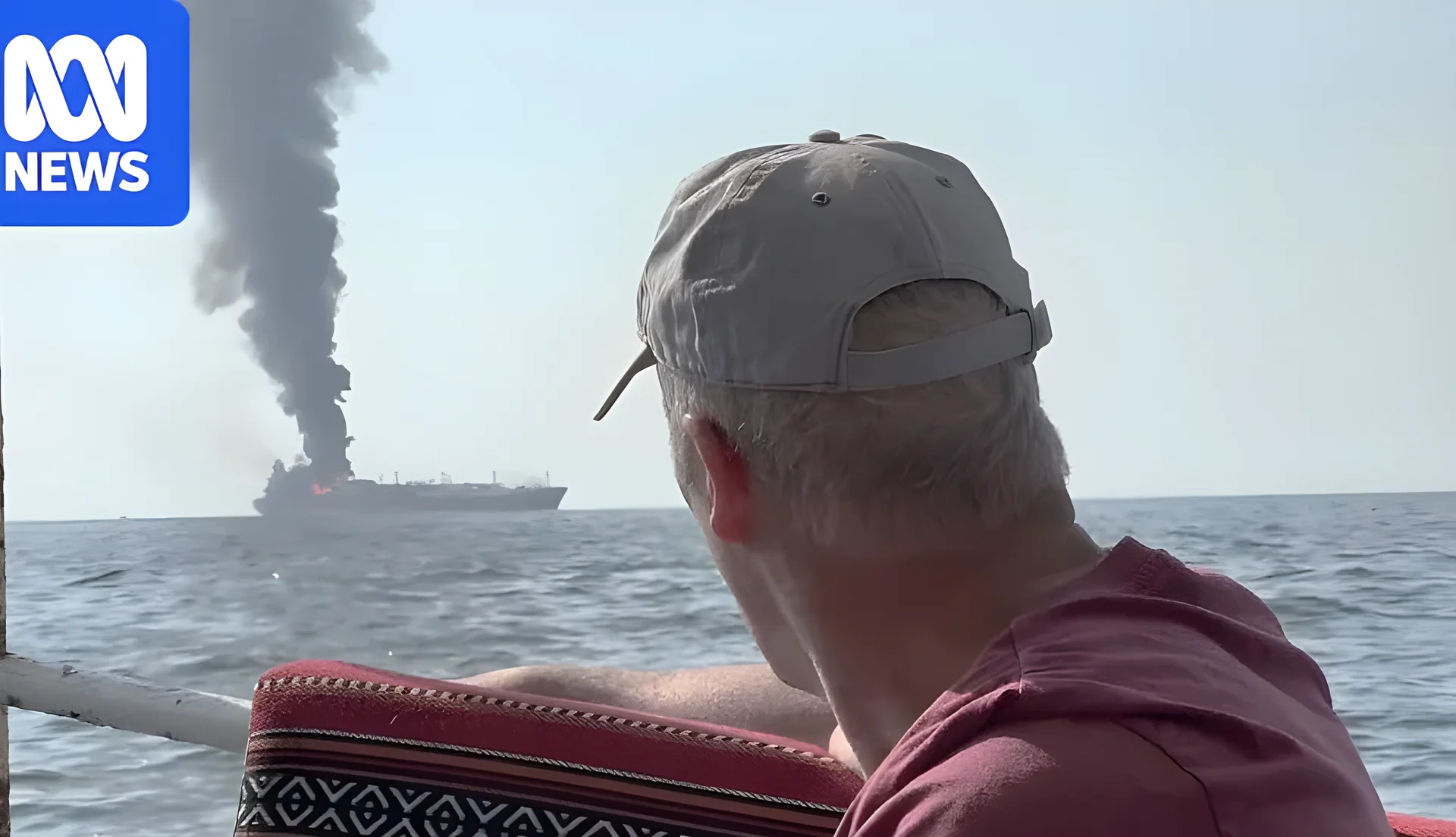
Minutes after Pugh entered the water on Monday, he heard two loud explosions. He saw an oil tanker about four kilometers away had been hit. “The explosion was so loud, two booms, and then fighter jets coming in. And at that moment I realized we have to get out of here right now,” Pugh told The Associated Press. He also passed another vessel that had been attacked and was sending fireballs into the sky.
Pugh warned that oil leaking from the dozens of tankers damaged since February could cause lasting harm to the region’s wildlife, including dolphins, sea turtles, and coral reefs. “When oil gets in there, when chemical pollution gets in there, it becomes very, very difficult to clean up that type of mess,” he said. “It lasts for generations.”
During his swim, Pugh saw large numbers of dolphins following his boat and hundreds of turtles along the Omani coast before the war. He described the strait as “one of the most beautiful places I have ever been.” But he emphasized that the area is now at risk due to ongoing attacks on shipping.
Since the war began on February 28, Iran has increased attacks on vessels it claims are traveling unauthorized routes in the strait. Several tankers have struck sea mines laid by Tehran, some of which have exploded and caught fire. One such vessel carried over 2 million barrels of oil.
Pugh urged an end to the fighting and the reopening of the strait, emphasizing the need for action to address the environmental damage. “With all these ships being sunk, this area is under severe threat,” he said. “It’s going to take years, decades for this area to recover.”
Pugh has spent 40 years swimming in extreme conditions to raise awareness about climate change and marine conservation. He has faced predators like great white sharks but said swimming in a conflict zone presented new dangers. “And to think of the impact which a casualty like this has on nature — it was very, very acute,” he said after passing a burning gas carrier.
Pugh emphasized that while war causes immense human suffering, the environmental damage often receives less attention. “But there is another casualty that receives far too little attention: nature itself,” he said. “And the damage can last long after the fighting has stopped.”



Comments
No comments yet
Be the first to share your thoughts