

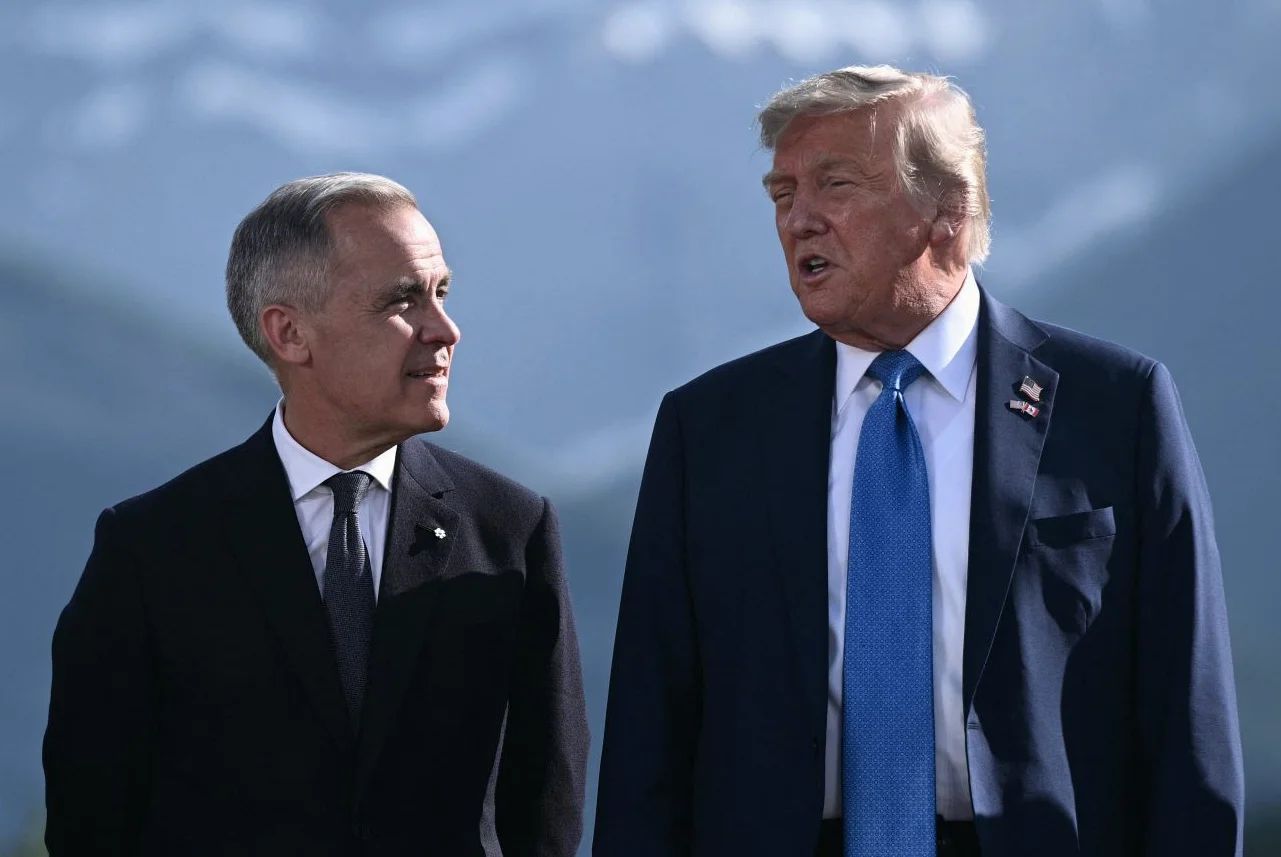
Canadian Prime Minister Mark Carney has publicly endorsed U.S. military actions against Iran, citing the country’s failure to dismantle its nuclear program and halt support for militant groups. Carney’s statement, issued during an official visit to Mumbai, signaled strong backing for the United States’ recent strikes on Iran, which were launched in response to perceived threats to global security.
Escalating Regional Tensions and Airspace Closures
The airstrikes, reportedly conducted by the United States and Israel, triggered widespread closures of airspace across the Middle East and parts of Europe. Countries including Iran, Iraq, Israel, Syria, Kuwait, and the United Arab Emirates announced partial or complete shutdowns of their skies following the attacks.
Iran’s Civil Aviation Organization confirmed the closure of the entire country’s airspace, stating it would remain shut until further notice. Israel’s transport minister, Miri Regev, announced the country’s airspace was closed to civilian flights. Qatar, Iraq, and the UAE also announced temporary airspace closures, while Syria shut down parts of its southern airspace for 12 hours.
Flight cancellations spread across major airlines, with Air France, Air India, Turkish Airlines, and Lufthansa among those affected. According to flight tracking website FlightAware, over 11,200 flights were delayed globally, and more than 1,000 were cancelled as of 12:30 GMT.
Global Flight Disruptions and Travel Chaos
Air India suspended all flights to Middle Eastern destinations, while Pakistan International Airlines halted services to several Gulf states. Turkish Airlines suspended flights to 10 Middle East countries, including Lebanon, Syria, Iraq, and Jordan, with cancellations lasting until March 2.
Air France cancelled its flights to Dubai, Riyadh, and Beirut for Saturday, while also suspending flights to Tel Aviv until Sunday. British Airways stopped flying to Tel Aviv and Bahrain until March 4, and Swiss International Air Lines halted all flights to Tel Aviv until March 7.
Lufthansa, the German airline, cancelled its flights to and from Tel Aviv, Beirut, Amman, Erbil, and Tehran until March 7. The airline also suspended services to Dubai and Abu Dhabi until Sunday. Norwegian Airlines suspended flights to Dubai until March 4, with the carrier stating it would reassess the situation afterward.
Canada’s Position and Regional Implications
Carney’s comments reflect a broader alignment with U.S. policy on Iran, despite ongoing diplomatic efforts to de-escalate tensions. The Canadian leader emphasized that Iran had not fully dismantled its nuclear program, stopped enrichment activities, or ended its support for militant groups in the region.
According to Carney’s statement, Canada supports U.S. actions to prevent Iran from acquiring nuclear weapons and to curb its regime’s threats to international peace. This stance follows a series of diplomatic and military engagements between the U.S. and Iran over the past decade, including the 2018 U.S. withdrawal from the Joint Thorough Plan of Action (JCPOA) and subsequent sanctions.
Analysts suggest that Canada’s support may embolden the U.S. to continue its military pressure on Iran, potentially increasing regional instability. The immediate impact of the airspace closures and flight cancellations has disrupted travel for thousands of passengers, with many stranded or forced to alter their travel plans.
The closures have also affected the global economy, with potential ripple effects on trade and tourism in the Middle East. Airlines have warned of ongoing disruptions, with some suspending services for multiple days depending on the evolving security situation.
As the situation develops, the international community is closely watching for further military actions or diplomatic initiatives that could de-escalate the crisis. The coming days will be critical in determining whether the current tensions lead to a broader regional conflict or a renewed push for dialogue.





Comments
No comments yet
Be the first to share your thoughts