

 The Guardian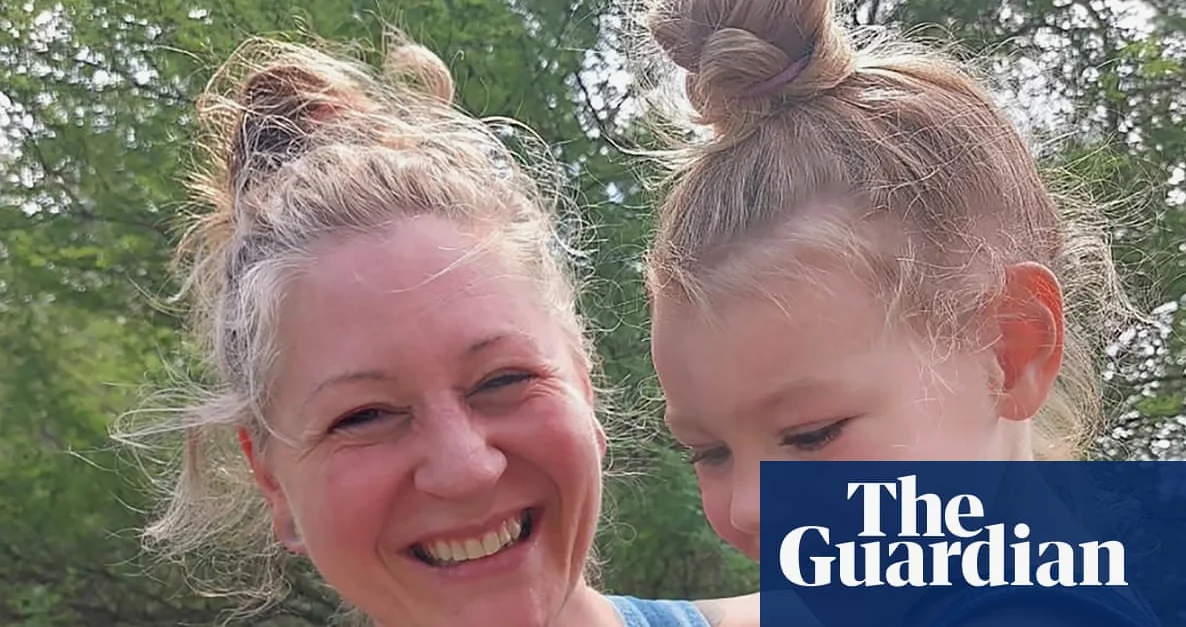
A Canadian woman currently detained with her seven-year-old daughter by Immigration and Customs Enforcement (ICE) has warned other immigrants to avoid checkpoints and to stay out of sight while Donald Trump remains in power. Tania Warner. 47, said she has been held with her autistic daughter, Ayla, at the Dilley immigration processing center in south Texas since March 14, after they were stopped at a border patrol checkpoint in Sarita, Texas.
Detention Claims and Legal Disputes
Warner said she and her family have all the necessary legal documents to live and work in the U.S. but that ICE has ignored this. Her husband. Edward Warner. Who is a U.S. citizen. Told the Vancouver Sun that ICE officials claimed his wife overstayed her visa, despite providing a copy of a U.S. ’employment authorization’ card issued to her in 2023, which was set to expire on June 8, 2030.
The family had moved from British Columbia to Kingsville, Texas, in 2021 after Warner married Edward Warner; On March 14, they were driving home from a baby shower in Raymondville, Texas, when they were stopped at a border patrol checkpoint in Sarita. Warner and her daughter were taken in by ICE agents to be fingerprinted, and neither returned to their home.
Warner described the conditions at the initial detention facility as ‘horrific.’ She said they were held for about five and a half hours at the checkpoint, then sent to a facility where every person, including children, was handcuffed. They slept on the floor on 2-inch mats and the lights were on 24 hours a day. Warner said agents would not let her call a lawyer and constantly pressured her to sign documents agreeing to ‘self-deport.’
Conditions at Dilley Processing Center
Warner and her family were later moved to the Dilley processing center, which was originally opened under President Barack Obama but closed during the administration of President Joe Biden. The facility was reopened in early 2025 to hold detained families and has been heavily criticized for inhumane conditions.
She said that while conditions have marginally improved—allowing inmates to access windows and sometimes go outdoors—there is no privacy and they are watched round the clock by guards. Warner described the treatment at Dilley as ‘horrific’ from the start. Ayla has developed a persistent full-body rash and has been given Benadryl, according to Warner.
Warner said her daughter has put on a brave face, befriending other children who ‘just want to go home.’ But she has also expressed concern that Ayla is internalizing the trauma of their situation.
Legal and Diplomatic Efforts
The family’s lawyer is working to get the pair released on payment of a $15,000 bond. Amelia Boultbee. A member of the legislative assembly of British Columbia, where Tania Warner is originally from, said she is urgently lobbying Canada’s federal government to help get Warner and her daughter released.
Boultbee said she is exploring diplomatic and legal avenues to have the Canadian citizens released from detention. She noted that there are few precedents for cases of Canadian families held in U.S. detention, and there is no clear template to follow, either diplomatically or legally.
Global Affairs Canada, the federal ministry that handles consular services and diplomatic relations, said on Thursday it was ‘aware of multiple cases of Canadians currently or previously in immigration-related detention in the U.S.’ A spokesperson said that consular officials advocate for Canadian citizens abroad and raise concerns about justified and serious complaints of ill-treatment or discrimination with the local authorities but cannot exempt Canadians from local legal processes.
ICE was approached for comment on March 20, and the Guardian provided that information, but four days later, ICE had still not replied.
Warner said she has made it clear that she has all the correct documents to live and work in the U.S., but that has been ignored. She said she does not want to leave the U.S. and has a life here with her husband, but she has ‘gotten a really ugly taste in my mouth for the United States.’
The case has drawn attention from Canadian officials and has raised concerns about the treatment of legal immigrants in the U.S. under current policies, while Warner’s warning to other immigrants to ‘lie low’ has sparked debate over the rights and treatment of non-citizens in the U.S.
As the situation unfolds, the family’s legal team continues to work on their release, while Canadian officials explore diplomatic and legal options to secure their freedom.




Comments
No comments yet
Be the first to share your thoughts