

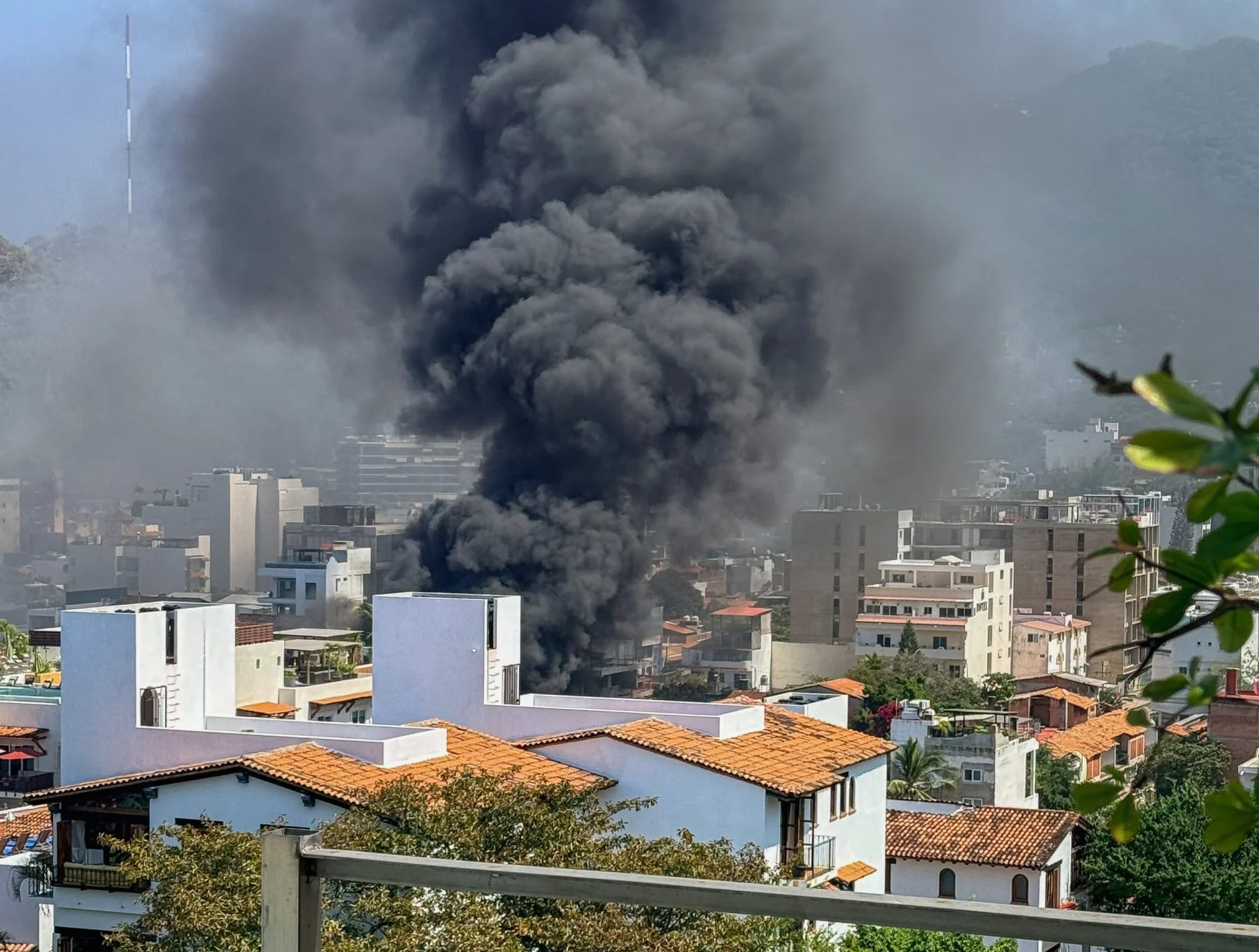
Flames engulfed streets across Mexico, filling the air with dark, heavy smoke as gas stations, storefronts, buses, and cars burned in the aftermath of the death of Jalisco New Generation Cartel (CJNG) leader Nemesio Oseguera Cervantes, known as ‘El Mencho.’ The incident, which occurred on Feb. 22, 2026, marked the Mexican military’s successful operation to kill the powerful drug trafficker, a move that triggered widespread violence across the country.
Chaos in Puerto Vallarta
Tim Cole, a communications professor at DePaul University, found himself caught in the crossfire of the retaliatory violence while vacationing in Puerto Vallarta with his family and friends. ‘The fires and explosions just did not stop, and they were super close by coming from all directions,’ Cole said. ‘It was very dramatic, and we had no idea what was going to happen.’
Cole described the atmosphere as tense and unpredictable, with limited communication and no access to reliable information. A local waitress warned him and other tourists about the severity of the situation, advising them to stay inside. ‘There was no police presence or first responders at all in the area. So things were just burning until they burned down completely,’ he said.
The U.S. State Department issued a warning to American tourists, urging them to ‘shelter in place’ due to ‘ongoing security operations and related road blockages and criminal activity’ in several Mexican states, including Puerto Vallarta. Cole said he followed the advice, though he remained on edge. ‘There were rumors that they were going to target American tourists. I didn’t feel safe. We were safe, but it didn’t feel safe,’ he said.
Cartel Power and Escalation
The violence following El Mencho’s death is not an isolated incident. Security officials reported more than 70 deaths, including 25 Mexican National Guard members and suspected cartel henchmen, during the operation and the subsequent unrest. El Mencho, who was wanted by U.S. authorities with a $15 million bounty, was designated a foreign terrorist organization by the Trump administration in February 2025.
President Claudia Sheinbaum Pardo confirmed that the U.S. provided intelligence to assist in the operation, stating that ‘coordination was going very well.’ However, she rejected multiple proposals from former President Donald Trump to send U.S. troops into Mexico to combat drug trafficking.
Yoalli Rodríguez, a DePaul professor of Latin American and Latino Studies, noted that Sheinbaum Pardo’s crackdown on narco-trafficking predates pressure from Trump, signaling a shift in policy from her predecessor, Andrés Manuel López Obrador. ‘This was a surprise for a lot of people because people thought that she was going to continue that line,’ Rodríguez said. ‘Especially because from the past, we know that every time they have killed or have taken a narco-trafficker, it just becomes more violent.’
Historically, the killing of high-profile cartel leaders has often led to increased violence. In 2019, an operation to capture Ovidio Guzmán López, son of Joaquín ‘El Chapo’ Guzmán, ended in failure, prompting López Obrador to order his release. Guzmán López was arrested again in 2023 and extradited to Chicago, where he pleaded guilty to drug trafficking and other charges.
Community Support and Resolution
Amid the chaos, Cole received unexpected support from his DePaul colleagues. ‘I have never been more proud to be a part of the DePaul community. I’ve never been more proud of the level of support I got from my colleagues,’ Cole said. Alexandra Murphy, the dean of the College of Communications, worked with DePaul’s network to ensure Cole’s safety and to find a solution to bring him back to Chicago.
Other professors offered assistance from Chicago, including pet-sitting and helping with a scheduled veterinary appointment for Cole’s dog. ‘When you have someone who’s part of your community, you make sure that you try to do what you can to help,’ Murphy said. ‘I think that was more the kind of instinct and seeing if there are ways in which, through our network, we can try to work something out, to be able to help somebody out.’
Cole has been teaching his classes remotely and has made arrangements to return to Chicago this weekend as airlines resume flights out of Puerto Vallarta. Despite the ordeal, he plans to continue visiting the coastal town and encourages others to do the same. ‘It’s an absolutely beautiful place and the people, who depend on tourism for their livelihood, are amazing,’ Cole said. ‘Everyone is amazingly friendly, and it’s a really nice community that I want to continue supporting and giving back to.’



Comments
No comments yet
Be the first to share your thoughts