

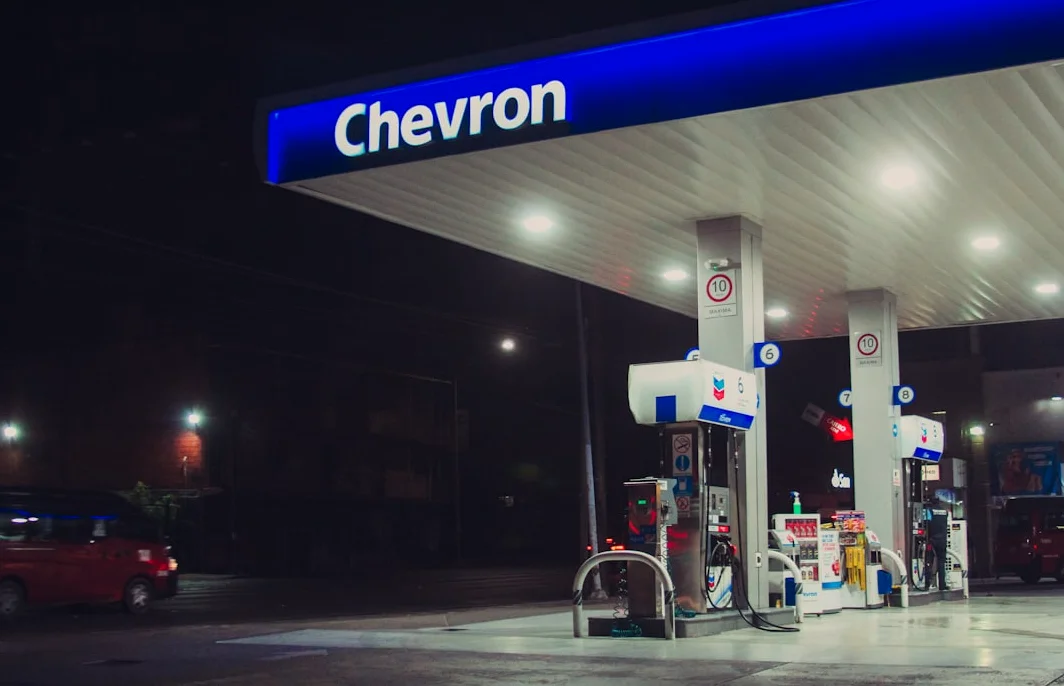
Oil prices surged to their highest levels in years as the Strait of Hormuz, a critical global oil shipping route, faced disruptions due to Iran’s military actions. Brent crude climbed above $100 per barrel on March 12, 2026, according to market data, as the closure of the narrow waterway between Iran and Oman threatened up to 30% of global oil and LNG supplies. The incident, which involved the setting of oil tankers on fire and the killing of seven people, has triggered a spike in energy prices, benefiting major oil companies like Chevron Corp. (CVX). But whether the company is a solid long-term investment remains a subject of debate among investors and analysts.
CVX’s Financial Strength and Strategic Moves
Chevron, with a market capitalization of $395 billion as of March 2026, continues to be a dominant player in the global energy sector. Its annual revenue, which stands at around $189 billion, highlights its strong position. In 2025, the company reported a net income of $12.3 billion while generating an adjusted free cash flow of $20.2 billion, signaling both stability and potential for future growth. This financial resilience is further reinforced by its strong balance sheet, with a debt-to-equity ratio of 0.20, significantly lower than that of peers like ConocoPhillips (0.36), according to Yahoo! Finance.
Chevron’s history dates back to 1879 when it was founded as Pacific Coast Oil Company. The company was acquired by John D. Rockefeller in 1900 and merged with Standard Oil, contributing to the formation of one of the largest oil companies in history. In 2025, Chevron completed its $55 billion acquisition of Hess Corp., a deal that had faced legal challenges for over a year. The acquisition boosted Chevron’s output to a record 4.1 million barrels of oil equivalent per day, as reported during its Q4 earnings call.
The acquisition was part of a broader restructuring strategy led by CEO Mike Wirth in 2024, aimed at streamlining operations and improving profitability. Despite plans to reduce its global workforce by 15-20% by the end of 2026, Wirth stated that Chevron is now ‘bigger, stronger, and more resilient than ever,’ citing its increased production and consistent dividend payouts.
Dividend Yield and Investor Appeal
Chevron has raised its dividend every year for 39 consecutive years, a rarity among S&P 500 companies. Its current dividend yield of 3.76% makes it a compelling option for long-term investors seeking stable income. This places it within the ‘dividend aristocrats’ category, a group of 69 elite stocks known for their reliability and consistent returns. These stocks are particularly favored by retirees and income-focused investors due to their ability to provide sustainable returns even in volatile markets.
Chevron’s inclusion in the ‘dogs of the Dow’ — a group of the 10 highest dividend-yielding stocks in the Dow Jones Industrial Average — further highlights its appeal. The company’s long-standing commitment to dividends has helped it become a blue-chip stock, offering a mix of growth and income potential for investors.
However, while the dividend yield is attractive, Chevron’s performance is closely tied to the energy sector’s broader dynamics. Energy prices are notoriously volatile, influenced by global supply and demand, geopolitical tensions, and environmental policies. These factors can lead to rapid price swings, as seen in the current situation with oil prices.
Risks and Caution in Energy Investing
Despite Chevron’s financial strength, the energy sector remains inherently risky. Commodity prices, including oil, are prone to sharp fluctuations. A rise in prices often leads to increased production, which can eventually create an oversupply and result in price crashes. This cyclical nature of energy markets means that even the most stable companies can face challenges during downturns.
Investors must be prepared to handle these swings, especially in the short term. Long-term investors, however, may find value in Chevron’s resilience and strategic positioning. As famed investor Warren Buffett once said, ‘Be fearful when others are greedy and be greedy only when others are fearful.’ This sentiment is particularly relevant in energy investing, where timing and risk management are crucial.
The current situation in the Strait of Hormuz is not the first time energy prices have been impacted by geopolitical tensions. Similar disruptions occurred during the 1970s oil crisis and more recently with the conflicts in Syria and Libya. These events have historically led to sharp increases in oil prices, followed by periods of adjustment as new supply sources emerge and production levels stabilize.
Chevron’s ability to handle these cycles will be a key factor in its long-term investment appeal. With a strong balance sheet, a strong production base, and a commitment to dividends, the company is well-positioned to weather short-term volatility. However, the broader energy market’s trajectory will play a significant role in determining whether Chevron continues to be a solid long-term investment.
Looking ahead, Chevron is expected to face several critical decisions in the coming months, including how to manage its global workforce reduction, improve its production capacity, and handle the evolving regulatory landscape. These decisions could have a significant impact on the company’s future performance and its ability to maintain its current dividend streak.
As the energy sector continues to evolve, Chevron’s position as a major player in the global market will be tested by both internal and external factors. Whether it can sustain its strong financial performance and continue to deliver value to shareholders will be a key indicator of its long-term investment potential.






Comments
No comments yet
Be the first to share your thoughts